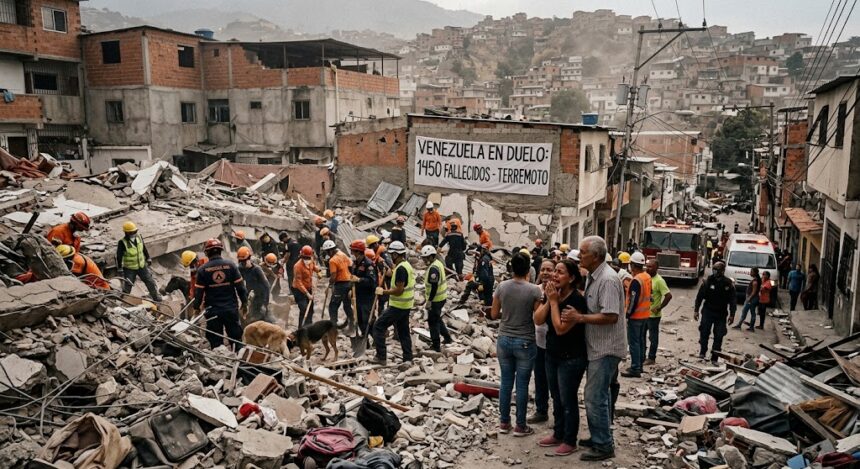
Waking up to the news that the earth has shaken in your home country is a nightmare; but seeing the death toll multiply hour by hour is an indescribable pain for the diaspora. Phones won’t stop ringing, social media is overwhelmed with searches for family members, and uncertainty reigns. The tragedy in Venezuela is facing one of the darkest chapters in its recent history.
The truth is that the numbers on our screens fail to capture the real magnitude of the disaster, but they reflect a harsh reality the international community can no longer ignore.

The official death toll from the series of devastating earthquakes in Venezuela has risen to 1,450, with thousands injured and missing still trapped under the rubble. The destruction has been concentrated in densely populated urban areas, where the combination of seismic force and weakened infrastructure has caused the massive collapse of residential buildings, hospitals, and access roads.
Let’s get to the point. What exactly is happening on the ground, why is the devastation so absolute, and—most importantly—what can we do from abroad?
The Perfect Storm: When the Earth Shakes Beneath Fragile Structures
It’s no secret that Venezuela has been grappling with a severe economic crisis for decades, one that has paralyzed preventive maintenance in its cities. When a major earthquake strikes an environment where building codes have been ignored or poorly funded for years, the result is catastrophic.
“The problem wasn’t just the intensity of the seismic movement, but the accumulated structural fatigue. Buildings that should have been reinforced a decade ago simply gave way.”
Here’s the interesting—and at the same time, the most tragic—part: engineers and seismologists had been warning for years about the risk of active geological faults in the country, particularly in the Boconó and San Sebastián fault systems. (Did anyone listen to these warnings? Unfortunately, the state’s priorities were elsewhere.)

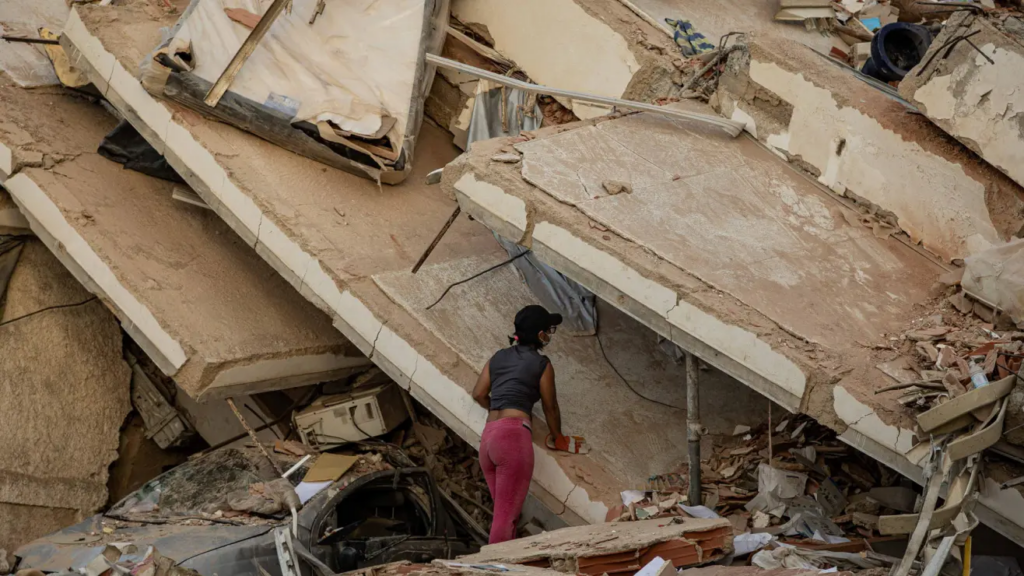
Ground Zero: The Map of Devastation
Search and rescue operations have classified the affected regions to prioritize international aid and rescue squads with tracking dogs and thermal equipment.
| Affected Region | Level of Structural Damage | Status of Basic Services | Rescue Priority |
| Capital Zone (Caracas and Miranda) | Critical (Collapses in high-density residential areas). | No electricity, water network fractured. | Immediate (Heavy Equipment) |
| Andean Zone (Mérida, Táchira) | Severe (Landslides block roads). | Total collapse of telecommunications. | Immediate (Road Clearance) |
| Central-Western Zone | High (Severe damage to hospitals and schools). | Intermittent electricity. | High (Medical Supplies) |
(Seeing this table is chilling. We’re talking about areas where millions of people are trying to survive today without access to clean water or operational hospitals.)
The Race Against Time (The 72-Hour Window)
Any disaster management expert will tell you that the first 72 hours are the golden window to find survivors. However, in Venezuela, local rescuers are facing brutal obstacles.

- Lack of heavy machinery: Excavators and cranes needed to lift multi-ton concrete slabs are scarce or lack fuel to operate.
- Massive blackouts: Searching for survivors at night under rubble with cellphone flashlights delays critical operations.
- Collapsed hospitals: The health centers still standing are operating at over 300% capacity. Doctors are working endless shifts, often without basic supplies, sutures, or anesthesia.
The Diaspora in Action: How to Help Without Falling for Scams
The response from the Hispanic community in the United States, Colombia, Spain, and the rest of Latin America has been immediate. However, in the midst of chaos, opportunists always appear. If you want to help, your money or donations must go through verified channels.
1. Avoid donating physical supplies (for now)
Sending boxes of old clothes or bottles of water from Florida or Madrid sounds like a good idea, but customs logistics, shipping costs, and destroyed roads mean these packages take weeks to arrive.
2. Prioritize organizations on the ground
Cash is the fastest tool for rescuers. It allows them to buy fuel, cutting tools, and medicine in local or border markets immediately.
- International Red Cross: They have an established humanitarian corridor and protocols to bypass bureaucratic barriers.
- Doctors Without Borders (MSF): They were already operating in the country and have doubled their mobile surgical units.
- Cáritas: Their network through local churches is often one of the most direct ways to deliver hot meals to victims in the hardest-hit neighborhoods.
The pain in Venezuela today is the pain of the entire Hispanic community. As rescue teams continue digging through the rubble, the death toll of 1,450 will likely change. Our duty is not just to stay informed, but to lend a hand.
Image: ElHispanoParaTodos/PRESS