

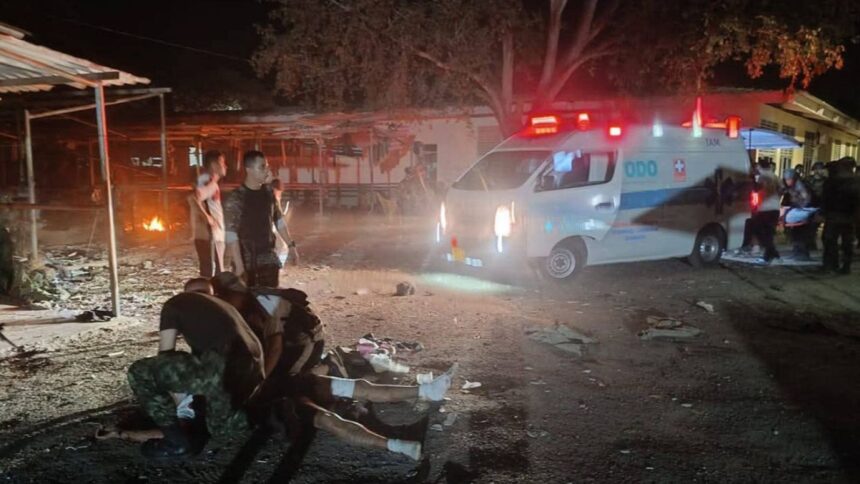
Historic shift in Colombia: Gustavo Petro orders his first airstrike against the ELN in Catatumbo, leaving 7 dead. We analyze the collapse of peace talks and what it means for regional security.
For years, the rhetoric from the Casa de Nariño was clear: airstrikes on guerrilla camps were a thing of the past, relics of a war that the government wanted to end through dialogue. However, the harsh reality of Catatumbo has a way of overriding discourse.

This Wednesday, the order changed. In a joint operation between the Air Force and the National Army, the first strategic airstrike under Gustavo Petro’s administration was carried out against a camp of the National Liberation Army (ELN). The preliminary toll: seven guerrillas killed and a political message that resonates louder than the explosions: the government’s patience has run out.
In a drastic shift from his “Total Peace” policy, President Gustavo Petro authorized an airstrike in the rural area of Teorama (Catatumbo), resulting in the deaths of seven ELN members. The operation responds to the escalation of violence and violations of the ceasefire by the insurgent group, marking the end of the restriction on airstrikes that the president had maintained since the start of his term.
Anatomy of Operation “Thunder”: Why Now?
The attack was not random. It took place in one of the most conflict-ridden areas of the continent: Teorama, Norte de Santander. This region is not just jungle; it is the heart of drug trafficking and the cocaine route to Venezuela.
Attack Details:
- Intelligence: It was confirmed that the targeted structure was responsible for recent ambushes against police and extortion kidnappings in the region.
- No Minors: One of the strict conditions Petro had set for authorizing any use of air force was intelligence certainty that no minors were recruited in the camp. The Ministry of Defense claims this condition was met (though in war, absolute certainty is a rare luxury).
- The Trigger: Intelligence sources suggest the ELN was planning a “public opinion strike” (mass attack) in a capital city, forcing the government to act preemptively.
The Collapse of the Negotiating Table
What happened to the talks in Havana and Mexico? The truth is, negotiations with the ELN have been on life support for months. This airstrike is, in practical terms, pulling the plug.

The ELN, historically decentralized and difficult to control under a single central command, has continued kidnapping and extorting under the pretext of “financing.” Petro, pressured by rising insecurity and opposition criticism, has had to dust off the conventional war manual.
“What good is talking about peace in an air-conditioned room if bombs are still going off in Catatumbo? That’s the question Petro could no longer avoid.”
Catatumbo: The Powder Keg No One Can Extinguish
To understand the gravity of this airstrike, you have to look at the map. Catatumbo is a “state within a state.”
- Illicit Crops: It is the region with the highest density of coca leaf per hectare in the world.
- Territorial Dispute: Here, the ELN is not alone; they fight against FARC dissidents and criminal gangs.
- Civilian Impact: The civilian population lives in confinement. An airstrike, even if targeted at insurgents, revives the trauma of decades of aerial warfare in rural communities.
Comparative Table: Petro’s Doctrine (Before vs. Now)
| Policy Axis | Initial Doctrine (2022-2024) | New Reality (2026) |
| Use of Air Force | Strict prohibition on airstrikes. | Selective airstrikes authorized (“Surgical Operation”). |
| Stance Toward ELN | Political status and unconditional negotiation. | “Either negotiate or face the state.” |
| Military Priority | Protection of life and human rights. | Regaining territorial control. |
| Ceasefire | Bilateral and internationally verified. | Suspended in critical regions (Catatumbo, Cauca). |
Implications for Hispanics Abroad
This event has cross-border repercussions:

- New Migration Wave: If the war reignites with full force in rural areas, we will see an increase in forced displacement. Many of those displaced will inevitably end up on the route to the Darién Gap, seeking to reach the U.S.
- Stigmatization: Violence in Colombia is often used politically in the U.S. to harden immigration policies against Colombians.
- Border Security: A Catatumbo at war further destabilizes the border with Venezuela, affecting trade and regional security.
“Total Peace” seems to have hit a wall of reality. And when arguments run out, the Super Tucano aircraft speak again.
Image RTVE Noticias





