


Europe took a step to strengthen its alliance in defense of Ukraine in its war with Russia, aiming to become less dependent on the United States.
- Led by British Prime Minister Keir Starmer and with the presence of Ukrainian President Volodymyr Zelensky, European leaders agreed on a four-point plan to support Ukraine in finding a way out of the conflict.
- “Europe must take on most of the effort,” but U.S. support is needed, the British prime minister stated.
- “It’s important that we prepare for the worst.”
With the goal of addressing the complex moment Ukraine faces amid negotiations between the United States and Russia to end the war that began three years ago in that country, leaders from the continent met in London.

Led by British Prime Minister Keir Starmer and with the presence of Ukrainian President Volodymyr Zelensky, European leaders agreed on a four-point plan to support Ukraine in finding a way out of the conflict.
After meeting for just over two hours, Starmer explained to the media that the agreement among the nations, including Turkey and Canada, aims to: Maintain the flow of military aid to Ukraine while the war continues and increase economic pressure on Russia. Any lasting peace must guarantee Ukraine’s sovereignty and security, and Ukraine must be present in any peace negotiations. In the event of a peace agreement, European leaders will work to deter any future Russian invasion of Ukraine. A “coalition of countries” will be established to defend Ukraine and ensure peace in the country.
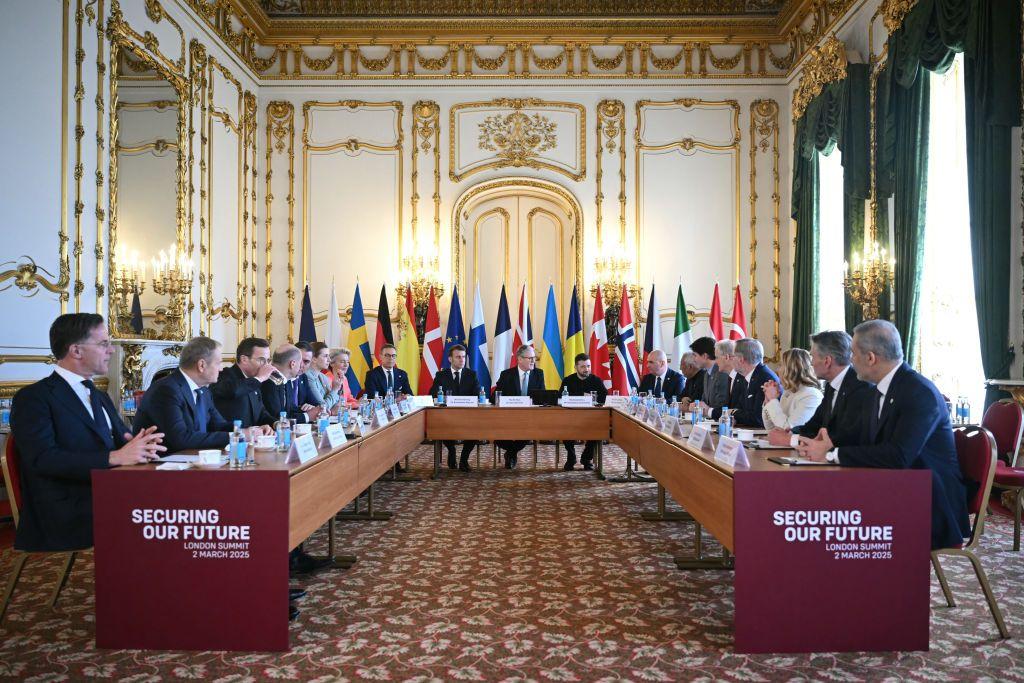
“Europe must take on most of the effort,” but U.S. support is needed, the British prime minister stated.
The European leader affirmed that those countries willing to do so will intensify planning with urgency before reaffirming the UK’s commitment to back this with “troops on the ground and planes in the air.”

In that regard, he confirmed that Ukraine will be allowed to use $1.6 billion pounds ($2 billion dollars) to purchase over 5,000 air defense missiles.
“To be clear, we agree with Donald Trump on the urgent need for lasting peace. Now we must deliver together,” he emphasized, while acknowledging that “today we find ourselves at a historic crossroads.”
“This is not the time for more rhetoric: it’s time to act and unite around a new plan for a just and lasting peace.”

The meeting comes after Zelensky traveled to the U.S. and had a tense meeting with President Donald Trump and Vice President JD Vance.
The impasse left the Ukrainian leader in a fragile position at a critical moment for negotiations to end the war.
When asked by reporters, Starmer assured that the plan would have the backing of the White House.
“This is a plan we are working on with the U.S., and with U.S. support. That’s why I spoke with Trump last night,” Starmer stated.
“It’s important that we prepare for the worst.”
European Commission President Ursula von der Leyen described the discussion as “good and frank” and assured that it focused on the need for global security guarantees, which includes placing Ukraine in a position of strength and ensuring it has the means to “fortify and protect itself.”
According to her, this encompasses everything from economic survival to military resilience.
Von der Leyen added: “We must increase defense, we must scale it up enormously,” and noted that a clear plan from the European Union and a common European approach are needed.
“It’s very important that we increase spending (on defense), that we prepare for the worst,” she stressed at a time when the U.S. has made clear that its spending commitment and support for Ukraine will end if no agreement with Russia is reached to end the war.
Along those lines, she also sent a message to Trump: “We are ready alongside you to defend democracy, to defend the principle that there is a rule of law, that a country cannot invade its neighbor or change borders by force. It is in our common interest to prevent future wars.”
After the meeting concluded, its participants praised the effort. Polish Prime Minister Donald Tusk stated on his X account that “Europe has awakened.”
The leader added that “everyone is speaking with one voice on aid to Ukraine, the need for close transatlantic cooperation, and strengthening the eastern border.”
Image: Infobae





