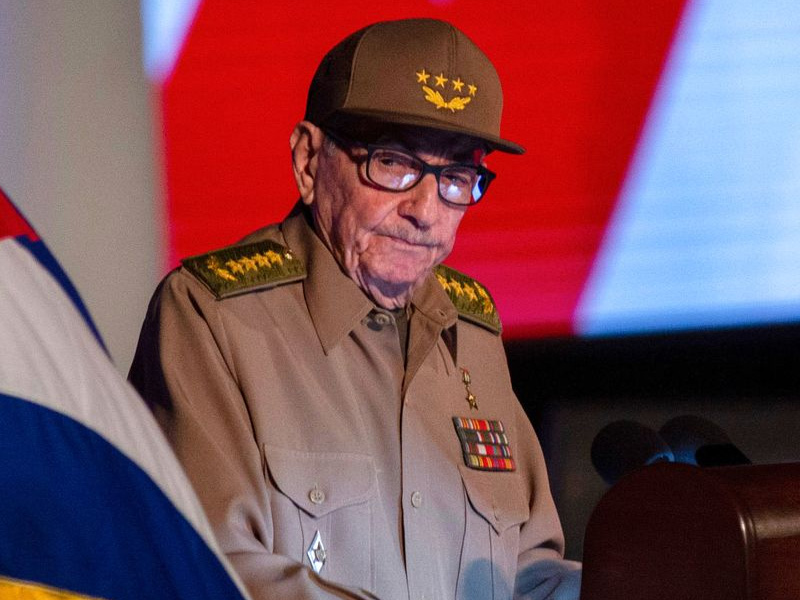
In an unprecedented move that escalates tensions between Washington and Havana to their highest point in decades, the U.S. Department of Justice has formally filed criminal charges against former Cuban President Raúl Castro, 94, accusing him of murder and conspiracy.
The announcement, made on May 20—Cuba’s Independence Day—from Miami’s iconic Freedom Tower, marks a drastic shift in U.S. foreign policy toward the communist island.

The Details of the Indictment: Justice Three Decades Later
The federal charges are directly linked to the fateful February 24, 1996, when Cuban MiG fighter jets from the Cuban Air Force shot down two civilian Cessna planes over the Florida Straits. The aircraft belonged to the exile group Brothers to the Rescue, which was dedicated to spotting rafters attempting to flee the island.
Four U.S. citizens and residents were killed in the attack: Armando Alejandre Jr., Carlos Costa, Mario de la Peña, and Pablo Morales.
According to the court document, Raúl Castro, who at the time served as Minister of the Revolutionary Armed Forces (FAR), was the one who gave the order to open fire. The specific charges he faces, along with five other individuals (including fighter pilots), are:
- Conspiracy to kill U.S. citizens.
- Four counts of murder.
- Two counts of aircraft destruction.
While the possibility of Castro standing trial on U.S. soil is virtually nonexistent, the indictment carries profound political and diplomatic ramifications, particularly under the Trump administration, which has intensified its “maximum pressure” campaign against socialist allies in the region following the recent capture of Venezuelan leader Nicolás Maduro.

What Comes Next for Cubans on the Island?
For citizens living in Cuba, this indictment does not represent an immediate legal change, but it does foreshadow a worsening of their already precarious living conditions.
1. Economic strangulation and energy crisis: The U.S. government has imposed a strict blockade on fuel shipments to the island, cutting off its main supplier, Venezuela. This has already caused massive blackouts, critical food shortages, and a collapse in daily economic activity. These sanctions are likely to remain or even tighten, using Castro’s indictment as moral justification.
2. Total diplomatic isolation: Any hope of diplomatic rapprochement or sanctions relief is now completely buried. U.S. Secretary of State Marco Rubio has been emphatic in conditioning any new relationship on the Cuban people demanding a free-market economy and a leadership transition.

3. Internal tension and state control: Historically, the Cuban government uses such external pressures to close ranks, denounce “U.S. imperialism,” and justify greater control over internal dissent. Everyday Cubans will once again be caught in the crossfire of a geopolitical conflict, facing the threat of retaliation if they mobilize to demand change.
The Impact on the Exile Community and Diaspora in Florida
For the Cuban community abroad, particularly in South Florida, this news resonates very differently.
1. A sense of historic justice: For the families of the Brothers to the Rescue victims and thousands of political exiles, the indictment represents official recognition of crimes they have denounced for nearly 30 years. It is a monumental symbolic victory that validates their narrative before the international community.
2. Political reactivation of the exile community: This move consolidates the diaspora’s support for the current administration’s “hardline” policies. Seeing high-ranking White House officials, such as Acting Attorney General Todd Blanche, announce these measures in Miami revitalizes exile organizations, giving them new momentum to push for more sanctions and financially isolate the regime.
3. Uncertainty about family futures: Despite the political celebration, the diaspora faces deep personal anguish. The tightening of the blockade and economic paralysis make it extremely difficult to send remittances, medicine, and basic aid to their families on the island. The exile community is divided between the longing for justice and the despair over the suffering of their loved ones trapped in the crisis.
The 1996 downing of the planes paralyzed relations between the U.S. and Cuba, leading to the Helms-Burton Act. Today, three decades later, the ghosts of that event once again hover over the Florida Straits, promising to rewrite, once more, the fate of millions of Cubans on both shores.
Image ElPais.com