The End of an Era in Transportation: Why Is the U.S. “Shutting Down” the Engines of Thousands of Immigrants?
Uncertainty has moved from the halls of Congress to truck stops across the country—the plan to revoke truckers’ licenses is now a reality. Starting March 16, 2026, a new federal regulation from the FMCSA has permanently changed the rules of the game. What was once a standard renewal process for any worker with an employment authorization document (EAD) has now become an insurmountable barrier.

The reality is harsh: an estimated 200,000 professional drivers could lose their livelihood. This isn’t about “rumors”—it’s an executive and legislative order (such as the proposed Dalilah Act) aimed at purging the system of drivers who don’t hold specific visa types. The result? A wounded transportation sector and a supply chain already feeling the strain of rising costs.
Quick Answer (Snippet Bait): Starting in March 2026, the Department of Transportation (DOT) and the FMCSA will only issue or renew “non-domiciled” CDLs to holders of H-2A, H-2B, and E-2 visas. Recipients of DACA, TPS, asylum applicants, and refugees can no longer use their Employment Authorization Document (EAD) to obtain or renew these licenses, even if their work permits remain valid.
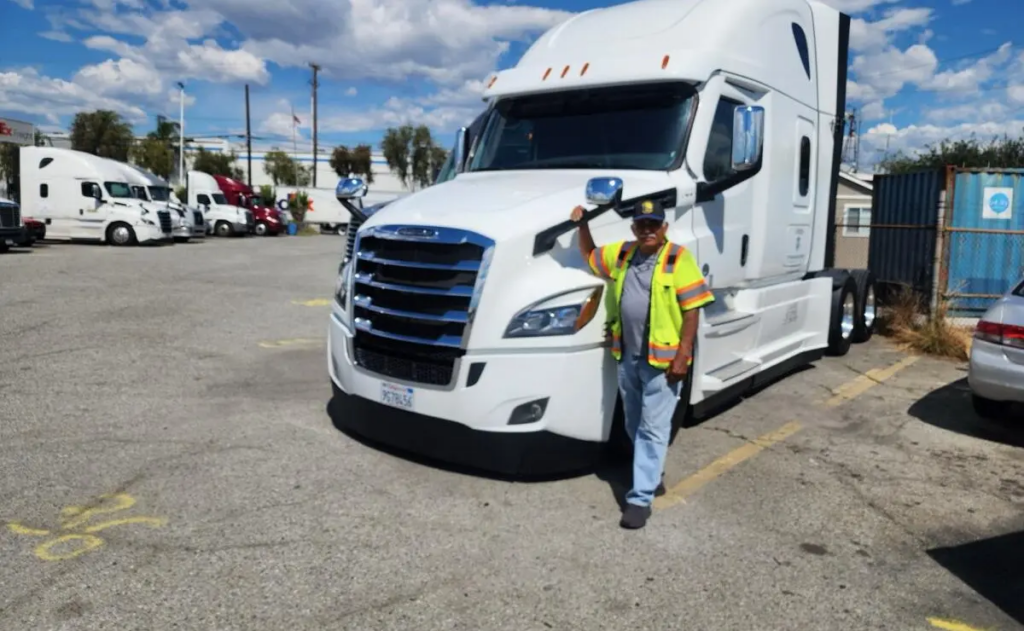
The 2026 Ban: Who Is Most Affected?
The new regulation doesn’t discriminate based on years of experience. You could have spent a decade crisscrossing the country without a single ticket, but if your immigration status doesn’t fit the FMCSA’s narrow criteria, your license has an expiration date.
The Blacklist of the New Regulation
If you fall under any of these statuses, the federal SAVE system (Systematic Alien Verification for Entitlements) will now block your renewal:
- DACA Recipients: Young “Dreamers” who have been the sector’s youthful workforce.
- TPS Holders: Citizens of Venezuela, El Salvador, Honduras, and other countries under temporary protected status.
- Asylum Applicants: Thousands of drivers awaiting their hearings who, until recently, were essential for interstate freight transport.
- Refugees and Humanitarian Parolees: Those who entered under recent sponsorship programs.
Why is this happening now? The government’s official argument is to “restore integrity” to the licensing system, claiming that the driving records of these drivers from abroad cannot be verified with the same rigor as those of citizens or residents. However, many experts see this as a blunt immigration enforcement measure.

The Battle Map: California vs. the Federal Government
Not every state is enforcing these measures with the same intensity. A legal war has erupted between “sanctuary states” and the Department of Transportation.
The California Case: A Temporary Ray of Hope
In February 2026, a judge in California issued a tentative ruling ordering the state’s DMV not to massively revoke the 20,000 immigrant licenses that the federal government demanded be canceled.
Table: What Exactly Changes in the Licensing Process?
| Requirement | Before 2026 | Now (Starting March 16, 2026) |
| Eligibility Proof | Valid work permit (EAD). | Only H-2A, H-2B, or E-2 visas. |
| Documentation | Passport and EAD. | Passport + I-94 with specific visa status. |
| CDL Duration | Typically 4-8 years. | Maximum 1 year (tied to the I-94 date). |
| Renewal | Could be done by mail/online. | In-person only. |
Impact on the Sector: Why Your Wallet Will Feel It Too
This isn’t just a problem for truckers—it’s a problem for anyone who buys groceries. The driver shortage is already critical, and removing 5% of the most active workforce will have immediate consequences:

- Increased Shipping Costs: Reports already show hikes of up to 35% on critical routes like New Jersey to Texas.
- Delivery Delays: Fewer trucks on the road mean perishable goods will take longer to arrive.
- Logistics Inflation: If moving goods gets more expensive, the final price is paid by Hispanic consumers.
“The truth is, there aren’t enough American drivers to fill the gap left by immigrants. This is a logistical suicide for political reasons,” says a Chicago-based freight broker.
What Can You Do If You’re an Affected Trucker?
If you’re one of the 200,000 drivers on the edge, don’t panic—but act fast.
- 1. Check Your Expiration Date: Your current license remains valid until it expires. It won’t be taken away tomorrow, but you won’t be able to renew it under the current rules.
- 2. Consult an Immigration Attorney: Assess whether you can switch to one of the permitted visas (H-2B or E-2). It’s difficult, but not impossible.
- 3. Keep Your Record Clean: Any minor violation will now be used by the SAVE system to expedite a potential revocation or “downgrade” of your commercial license to a standard one.
- 4. Look to States with Legal Challenges: Stay updated on news from California and other states challenging the federal order. Your license may remain valid if the state where you live decides to fight in court.
Image: ElHispanoParaTodos/PRESS