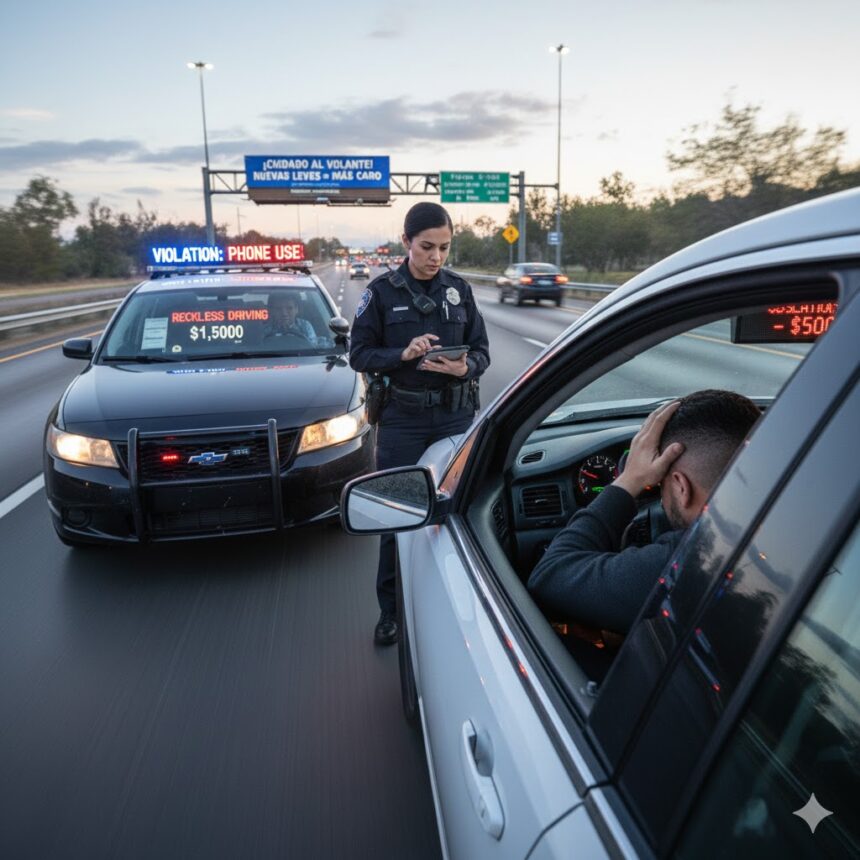
Flexibility Over? 2026 Starts with a Heavy Hand on U.S. Roads
If you think a traffic ticket is just a piece of paper you pay and forget, think again. Starting in February 2026, the landscape for drivers in the United States has taken a drastic turn. Under a new federal safety initiative, authorities have implemented the Unified Sanctions Protocol, which raises fines for serious violations to $1,500 and includes jail time of up to 30 days for repeat offenders.
The reality is harsh: what used to be a simple warning for checking your phone or weaving through traffic can now land you in a cell or leave your bank account reeling.

Quick Answer: What Are the Main Changes?
The new 2026 regulations severely punish distracted driving (cell phone use), extreme speeding (+20 mph over the limit), and reckless driving. Fines for repeat offenders have been standardized at $1,500, while jail sentences can range from 15 to 90 days, depending on the state and the severity of the offense.

Breakdown of New Penalties: The 2026 Crackdown
The toughening is no coincidence. With the rise in accidents linked to rideshare apps and digital distractions, the federal government has pressured all 50 states to enforce stricter standards.
1. The War on Cell Phones and Distractions
It’s no longer enough to just “not be texting.” The law is now much more specific.
- Cell Phone Use: Holding a phone in your hand while the vehicle is in motion (even at a stoplight in certain states like North Carolina) is now considered a primary offense.
- Loose Objects: Surprisingly, 2026 brings fines of up to $500 for having objects that obstruct pedals or vision (loose water bottles, accumulated trash, or excessive dashboard decorations).
- Penalty: If you’re a repeat offender within a 12-month period, be prepared to pay $1,500 and face a possible license suspension.
2. Speeding and Racing: Zero Tolerance
Speeding has gone from being a “traffic violation” to a misdemeanor in much of the country.

- 20-30 mph Over the Limit: In states like Washington and Florida, exceeding the limit by this margin automatically triggers charges of negligent or reckless driving.
- Direct Jail Time: In Florida, under law SB351, a second offense for extreme speeding can land you in jail for up to 90 days.
Fine and Penalty Comparison Table (2026 Estimates)
| Violation | First Offense | Repeat Offense (12 months) | Jail Time |
| Cell Phone Use | $500 | $1,500 | 15 – 30 days (optional) |
| Speeding (+20 mph) | $300 – $500 | $1,500 | Up to 60 days |
| Failing to Yield to Blind Pedestrians | $500 | $1,000 | Up to 60 days |
| Obstruction from Trash/Pedals | $100 | $500 | N/A |
How Does This Affect the Hispanic Community?
For our community, these laws represent a double challenge. Not only is there the financial impact of a $1,500 fine (which for many represents nearly a month’s rent), but also the legal risk that comes with an arrest.
Critical Note: An arrest for a traffic violation, now classified as a “misdemeanor” instead of a simple infraction, can have repercussions on immigration proceedings or work permit renewals. Don’t take the risk.
Pro Tips to Avoid Problems:
- Invest in a Mount: If your car doesn’t have Apple CarPlay or Android Auto, buy a dashboard mount. Touching your phone is the easiest way to get pulled over by the new smart cameras.
- Clean Your Cabin: Keep the driver’s foot area free of bottles or papers. Officers are using body and dashboard cameras to document these “physical distractions.”
- Dashcam: If you believe a ticket is unfair, the 2026 law allows dashcam footage to be used as primary evidence to appeal within the first 30 days.
Image: ElHispanoParaTodos/PRESS