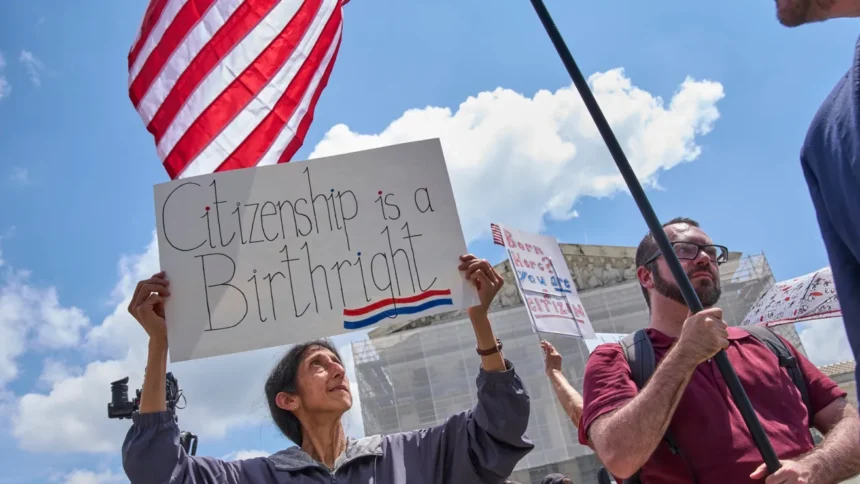
If you’re one of those who, upon hearing constant warnings about potential changes to the Constitution, has felt a knot in your stomach over the future of your children born in this country, today there is a legal certainty that clears much of that uncertainty. The narrative of “changing the rules of the game” through executive orders has run headlong into the strongest wall of American democracy: the constitutional interpretation of the 14th Amendment’s birthright citizenship.
The truth is, while political headlines tend to be noisy, the legal framework protecting birthright citizenship has proven far more resilient than some strategists in Washington would like to admit.

The immediate operational impact (Snippet Bait): In a landmark ruling, the Supreme Court of the United States has halted the Trump administration’s attempts to limit birthright citizenship, reaffirming that the 14th Amendment of the Constitution automatically guarantees citizenship to all persons born on U.S. soil, regardless of their parents’ immigration status. This decision blocks any attempt to revoke or condition this right through executive orders or restrictive administrative interpretations.
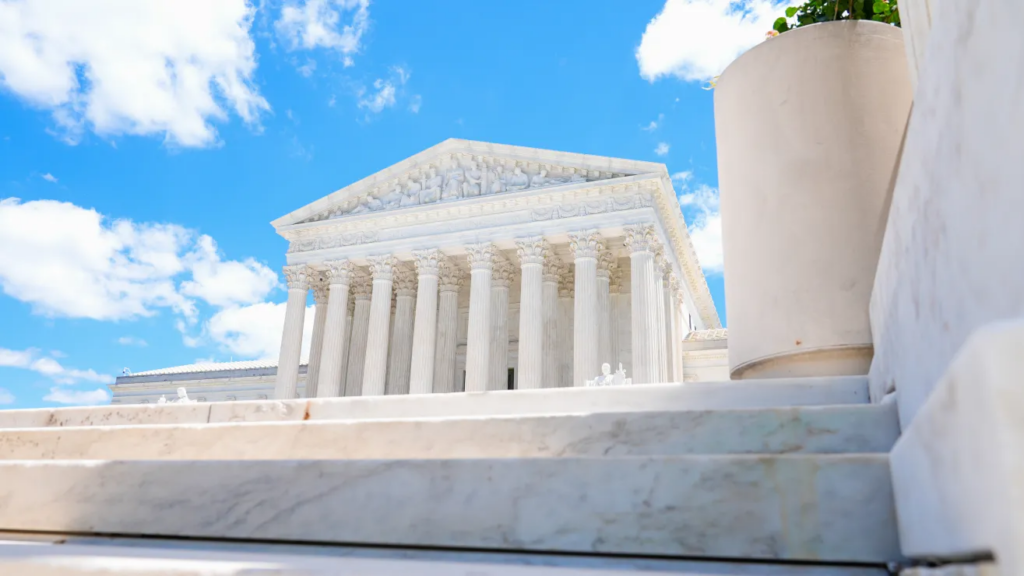
The 14th Amendment: Why Is It the Ultimate Shield?
Birthright citizenship is not a “policy” that can be eliminated with a signature in the Oval Office; it is a constitutional clause. Section 1 of the 14th Amendment, ratified after the Civil War, unequivocally states that “all persons born or naturalized in the United States, and subject to the jurisdiction thereof, are citizens of the United States.”
Here’s the interesting part: Some legal advisors in the administration had suggested that the phrase “subject to the jurisdiction thereof” could be reinterpreted to exclude children of undocumented parents. The Supreme Court, however, has maintained a conservative and protective interpretation of the original text, making clear that this jurisdiction refers to the territory, not the visa or legal status of those giving birth.
- The historical precedent: The case United States v. Wong Kim Ark (1898) remains the cornerstone. The Court ruled that even children of foreign parents, whose country of origin did not allow naturalization of U.S. citizens, were birthright citizens if born on U.S. soil.
- Why Trump’s attempt failed: The Court has reminded the Executive Branch that the Constitution is not a malleable document based on the whims of the moment. Any change to this right would require a constitutional amendment, a process that demands an overwhelming majority in Congress and ratification by three-fourths of the states. In today’s political climate, this is practically impossible to achieve.
The “Containment Plan”: What Was the Executive Branch Trying to Do?
The Trump administration had been preparing a series of policies aimed at discouraging what they call “birth tourism.” The plan was not only to apply rhetorical pressure but also to implement bureaucratic obstacles in passport offices and birth certificate registries to make it harder to obtain proof of citizenship.
Uncomfortable truth: The goal behind these tactics was not necessarily to win the final legal battle, but to create enough legal uncertainty so that families would start questioning whether they should really exercise their rights. When the government sows doubt, citizens retreat. That was the real victory the Executive Branch was seeking.
Scenario Table: What Changed After the Judicial Decision?
To help our community understand what is different now compared to a few months ago, we’ve prepared this comparative chart:

| Scenario | Before the Ruling (Speculation) | After the Ruling (Legal Reality) |
| Birth Certificates | Risk of aggressive administrative scrutiny. | Full constitutional protection; cannot be denied based on status. |
| Passports for Minors | Threat of deliberate obstacles and delays. | Regular procedure; inalienable right of the citizen. |
| Family Security | Climate of fear and immigration instability. | Legal certainty for children born in the U.S. |
What’s Next? Preparing for Future Battles
While this is a decisive setback, it does not mean the debate is over. The administration, having lost in the courts, will likely try to pressure other fronts, such as state laws affecting access to public services for mixed-status families.
1. Keep Your Documents Up to Date: Essential Documentation.
Although the right is protected, bureaucracy can be slow. Make sure you have certified copies of your children’s birth certificates in a safe place. Do not rely on a single copy.
2. Don’t Be Intimidated by Procedures: Awareness of Rights.
If any government agency questions your child’s right to a passport or benefits based on your immigration status, you have the full right to file a formal complaint and cite the constitutional precedent. The law is on your side.

3. Avoid Misinformation: Expert Advice.
Do not make decisions based on social media rumors. If you receive any government notification questioning your child’s citizenship, immediately seek a lawyer specializing in constitutional rights.
The Supreme Court has sent a clear message: The Constitution of the United States is not a political tool. For our community, this means the foundations of our children’s citizenship remain intact. We will continue rigorous monitoring of any secondary maneuvers attempting to circumvent this ruling, because in the defense of our rights, vigilance is the only strategy that guarantees results.
Image: ElHispanoParaTodos/PRESS