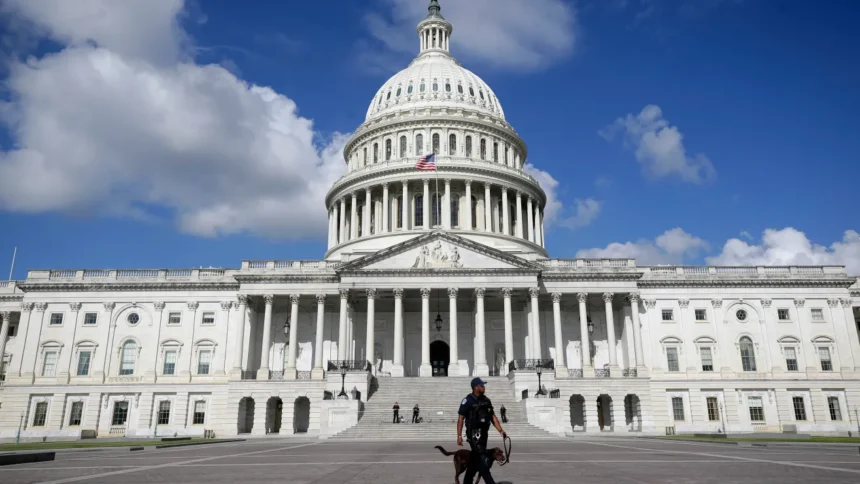
The partial U.S. federal government shutdown entered its 22nd day on Wednesday, becoming the second-longest in the nation’s history, trailing only the 35-day shutdown that occurred between 2018 and 2019 during the first term of Donald Trump.
By reaching its 22nd day, the current shutdown has surpassed what was previously the second-longest, which took place between December 1995 and January 1996 under President Bill Clinton.

The Senate has attempted to pass stopgap funding bills eleven times this year, most recently on Monday, but neither Republicans nor Democrats have secured the required 60 votes.
Democrats are demanding the inclusion of an extension of Obamacare subsidies, which Republicans—who have stated they will not negotiate while the shutdown continues—oppose, claiming without evidence that the healthcare program benefits undocumented immigrants.
With no sign of an agreement between the two parties, another vote is expected today in the Senate, where Republicans have said that if their proposal fails again, they will try to introduce a bill that would directly fund the pay of federal employees still working because they are considered essential to national security.
Credit: Jose Luis Magana | AP
The government shutdown enters its most critical phase later this week, as essential federal workers were scheduled to receive their paychecks this Friday for the period between October 5 and 18.

If the shutdown continues, they will not receive payment, which is expected to increase pressure on groups like air traffic controllers, a workforce with significant leverage due to the shortage of professionals in the sector.
Sickouts by air traffic controllers—which led to the cancellation of a large number of flights—sparked the deal that ended the previous 35-day government shutdown, the longest in U.S. history.
Image: Opinion