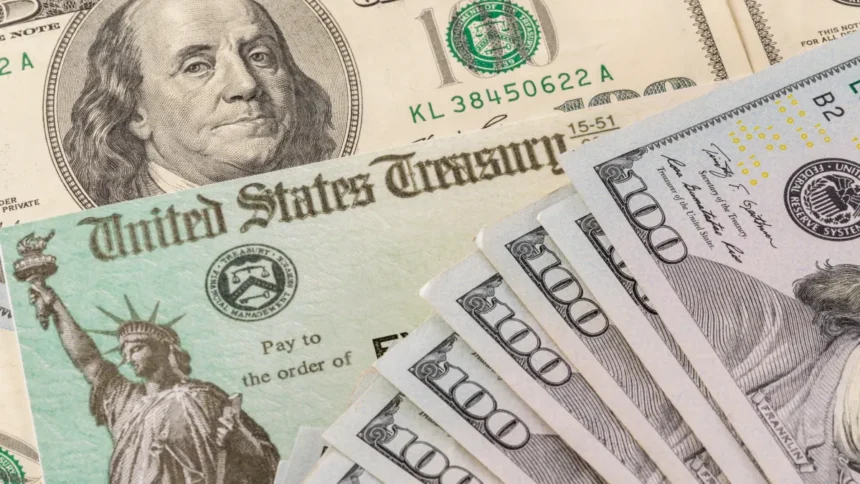
Last week, rumors resurfaced that the Donald Trump administration would issue stimulus checks to certain taxpayers based on their income levels.
Here’s what you need to know:

What do the rumors say?
The rumors claimed that the Internal Revenue Service (IRS) and the Department of the Treasury had supposedly approved $1,390 stimulus checks to be distributed to low- and middle-income taxpayers by the end of the summer.
Will the stimulus checks actually arrive?
According to an IRS spokesperson, this is NOT true.
“There is no recovery rebate credit that taxpayers can claim.”
Even if these checks had been planned, Congress has not approved any legislation to authorize them.

Republican Senator Josh Hawley of Missouri introduced a bill last month that would provide tax rebates to qualifying taxpayers, using revenue from tariffs imposed by President Donald Trump. Hawley’s bill has not been approved by either the Senate or the House of Representatives.
Authorities believe the rumors are related to a December 2024 announcement, in which the IRS stated it “would issue automatic payments… to eligible individuals who did not claim the Recovery Rebate Credit on their 2021 tax returns.”
The rebate credit was refundable for individuals who did not receive one or more pandemic stimulus checks due to COVID-19.

The agency stated that no action was required and that payments would be made in January 2025. The maximum amount was $1,400 per person.
Taxpayers who had not yet filed their 2021 tax returns could still qualify at that time but had to meet the April 15 deadline to claim the credit.
Since then, no new credits have been requested, according to the IRS.

What are stimulus checks?
Stimulus checks, also known as economic impact payments, are authorized by Congress through legislation and distributed by the Department of the Treasury.
Previous stimulus checks were authorized through legislation passed by Congress. For example, payments during the coronavirus pandemic were made possible by three bills: the Coronavirus Aid, Relief, and Economic Security Act; the COVID-related Tax Relief Act; and the American Rescue Plan Act.
In 2008, stimulus checks were authorized in response to the Great Recession through the Economic Stimulus Act.
The Department of the Treasury, which includes the Internal Revenue Service (IRS), distributed stimulus payments during the COVID-19 pandemic and the Great Recession. The Bureau of the Fiscal Service, created in 2012, also played a role during the previous crisis.
What has been proposed so far?
In July, Hawley introduced the American Workers Rebate Act, which would share tariff revenue with qualifying Americans through tax rebates. The proposed rebates would amount to a minimum of $600 per person, with additional payments for each qualifying child. Rebates could increase if tariff revenue exceeds projections. Taxpayers with adjusted gross annual incomes above a certain threshold ($75,000 for those filing individually) would receive a reduced rebate.
Hawley stated that Americans “deserve a tax rebate.”
“As proposed by President Trump, my legislation would allow working Americans to benefit from the wealth that Trump’s tariffs are bringing back to this country,” Hawley said in a press release.
Neither the Senate nor the House of Representatives had approved the American Workers Rebate Act as of Friday. The Senate read the bill twice on July 28, the day it was introduced, and referred it to the Finance Committee.
Image: T51