If an undocumented immigrant possesses a firearm in the United States, what would the consequences be? This combination of undocumented status and firearm possession carries extremely serious legal repercussions at both the federal and state levels.
From a legal perspective, it is one of the most dangerous “red lines” for any immigrant. Here’s why and what the consequences are:

1. The Trigger: A Massive Audit
Under U.S. federal law, specifically 18 U.S.C. § 922(g)(5), it is a felony for any person who is illegally or unlawfully in the United States to possess, ship, transport, or receive firearms or ammunition.
No exceptions: It does not matter if the firearm was legally purchased by someone else, if it is for self-defense, or if it was found. The mere fact of having “constructive possession” (having access to or control over the firearm) is enough for an arrest.
Ammunition: The law even prohibits possessing bullets; it is not necessary to have the complete firearm to violate this federal law.
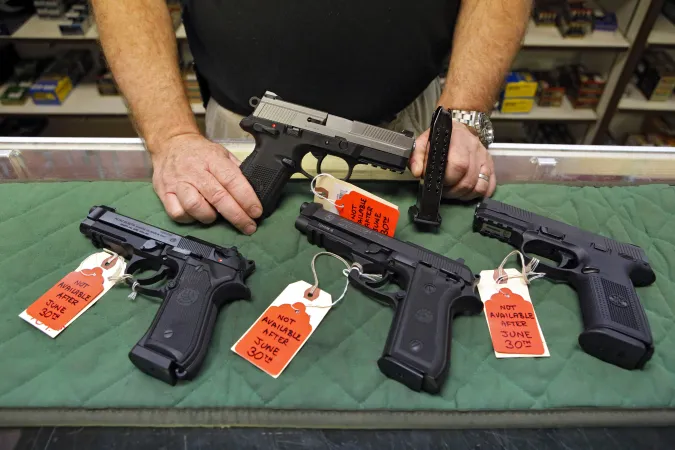
Credit: Ed Andrieski | AP
2. The New “EIV-SAVE Tenant Match Report”
If an undocumented immigrant is caught with a firearm, they face a judicial “double whammy”:

Federal Prison: Sentences can reach up to 10 or 15 years in federal prison, depending on prior record and circumstances.
Immediate Deportation: Firearm possession is one of the categories of crimes that trigger automatic deportability. Additionally, it is often classified as an “aggravated felony” or a “crime of moral turpitude,” which permanently blocks any future pathway to obtaining residency or citizenship (permanent inadmissibility).
No Right to Bail: In many cases, these charges result in mandatory detention by ICE with no possibility of release on bail while the case is resolved.

3. Legal Framework and Executive Order
It is a common misconception that sanctuary city policies protect individuals in this situation. While these cities limit cooperation with ICE on minor offenses, firearm possession is a serious crime.
In most jurisdictions, police will immediately notify federal agencies (ATF and DHS) of a firearm charge.

Warning: Even if the state where the person lives has “Constitutional Carry” laws, federal laws always take precedence over state laws on immigration and firearms.
Image: Opinion