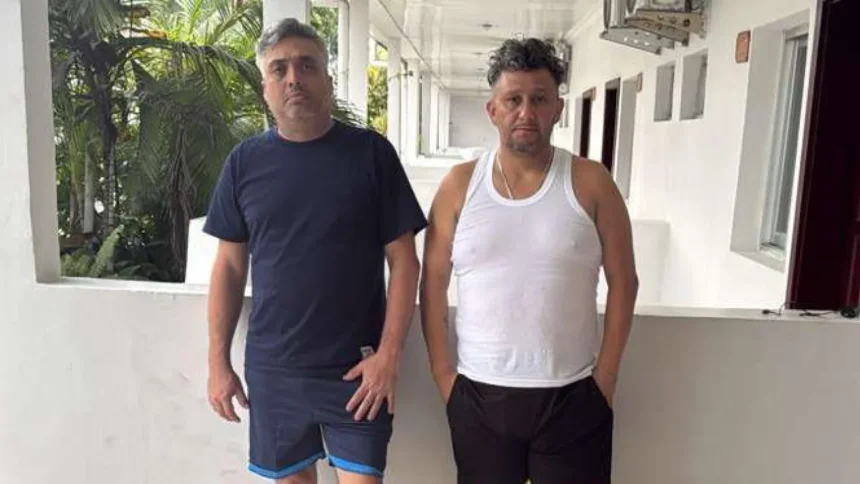
The Unexpected Banishment: Why Is the U.S. Sending People to the Heart of Africa?
The phrase echoes in immigration lawyers’ offices in Texas and Florida: “I never thought I’d end up in Africa.” For many, Congo is just a place on a map, not their home. Yet, in recent months, U.S. Immigration and Customs Enforcement (ICE) has ramped up deportation flights to the Democratic Republic of the Congo (DRC), leaving entire families in a legal and cultural limbo that borders on the inhumane.
- The Unexpected Banishment: Why Is the U.S. Sending People to the Heart of Africa?
- The Legal Void of Terror: How Is It Possible to Send a Colombian to Africa?
- The Banishment Board: Key Data from the U.S.-Congo Agreement
- “Worse Than a Nightmare”: Jorge Cubillos’ First Days in Kinshasa
- International Response and the Future of the Banished
- The Legal Labyrinth: How Does One Reach This Point?
- The Stories Behind the Numbers: “I’m More American Than Congolese”
- ICE’s “Turn”: Secret Flights or Standard Procedures?
- Advice for Families Facing an Active Deportation Order
The truth is, this isn’t just about changing countries; it’s a forced civilizational shock for people who, in many cases, barely speak the local languages or have a single support network on the African continent.

Quick Answer: U.S. deportations to Congo have increased due to the resumption of migration cooperation agreements and the tightening of asylum policies for citizens who fail to demonstrate a “credible fear” specific to the new regulations. This includes not only native Congolese but also individuals with uncertain legal status whom the system labels as “repatriable” based on technical documentation, often ignoring their ties to the U.S.
The Legal Void of Terror: How Is It Possible to Send a Colombian to Africa?
This is the question repeated by lawyers and activists. It’s not an ICE mistake. It’s a cold, calculated legal engineering.
The “Double Barrier” Mechanism
Let’s be clear about how the system trapped Cubillos. Jorge, a native of Bogotá, applied for asylum upon arriving in the U.S. in 2018, claiming life threats from guerrilla groups. An immigration judge granted him what’s known as Withholding of Removal.
Here’s the deadly trap of the Trump administration:
- Protection is limited: Withholding only prohibits the U.S. from deporting the person to their country of origin (Colombia).
- The “Safe” Third Country: It does not prohibit sending them to any other country that agrees to receive them and where, technically, they would not face direct persecution for the same reasons.
Taking advantage of this technical distinction, and under the Trump administration’s tougher immigration policies, the U.S. began implementing third-country agreements with nations like Congo, Ghana, Cameroon, Uganda, and Rwanda.

The Banishment Board: Key Data from the U.S.-Congo Agreement
| Element | Agreement Details (April 2026) |
| Affected Population | Migrants with final deportation orders who cannot be returned to their countries (e.g., those with withholding). |
| First Group Number | 15 Latin Americans (Colombians, Peruvians, Ecuadorians). |
| Funding | Fully covered by the U.S. (Logistics, transportation, “aid” to the Congolese government). |
| Migrant Status in Congo | “Temporary” reception with the promise of a temporary Congolese visa process. |
| Current Situation | Stranded in a hotel in Kinshasa, assisted by the IOM (UN). |
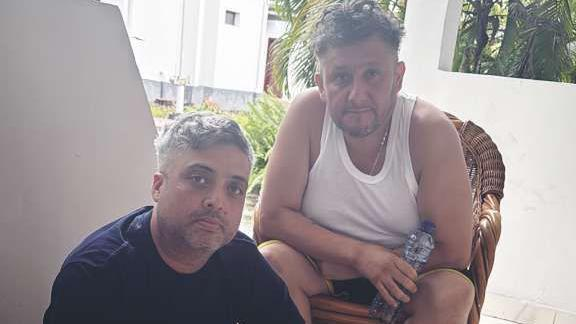
“Worse Than a Nightmare”: Jorge Cubillos’ First Days in Kinshasa
“Waking up in detention, thinking it’s not real, and then waking up on the other side of the world in an African country, you say, ‘This nightmare is worse.’”
This is the raw account Cubillos shared with Hispanic media. The reality in Congo for these 15 Latinos is devastating. Did anyone really think about the humanitarian logistics? Probably not—just about the deportation numbers.
Survival Challenges:
- Language and Cultural Barrier: The group doesn’t speak Lingala or technical French, the local languages. They’re isolated.
- Health Collapse: Cubillos reported falling ill after receiving the mandatory yellow fever vaccine upon arrival.
- Insecurity and Lack of Resources: They report no drinking water, constant power outages, and fear of going outside in an unfamiliar city with high crime rates. They feel intimidated.
- Family Trauma: Jorge’s wife, who remains in Orlando, Florida, with their four children, described the news as if she’d been told: “Your husband just died.”
International Response and the Future of the Banished
Jorge Cubillos’ case and the “15 of Congo” have sparked outrage. Colombian President Gustavo Petro reacted harshly on social media, calling the measure “ostracism” and ordering the foreign ministry to bring the Colombians back “immediately and without chains.”
However, the legal path is complex. The U.S. legally expelled them under its domestic law. Repatriation to Colombia now depends on Petro’s government’s willingness and a complex diplomatic process with Congo.

What lies ahead for our community? This case is a warning. The Trump administration has shown there are no geographical limits to its “zero tolerance” policy. If you have a family member with a final deportation order, even with temporary protections, seek specialized emergency legal advice.
The Legal Labyrinth: How Does One Reach This Point?
It doesn’t happen overnight. The U.S. deportation machine operates with cold logic. Most of these cases involve asylum seekers who crossed the southern border and were processed under Title 8.
Here’s the interesting part: Many of the deportees claim their credible fear interviews were rushed or that translators didn’t understand the nuances of their dialects or political situations.
Factors That Speed Up Deportation to Congo:
- Lack of documentary evidence: If the applicant doesn’t present physical proof of political persecution in the DRC, the system assumes deportation is safe.
- Minor criminal records: Even non-violent crimes can nullify any temporary protection (like DACA or TPS, which currently doesn’t apply to Congo).
- Opaque diplomatic agreements: The U.S. maintains a complex relationship with Kinshasa’s government, where accepting deportees is sometimes used as diplomatic leverage.
The Stories Behind the Numbers: “I’m More American Than Congolese”
Let’s be clear. Imagine someone who arrived in the U.S. at age 5. They speak perfect English, their Spanish is fluent from living in Latino communities, and their only connection to Congo is a yellowed birth certificate. Upon landing at N’Djili International Airport, they face a brutal reality: police corruption, lack of infrastructure, and the stigma of being a “deportee.”
| Challenge in Congo | Deportee’s Reality | Psychological Impact |
| Language | Many speak English/Spanish, not Lingala or technical French. | Total isolation and vulnerability. |
| Health | Limited access to medications that are common in the U.S. | Risk of death from treatable diseases. |
| Security | The eastern Congo is in active conflict (rebel groups). | Constant fear of being recruited or killed. |
Do we really need to send people who don’t know the territory to conflict zones? Ethics say no, but current immigration law has no feelings.
ICE’s “Turn”: Secret Flights or Standard Procedures?
Various human rights organizations have reported that flights to Africa are carried out with a level of discretion bordering on secrecy. Unlike mass deportations to Mexico or Central America, flights to Congo are costly and logistically heavy.
Why so much effort? Because the system aims to send a “zero tolerance” message. No matter how far your country of origin is, if the judge signs the order, the plane will take off.
The Danger of “Mistaken Identity”
There are alarming reports of people sent to Congo who claim to belong to neighboring nations (like Angola or Rwanda). The administrative chaos in African border regions makes it easy for the U.S. to “label” an immigrant as Congolese simply based on their ancestors’ original port of departure, leading to fatal geographical errors.
Advice for Families Facing an Active Deportation Order
If you have a family member in a detention center with a removal order to Africa, time is your worst enemy. Don’t wait until the last minute.
- Request for Stay of Removal: This is an emergency measure based on humanitarian reasons or new evidence of a risk of death in the destination country.
- Contact the Consulate: Ironically, sometimes the consulate of the country of origin may refuse to issue travel documents if you prove the person has no real ties there.
- Document Ties to the U.S.: Photos, tax records, church letters—anything that shows this person’s life is in the U.S., not Africa.
Critical Note: Most deportees to Congo end up homeless in Kinshasa or attempting to migrate illegally to Europe, repeating the cycle of migratory trauma.
Image: ElHispanoParaTodos/PREESS