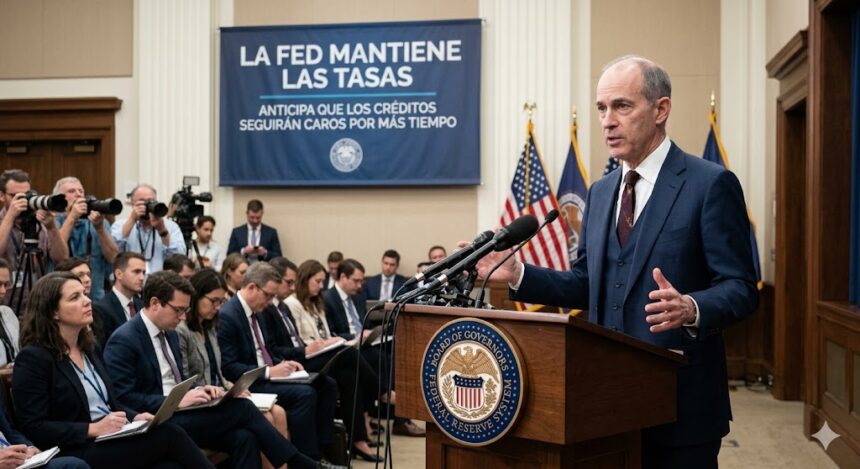
Indeed, the Federal Reserve (Fed) confirmed its decision to keep interest rates in the 3.50% to 3.75% range. This was the first monetary policy meeting under the chairmanship of Kevin Warsh.
However, the central bank’s message was clear: the era of expensive money will continue, and further increases are not ruled out.

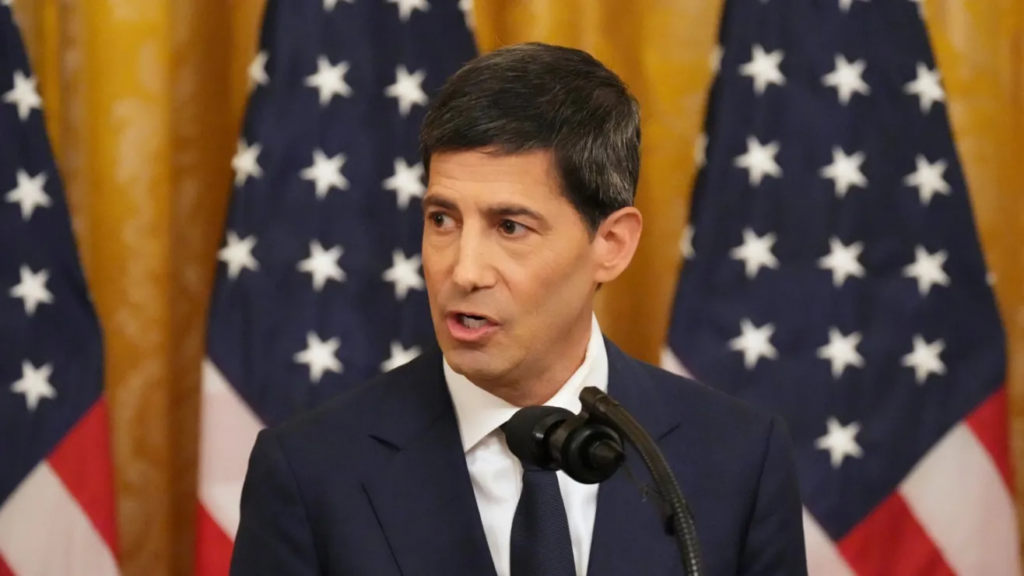
This decision, adopted unanimously by the Federal Open Market Committee (FOMC), marks a significant turning point as the first monetary policy meeting officially chaired by Kevin Warsh.
Why Will Loans Remain Expensive?
- Persistent inflationary pressure: The Fed noted that inflation remains elevated compared to its 2% target. This is largely due to supply shocks affecting key sectors such as energy, influenced by global uncertainty and the conflict in the Middle East.
- Adjustment in projections (Dot Plot): Committee members significantly raised their year-end forecast. The median estimate now places the interest rate at 3.8%, up from the 3.4% projected in March.
- Door open to further hikes: Far from anticipating an imminent rate cut as markets had hoped months ago, the updated macroeconomic outlook strongly suggests that a rate hike could be decided before the end of 2026.
- Strong economy: The central bank justified its restrictive stance by explaining that the U.S. economy continues to expand at a “solid pace,” supported by capital investment and productivity growth, along with a stable labor market.
The Fed’s New Style
Beyond the numbers, this meeting made clear the shift in direction under Warsh’s leadership. In line with his stated intention to reduce the central bank’s excessive communication, the official statement issued was notably shorter than usual and eliminated forward guidance on the future path of rates, introducing a greater dose of caution and surprise for upcoming meetings.
For citizens and businesses, the outlook is clear: refinancing debt, applying for mortgages, or securing commercial loans will continue to require paying high interest rates for the coming months.
Understood. Since the outlook is clear and the Fed has firmly maintained its stance on expensive money, the real question is not just what the central bank did, but how it affects you and what actions you should take.

When rates stay “higher for longer,” the rules of the financial game change. Here’s a survival guide for this restrictive credit environment:
Winners and Losers of High Rates
Not everyone suffers from this decision; the impact depends on which side of the equation you’re on:
| Sector / Profile | Impact | Why? |
| Savers and Investors | Winners 🟢 | High-yield savings accounts and certificates of deposit (CDs) will continue to offer very attractive rates with no risk. |
| Homebuyers | Losers 🔴 | Mortgages will remain high, reducing families’ purchasing power and cooling the housing market. |
| Highly Leveraged Businesses | Losers 🔴 | Refinancing debt will cost them much more, which could directly impact their profits and expansion plans. |
Action Plan: What Should You Do Now?
1. In Your Personal Finances
- Freeze your variable-rate debts: If you have credit cards or lines of credit with floating rates, now is the time to pay them down aggressively or consolidate them into a fixed-rate loan. Don’t expect relief from the Fed anytime soon.
- Switch to “aggressive saver” mode: While credit punishes borrowers, it rewards savers. Look for fixed-income instruments that allow you to lock in current yields before things change in the long term.
- Be cautious with big purchases: If you were planning to buy a car or a home with financing, crunch the numbers assuming that this rate is the new normal. Don’t buy expecting to refinance at a lower rate next year.
2. If You’re a Business Owner or Entrepreneur
- Cash flow is king: Access to external capital is expensive and difficult. Prioritize your business’s internal liquidity instead of relying on bank credit lines.
- Demand higher returns on your projects: Any expansion plan must now compete against the opportunity cost of expensive money. If a new project doesn’t generate a return significantly higher than the cost of interest, it’s better to pause it.
The key at this moment: Kevin Warsh’s Fed is no longer providing detailed hints about its next move (forward guidance), meaning the market will operate with more uncertainty than usual. In such environments, caution and liquidity are your best allies.
Image: ElHispanoParaTodos/PRESS