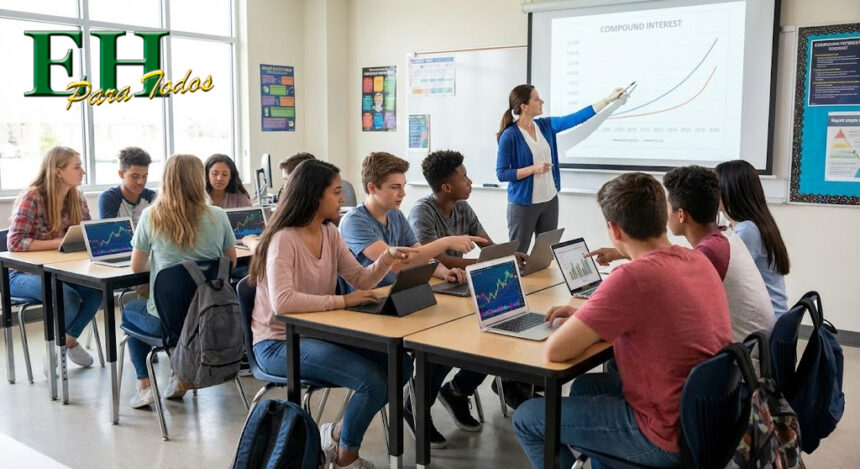
Do your kids know how to invest, or just how to spend? High schools across the U.S. are adopting financial literacy programs with stock simulators and ‘Reality Fairs’ to teach what truly matters.
What good is the Pythagorean Theorem if I can’t file my taxes?
Let’s be honest for a second. Most of us left high school knowing how to diagram a sentence or solve for ‘X’ in an equation, but completely terrified of a credit card or a mortgage. For decades, the U.S. education system failed at the basics: teaching young people how to survive in the capitalist jungle.

But the tide is turning. And it’s turning fast.
Right now, a quiet revolution is sweeping through the halls of high schools across the United States. It’s no longer just about theory; schools are implementing ‘Reality Financial Fairs,’ real-time stock simulators, and student-run credit unions.
The goal is simple but vital: let students make their financial mistakes with ‘Monopoly money’ at 16, so they don’t lose their real home at 30.
Beyond the textbook: The ‘Hands-On’ approach
Forget those economics classes where a teacher draws supply and demand curves on the board while students doze off. The new financial education is visceral, practical, and sometimes stressful. Just like real life.

States like Florida, Ohio, and California are leading mandates requiring financial literacy credits, but what’s interesting is the how.
1. ‘Reality Fairs’
Imagine this: Your teenage child walks into the school gym. They’re assigned a new identity: ‘You’re a 24-year-old welder, married, with one child, and you earn $45,000 a year.’
From there, they have to visit different booths and make decisions:

- Housing: Luxury apartment or shared studio?
- Transportation: New SUV or used sedan?
- Luxuries: Netflix and a gym membership or basic cable?
At the end of the exercise, they must balance their budget. Spoiler: Most end up in the red and have to start over—returning the sports car. This ‘reality check’ teaches more in two hours than a semester of theory.
2. The Stock Market in the Classroom
Thanks to platforms like The Stock Market Game or simulated apps, students receive $100,000 in virtual money. They must research companies, diversify portfolios, and watch how their ‘investments’ rise or fall with real-world news.
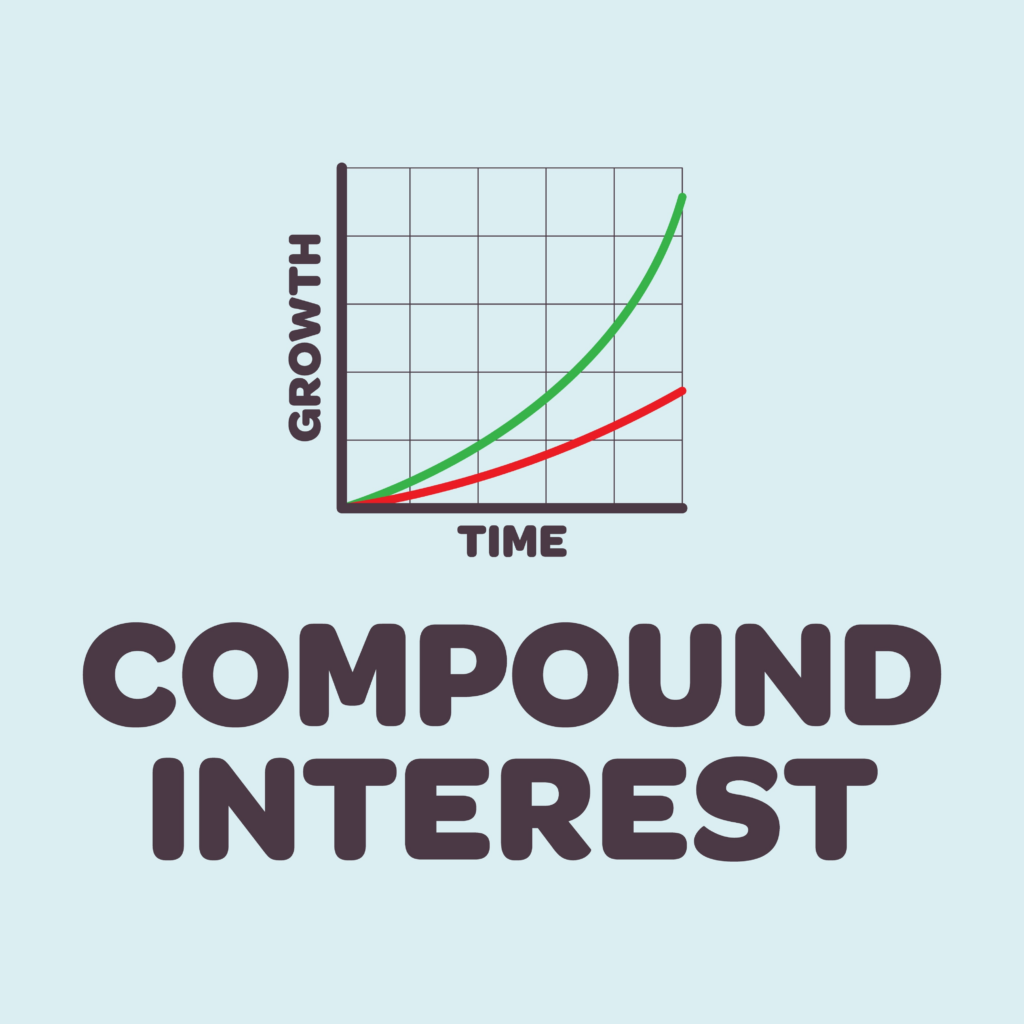
- The lesson: They learn the stock market isn’t a casino but a long-term growth tool (compound interest).
- The impact: Many discover that keeping money ‘under the mattress’ (a common habit in our Hispanic community) means losing money to inflation.
Technology: Apps that teach how not to drown in debt
Schools are using technology that speaks the language of Gen Z. These aren’t boring Excel spreadsheets; they’re gamified interfaces.
- Budget Challenge: A 10-week simulation where students receive real bills (electricity, cell phone, rent) and must pay them on time through an app. If they’re late, they’re charged fees. If they misuse a credit card, their score drops.
- Banzai!: An interactive ‘choose your own adventure’ software where students face dilemmas like: ‘Do I fix the car or save for college?’
| Traditional Method (Old) | ‘Hands-On’ Method (Current) |
| Read about what a check is. | Manage a virtual bank account for 3 months. |
| Calculate simple interest on paper. | Watch how credit card debt grows day by day in an app. |
| Listen to lectures about the stock market. | Compete with classmates to see who gets the best return on investment (ROI). |
School Credit Unions: Real Banking, Real Money
This is the expert level. Some high schools have partnered with local credit unions to open real bank branches inside the school.
- The tellers: Trained students (part of their business class).
- The customers: Other students and teachers.
- The lesson: They learn about confidentiality, cash handling, customer service, and the importance of opening a savings account early.
‘We’re not raising accountants; we’re raising functional adults. If a kid understands how compound interest works on a credit card, they’re less likely to go into debt over a $200 pair of sneakers.’ — Texas FinLit Program Director.
The Hispanic Angle: Why this matters for us
This is where I get serious. Our community is hardworking and tireless. But often, we lack education about investing and credit. We come from countries where banks aren’t trustworthy or where the economy is unstable.
When U.S. schools teach this, they’re breaking generational chains.
- Fear of credit: They teach that credit isn’t bad; it’s a tool if used wisely (to buy a home, not for consumption).
- FAFSA and Student Loans: A big part of these modern curricula focuses on understanding student debt before signing the promissory note. This prevents our youth from graduating with unmanageable debt.
Conclusion: Demand more from your child’s school
If you live in a state where this isn’t mandatory, ask about it. Go to the school board. Practical financial education isn’t a luxury; it’s a vaccine against poverty. Teaching our kids how to earn money is important, but teaching them how to keep and grow it is what will change their future.
AI-generated image for illustrative purposes.