

Which Latin American regions face the highest risk of droughts and floods due to El Niño, and how it affects Florida
Translated with AI from the original article in Spanish. Leer la noticia original en español
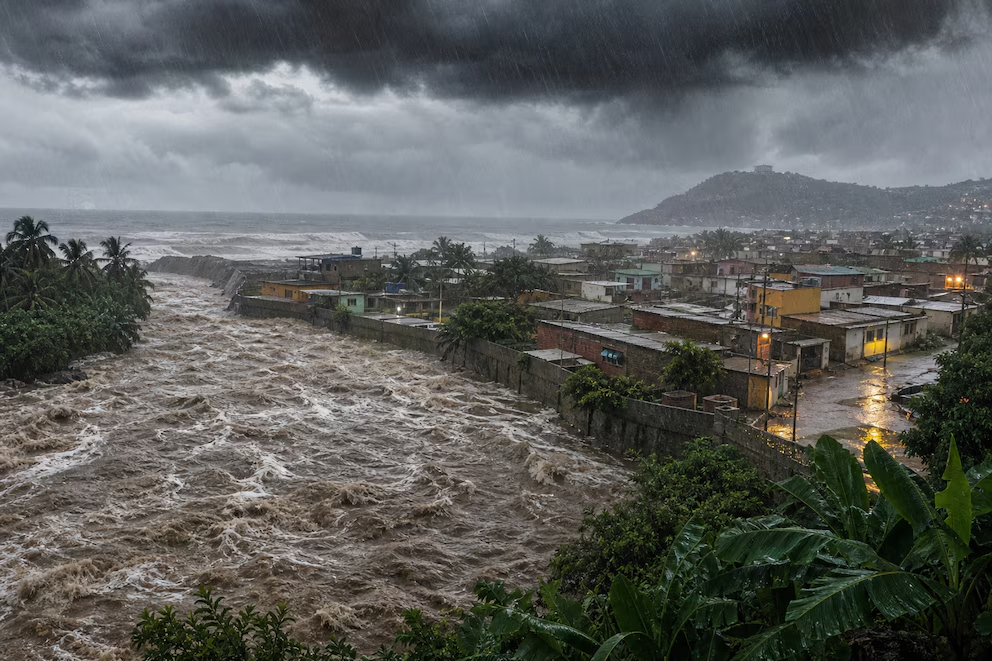
According to Felipe Costa, director of the International Center for the Research of the El Niño Phenomenon (CIIFEN), Latin America is facing a scenario of extreme climate contrasts driven by the entry of El Niño into the "very strong" category. Measurements record sustained thermal anomalies exceeding 2 °C on the surface of the equatorial Pacific and deviations of up to 8 °C below the ocean surface (in the first 200 meters of depth), with a probability of over 80% of breaking historical records registered since 1950 during its peak between October and December 2026.
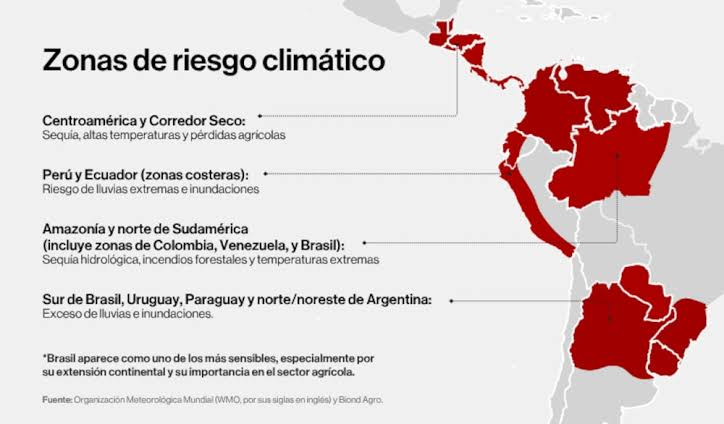
The following map illustrates how climate risk zones are distributed across the continent, highlighting the contrast between water deficits in the north and excess rainfall on the Pacific coast and the Southern Cone:
Regions with the highest risk of drought and water deficit
Abnormal ocean warming alters atmospheric circulation and inhibits rainfall formation in the northern strip of the continent, in addition to raising air temperatures between 2 °C and 4 °C above normal:
- Central America and the Dry Corridor: Especially in agricultural areas of Guatemala, Honduras, and El Salvador, where the rainfall deficit and high temperatures directly impact basic grain harvests and water reserves.
- Northern South America: Covers much of Colombia, Venezuela, and the Guianas, regions with a high probability of below-normal rainfall, reduced river flow, and impacts on hydroelectric generation.
- The Amazon Basin: Includes northern and north-central Brazil, as well as Amazonian sectors of Colombia and Peru, where prolonged hydrological drought severely increases thermal stress and the risk of forest fires.
Regions with the highest risk of extreme rainfall and flooding
In contrast, the accumulation of warm waters off the South American coast and changes in trade winds boost torrential rainfall in the center and south of the region:
- Equatorial Pacific Coast: The coastline of Ecuador and the northern coast of Peru (regions such as Piura, Tumbes, and Lambayeque) face the direct impact of coastal thermal anomalies of up to 7 °C, which triggers the risk of extraordinary rainfall, river overflows, and landslides.
- Plata Basin and Southern Cone: Comprises southern Brazil, Uruguay, Paraguay, and northern and northeastern Argentina, areas where the strengthening of the phenomenon generates a sustained excess of rainfall and severe flooding.
- Andean Strip and Chile: Sectors of Bolivia and the central zone of Chile also record precipitation projections above historical averages during the development of the event until the first quarter of 2027.
The El Niño phenomenon impacts the agricultural sector of Latin America through a double front of productive loss and food inflation: while the suppression of rainfall destroys basic grain harvests in the north of the continent and Central America, excess rainfall and ocean warming hit export crops, livestock, and fishing on the Pacific coast and the Southern Cone.
Will the El Niño phenomenon impact the climate and agriculture in South Florida?
During the 2026-2027 winter season, the El Niño phenomenon—with projections to reach very strong intensity—directly alters the usual climate pattern in the state of Florida. By positioning the subtropical jet stream further south, the state experiences a much more active, humid, and stormy season.
1. Impact on climate and winter rainfall
- Increased precipitation: A wetter-than-normal winter is expected throughout Florida, especially concentrated in the north and center of the state. Cold fronts coming down from the continent collide with subtropical moisture, generating frequent rounds of storms and considerable water accumulation.
- Higher risk of severe weather and tornadoes: One of the most characteristic effects of strong El Niño events in Florida is the significant increase in wind shear. This boosts the risk of severe storms, squall lines, and a higher frequency of winter tornadoes on the peninsula.
- Temperatures and cloud cover: Cloudier skies will predominate, which will moderate daytime heat extremes, although with marked thermal fluctuations every time a frontal system crosses the region. As a positive aspect, the risk of forest fires decreases drastically due to soil moisture saturation.
2. Effects and challenges in Florida's agricultural sector
The regime of continuous rain and atmospheric instability poses ambivalent operational and sanitary challenges for the state's agricultural producers:
- Winter vegetables (tomatoes, peppers, strawberries, and zucchini):
- The challenge: Excessive rain and high relative humidity notably increase the pressure of fungal and bacterial diseases (such as bacterial spot, gray mold, and anthracnose).
- Yield: The growth of crops like strawberries usually slows down due to less sunlight and excess water in the furrows, requiring intensive phytosanitary monitoring.
- Citrus and pome/stone fruit:
- The challenge: Constant rainfall hinders harvesting work and can cause temporary waterlogging in poorly drained soils.
- Cold accumulation: Winters under the influence of El Niño often alter the accumulated cold hours necessary to break dormancy in certain temperate fruits (such as blueberries or peaches), forcing producers to adjust treatments and regulator applications.
- Livestock and pastures:
- The benefit: Winter pastures initially benefit from the constant supply of moisture, improving the availability of green forage.
- The risk: Excessively saturated and muddy soils complicate livestock management, increase pasture compaction, and raise the incidence of parasites or hoof conditions in animals.
Recommended management measures
Agricultural extension agents and meteorological agencies recommend that local producers prioritize the preventive cleaning and desilting of drainage systems in fields and greenhouses, reinforce preventive fungicide application programs in anticipation of high humidity, and ensure livestock is sheltered in high areas to mitigate the impact of flash floods associated with winter storm fronts.