

Port St. Lucie moves forward with $2.2 billion mobility plan to expand roads
Translated with AI from the original article in Spanish. Leer la noticia original en español
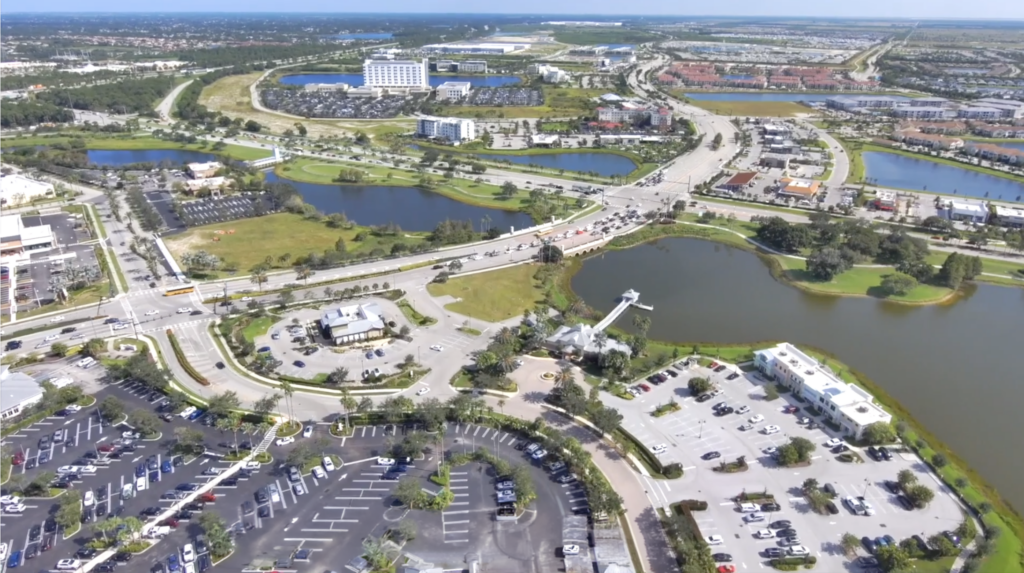
The Port St. Lucie City Council approved on first reading Ordinance 26-89 for the 2050 Mobility Plan, which seeks to improve traffic and road infrastructure with a $2.2 billion investment.
Years of rapid growth have brought thousands of new homes, businesses, and drivers to the city of Port St. Lucie. Now, municipal leaders face the challenge of maintaining vehicular and pedestrian flow for everyone, a challenge that will have an estimated cost of $2.2 billion.
This Monday, City Council members approved Ordinance 26-89 on first reading. This measure formally advances the city's 2050 Mobility Plan, introducing an updated mobility fee schedule and the administrative guidelines required to manage the program.
The plan functions as a 25-year roadmap for the construction of new and wider roads, structural improvements to intersections, construction of sidewalks, trails, bicycle infrastructure, and new public transportation options that would improve the city's mobility.
However, authorities warn that its inclusion in this document does not guarantee that all projects will be executed. Currently, about $1.7 billion contemplated in the plan lacks assigned funding.
The urgency of this plan is based on the exponential growth of Port St. Lucie, whose population has exceeded 250,000 residents, distributed over an area of approximately 120 square miles. The updated plan seeks to identify the exact infrastructure that will be required by the area's continued residential and commercial development through the year 2050.
Main road projects proposed for 2030
The plan divides the proposed works into short, medium, and long-term timeframes. The short-term phase (projects planned to be carried out before 2030) carries an estimated cost of $403 million. Key works proposed for this first stage include:
- Widening St. Lucie West Boulevard from four to six lanes (between Interstate 95 and Cashmere Boulevard).
- Widening Torino Parkway from two to four lanes (between Midway Road and Cashmere Boulevard).
- Widening California Boulevard from two to four lanes (between St. Lucie West Boulevard and Crosstown Parkway).
- Widening Port St. Lucie Boulevard from two to four lanes (between Paar Drive and the Martin County line).
- Continuing improvements along Floresta Drive (between Prima Vista Boulevard and Crosstown Parkway).
- Widening Village Green Drive (between Walton Road and Tiffany Avenue).
- Constructing or extending various collector roads to improve connections in the city's fastest-growing areas.
Authorities clarified that these projects are part of a preliminary planning document; their inclusion does not guarantee that funds are secured or that they will be built within the stipulated 2030 timeframe.
Simultaneously, the city government highlighted works already completed, underway, or in the design phase under the current mobility program. This includes the recent roundabout at East Torino Parkway and Midway Road, the ongoing widening of Port St. Lucie Boulevard, new sidewalks on Savage Boulevard and Selvitz Road, and intersection improvements at Tradition Parkway and Village Parkway.
New developments will bear the highest costs
To help fund this ambitious transportation network, the ordinance updates the city's so-called mobility fees. These are one-time charges mandatorily applied to new developments, redevelopments, expansions, and certain commercial changes of property use.
Authorities emphasized that these fees legally fall on real estate developers and contractors, not on current residents. However, during Monday's session, it was debated how builders would inevitably pass this expense on to the final prices of new homes or commercial leases, impacting the city's affordability.
The fee increase will not happen all at once. The difference between the current fee and the new calculation will be implemented in a staggered manner over four years: 25% of the increase will take effect in 2027, 50% in 2028, 75% in 2029, until reaching the full rate in 2030.
For example: the current impact fee for a new single-family home located east of I-95 is approximately $1.60 per square foot. Under the new scheme, it would rise to $1.80 in 2027 and reach $2.40 in 2030. For a standard 2,000-square-foot home, the charge would go from the current $3,200 to nearly $4,800 by the end of the decade.
An approach that goes beyond private vehicles
Port St. Lucie has applied mobility fees since 2021. According to city financial records, the program managed to collect more than $30 million between 2022 and 2024 alone. Unlike old "road impact fees," the mobility fee model provides the city with legal flexibility to invest in improvements that do not exclusively involve roads for cars. These funds can be lawfully used for sidewalks, shared-use paths, protected bike lanes, public transit stops, and multimodal interconnection centers.
Given that the vote on September 21, 2026, was only the first reading of the ordinance, the document will need to return to the full City Council for debate and final approval. If enacted, the updated fee schedule would officially take effect.