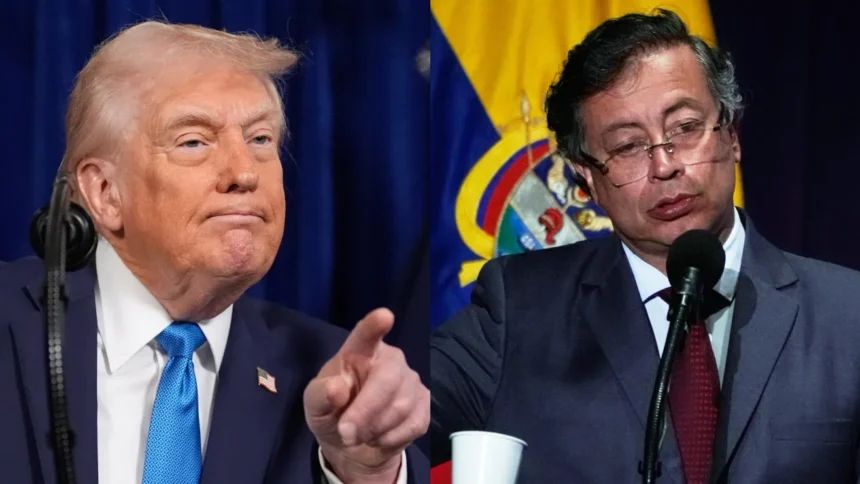
President Donald Trump confirmed that he spoke with his Colombian counterpart, Gustavo Petro, and will receive him at the White House, days after suggesting he might carry out a military operation in Colombia similar to the one in Venezuela.
“It was a great honor to speak with the president of Colombia, Gustavo Petro, who called me to explain the drug situation and other disagreements we’ve had. I thanked him for the call and his tone, and I look forward to meeting with him soon,” Trump wrote on his Truth Social platform.

The U.S. president added that Secretary of State Marco Rubio and Colombia’s Foreign Minister are making “the necessary arrangements” for the meeting and confirmed it will take place at the White House.
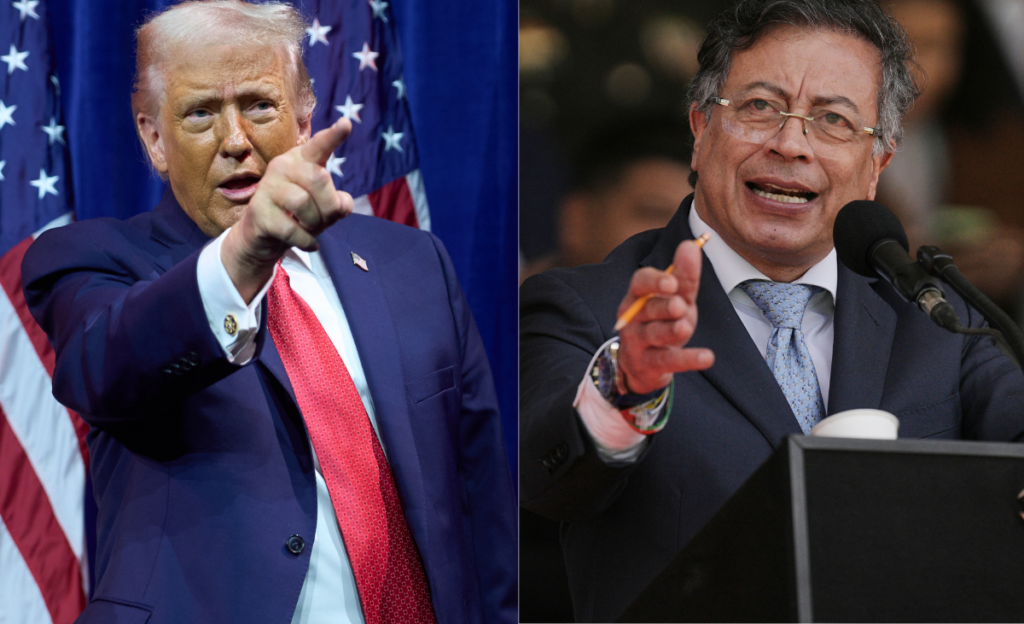
Petro Requests Restoring Communications
Petro, speaking to thousands of people at a rally in Bogotá’s Plaza de Bolívar, explained that this was the first direct conversation with Trump since he began his second term in January 2025 and that it lasted approximately an hour or more.
During the call, he said, he urged Washington to restore contact between both foreign ministries and presidencies to facilitate institutional exchanges.
“If there’s no dialogue, there’s war. History has taught us that in Colombia,” Petro stated.

The context of this call comes after a year of disagreements between Bogotá and Washington, which included mutual accusations, sanctions, changes in anti-drug cooperation status, and diplomatic accusations from both leaders.
Tensions Between Trump and Petro
The request to restore communications follows Trump’s threats of military action against Colombia similar to those carried out in Venezuela on January 3, an operation that ended with the capture of Nicolás Maduro, an event the Colombian president has openly criticized.
The bilateral relationship has been tense since January, when Petro blocked the entry of flights carrying deported U.S. citizens, citing a lack of dignified treatment.

Though the crisis that day was contained, disagreements deepened with accusations of conspiracy, differences over international policy, and U.S. decisions that affected Colombia’s status in the fight against drug trafficking.
Additional measures included canceling the Colombian president’s visa and placing him on the so-called Clinton List, while contacts have been limited to sporadic meetings with the U.S. chief of mission in Bogotá, without a direct channel between foreign ministries.
Image: DiarioNY