

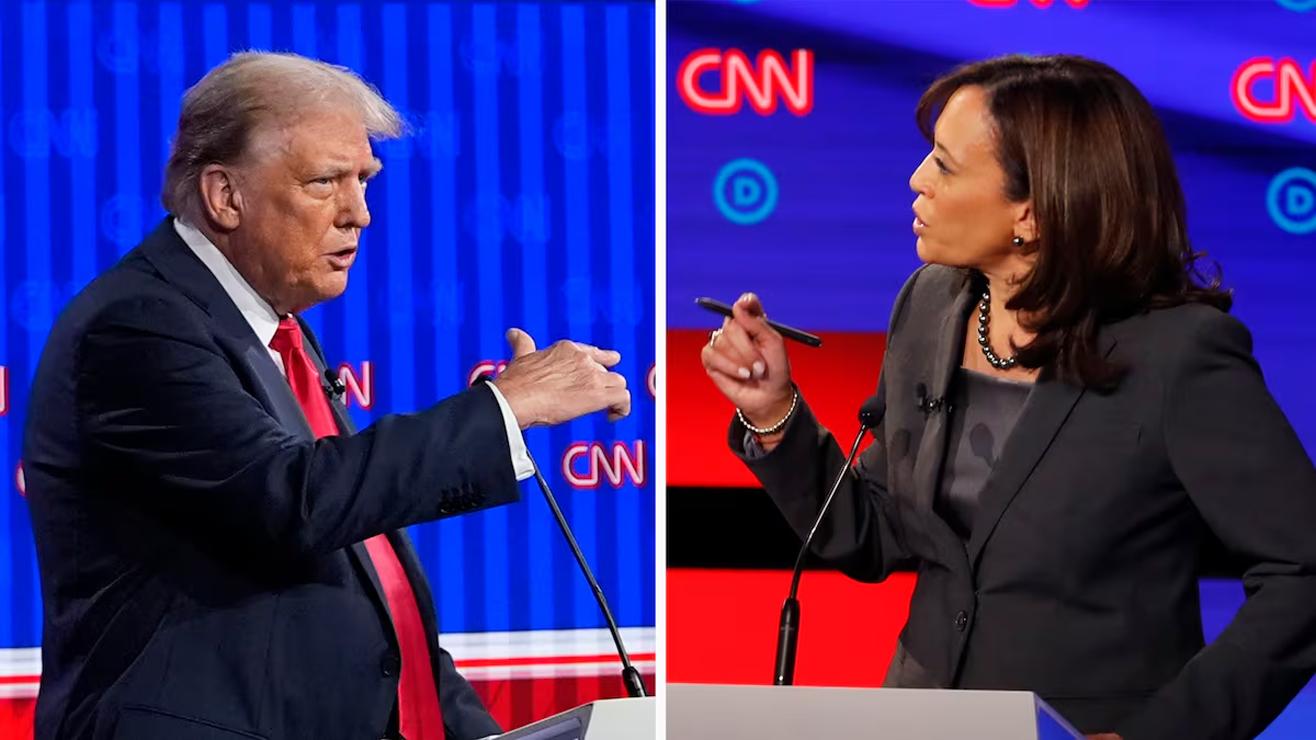
In November, Republican candidate Donald Trump will face current Vice President and Democratic candidate Kamala Harris, after President Joe Biden dropped out of the race.
- In November, Republican candidate Donald Trump will face current Vice President and Democratic candidate Kamala Harris, after President Joe Biden dropped out of the race.
- Donald Trump:
- After the start of the war between Israel and Hamas in October, Trump also promised to revoke the visas of “Hamas supporters.”
- The former president has also promised to “put parents back in charge and give them the final say” in education.
- A second Trump administration would pursue violations of the Establishment and Free Exercise Clauses of the Constitution in schools, which prohibit the government from establishing a religion and protect citizens’ right to practice their own religion, he said.
- Trump also said in May that he did not support banning contraceptives. He previously said he was “looking into it” when asked if he supported contraceptive restrictions.
- Trump has also committed to “appointing federal prosecutors who will be the opposite of Soros district attorneys and others being appointed across the United States.”
- Trump refused to commute Ulbricht’s sentence during his presidency.
- Trump also addressed his strategy to end “endless wars” by promising to remove “warmongers,” “frauds,” and “failures from the top ranks of our government” and replace them with national security officials who defend U.S. interests.
- Trump has promised to lower energy prices by increasing domestic production.
- As part of a broader strategy to bring jobs back to the U.S., Trump also said he would implement his so-called “America First” trade agenda if elected.
- The former president has also talked about reducing the corporate tax rate from the current 21% to 15%.
- Kamala Harris
- Harris also wants to expand the Earned Income Tax Credit to cover low-income workers without children (which, according to campaign estimates, would reduce their effective tax rate by $1,500).
- Harris promises to reduce the bureaucracy that restricts the construction of new homes. But that is mainly a state and local concern.
- Trump’s applied only to some insulin products covered by a voluntary subset of Part D plans.
- Still, prices remain higher overall than just a couple of years ago.
Here are some key points from the candidates’ proposals for the U.S. presidency…

Donald Trump:
He has said he plans to finish building the wall between the United States and Mexico, which he first promised in 2016, deport all undocumented immigrants, impose more tariffs on imports, and increase U.S. energy production.
Eliminate income tax on tip earnings. He has also floated ambitious but vague ideas to position the United States for the future, embracing flying cars, promoting cryptocurrency, and promising to build 10 new “Freedom Cities.”
In a second term, Trump could unleash the Department of Justice against his political enemies, purge the federal government of disloyal bureaucrats, and consolidate power in the executive branch.
Trump promised: (I will use) “the Alien Enemies Act to deport gang members, drug dealers, or known or suspected cartel members from the United States.” “We will transfer massive portions of federal law enforcement to immigration law enforcement, including parts of the DEA, ATF, FBI, and DHS,” he wrote.

In a video posted on Truth Social in late February before his border visit, Trump also promised to “carry out the largest domestic deportation operation in American history.”
In June, however, Trump proposed automatically granting green cards to foreign citizens who graduate from U.S. universities.
After the start of the war between Israel and Hamas in October, Trump also promised to revoke the visas of “Hamas supporters.”
The former president has also made the “war” against drug cartels a priority for his second term. If elected, Trump said in his November 2022 campaign announcement that he would ask Congress to ensure that drug and human traffickers could face the death penalty for their “atrocious acts.”

Trump also promised to “end” drug cartels by imposing naval blockades, cutting off cartels’ access to global financial systems, and using special forces within the Department of Defense to target cartel leaders.
In a September 2023 campaign video, Trump announced plans to shut down the Department of Education and send “all education and work and educational needs back to the states.”
The former president has also promised to “put parents back in charge and give them the final say” in education.
In a January 2023 campaign video, the former president said he would give funding preferences and a “favorable deal” to schools that allow parents to choose principals, abolish K-12 teacher tenure, use merit pay to incentivize quality teaching, and reduce the number of school administrators, such as those overseeing diversity, equity, and inclusion initiatives.
Trump also said he would cut funding for schools that teach critical race theory and gender ideology.
In a later speech, Trump said he would restore the 1776 Commission, which was launched during his previous administration to “teach our values and promote our history and traditions to our children.”
The former president said he would direct the Department of Justice and the Department of Education to investigate civil rights violations involving racial discrimination in schools, and that he would also remove “Marxists” from the Department of Education.
A second Trump administration would pursue violations of the Establishment and Free Exercise Clauses of the Constitution in schools, which prohibit the government from establishing a religion and protect citizens’ right to practice their own religion, he said.
Trump has also promised to fund free online classes using funds seized from private university donations.
Last November, Trump promised in a series of Truth Social posts to replace the Affordable Care Act, commonly known as Obamacare.
A Trump attempt to repeal and replace Obamacare failed in 2017 after three Republican senators joined Democrats to vote against the bill.
Trump also promised in a June 2023 campaign video to reinstate his previous executive order requiring the U.S. government to pay the same price for pharmaceuticals as other developed countries.
Biden revoked some of the former president’s pharmaceutical policies. Trump said in April that he would not sign a federal abortion ban and has taken the stance that abortion laws should be decided by the states.
Trump also said in May that he did not support banning contraceptives. He previously said he was “looking into it” when asked if he supported contraceptive restrictions.
Trump added in a campaign video that he would issue an executive order directing federal agencies to cut programs that promote gender transitions, in addition to asking Congress to stop the use of federal funds to promote and pay for gender-affirming procedures.
The former president added that his administration would not allow hospitals and healthcare providers to meet federal health and safety standards for Medicaid and Medicare if they provide chemical or physical gender-affirming care to minors.
Trump has promised to use the Department of Justice to target his critics and former allies.
Trump said in a campaign video last year that he would reinstate a 2020 executive order to remove “dishonest” bureaucrats and propose a constitutional amendment to limit the terms of members of Congress.
To address the “troubling” relationship between tech platforms and the government, the former president said in a January 2023 video that he would enact a seven-year cooling-off period before employees of agencies like the FBI or CIA could work for platforms that oversee massive user data.
Trump has also committed to “appointing federal prosecutors who will be the opposite of Soros district attorneys and others being appointed across the United States.”
In a September 2023 speech in Washington, D.C., Trump also announced that he would appoint a task force to review the cases of people who, he claimed, had been “unjustly persecuted by the Biden administration.”
Trump said he wanted to “study the situation very quickly and sign their pardons or commutations on day one.” This is a measure that could lead to potential pardons for many January 6 insurrection rioters.
At the May Libertarian Convention, Trump also promised to free Ross Ulbricht, the founder of the online black market Silk Road, who is serving a life sentence for money laundering, drug trafficking, and computer hacking.
Trump refused to commute Ulbricht’s sentence during his presidency.
In addressing policies in what Trump calls the “Democrats’ war on police,” the former president promised in a campaign video to approve a “record investment” to hire and retrain police, strengthen protections like qualified immunity, increase penalties for assaulting law enforcement officers, and deploy the National Guard when local police “refuse to act.”
The former president added that he would require law enforcement agencies receiving money from his financial investment or the Department of Justice to use “proven common-sense measures,” such as stop-and-frisk.
Trump has continued his attacks on NATO member countries, a European and North American defense alliance.
At a rally in South Carolina earlier this year, Trump said he would not comply with the alliance’s collective defense clause and would encourage Russia to do “whatever the hell they want” if a member country did not meet spending guidelines.
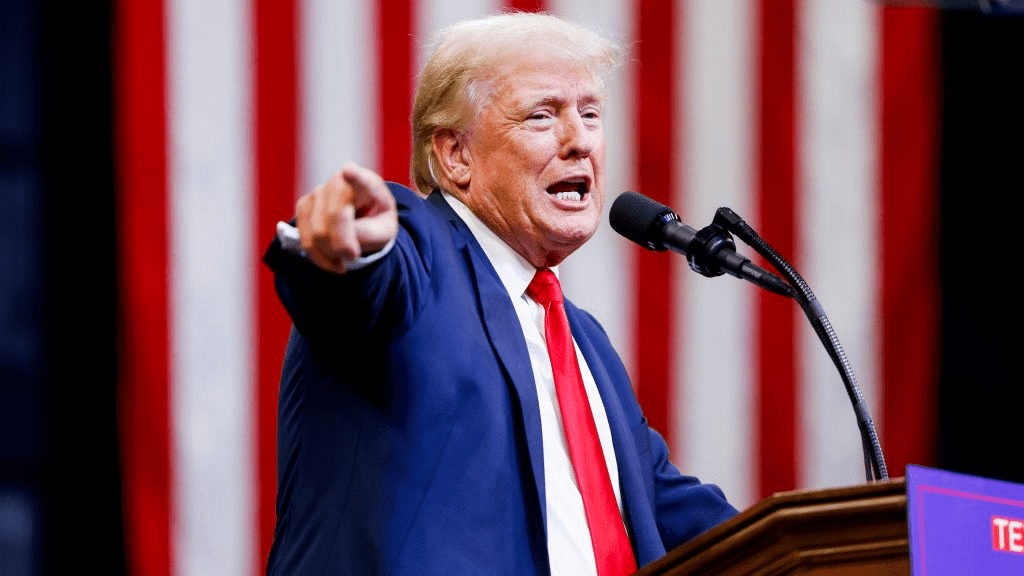
Trump also addressed his strategy to end “endless wars” by promising to remove “warmongers,” “frauds,” and “failures from the top ranks of our government” and replace them with national security officials who defend U.S. interests.
Additionally, Trump has said he would reinstate his “wonderful” travel ban on people from several majority-Muslim countries to “keep radical Islamic terrorists out of our country,” after Biden revoked the ban in 2021.
Trump said in several campaign videos that he would lead an effort to build so-called “Freedom Cities” to “reopen the border, reignite American imagination, and give hundreds of thousands of young people and others—all working families—a new opportunity to own a home and, in fact, (live) the American dream.”
Under his plan, the federal government would create 10 new cities on federal land and award them to the areas with the best development proposals. The former president said in a campaign video that Freedom Cities would bring back American industry, economic opportunities, and affordable living.
Trump has promised to repeal new vehicle pollution rules at the Environmental Protection Agency that could require electric vehicles to make up as much as two-thirds of new cars sold in the U.S. by 2032.
Trump has promised to lower energy prices by increasing domestic production.
Regarding other energy sources, Trump has also shifted his tone on the expansion of offshore wind farms, which he had promoted early in his presidency as part of a broader push to “unleash the forces of economic innovation to more fully develop and explore our ocean economy.”
Trump has also promoted cryptocurrency mining in the United States, an industry that has become significantly more dependent on fossil fuels.
Bitcoin mining is energy-intensive, as servers require vast amounts of energy to solve a complex series of algorithms to verify transactions.
In February, Trump promised to impose “tough sanctions on China and other trade abusers.”
Under his proposed “Trump Reciprocal Trade Act,” the former president said that if other countries impose tariffs on the U.S., the country would impose a “reciprocal, identical” tariff in response.
As part of a broader strategy to bring jobs back to the U.S., Trump also said he would implement his so-called “America First” trade agenda if elected.
By establishing universal tariffs on most foreign products, the former president said Americans would see taxes decrease as tariffs increased.
His proposal also includes a four-year plan to phase out all Chinese imports of essential goods, as well as preventing China from buying American products and stopping U.S. companies from investing in China. Trump also said in February that he would consider imposing a tariff of more than 60% on all Chinese imports if reelected.
In a meeting with Republican congressional lawmakers in June, Trump also suggested replacing federal income taxes with high tariffs, according to a Reuters report.
ECONOMYTrump has promised to extend the cuts from his 2017 Tax Cuts and Jobs Act (TCJA), particularly the TCJA’s individual income tax exemptions.
The former president has also talked about reducing the corporate tax rate from the current 21% to 15%.
Trump has also pledged to repeal Biden’s tax hikes, “immediately address” inflation, and end what he called Biden’s “war” on American energy production.
Trump also pledged to end taxes on tips, a measure aimed at attracting hundreds of thousands of people who work in the city.
The former president also promised that the government would not infringe on citizens’ Second Amendment rights.
Trump added that he would revoke Biden’s equity executive order, which required federal agencies to deliver equitable outcomes in policies and conduct equity training.
If elected, he would fire staff hired to implement Biden’s policy and then reinstate his 2020 executive order banning racial and sexual stereotypes in the federal government.
Kamala Harris
Vice President Kamala Harris unveiled her economic agenda on Friday in Raleigh, North Carolina.
Her plans include a proposal for a federal ban on what she called food price gouging, as well as a $25,000 down payment assistance for certain first-time homebuyers and tax incentives for homebuilders.
She also spoke extensively about reducing the cost of medications and lowering health insurance premiums through the Affordable Care Act.
She emphasized tax breaks for families, as well as for middle- and low-income individuals, and promised to expand the Child Tax Credit to $3,600, and $6,000 for children in their first year of life.
Harris also wants to expand the Earned Income Tax Credit to cover low-income workers without children (which, according to campaign estimates, would reduce their effective tax rate by $1,500).
Housing shortage and helping buyersHarris said: “By the end of my first term, we will end the housing shortage in the U.S. by building 3 million new homes and rentals… Additionally, it will give first-time homebuyers $25,000 to help them with the down payment.”
These promises, the AP agency noted, could end up having contradictory effects.
By helping more Americans buy a home, Harris’s proposal to subsidize down payments would increase demand at a time when housing shortage estimates already range between 3 and 7 million.
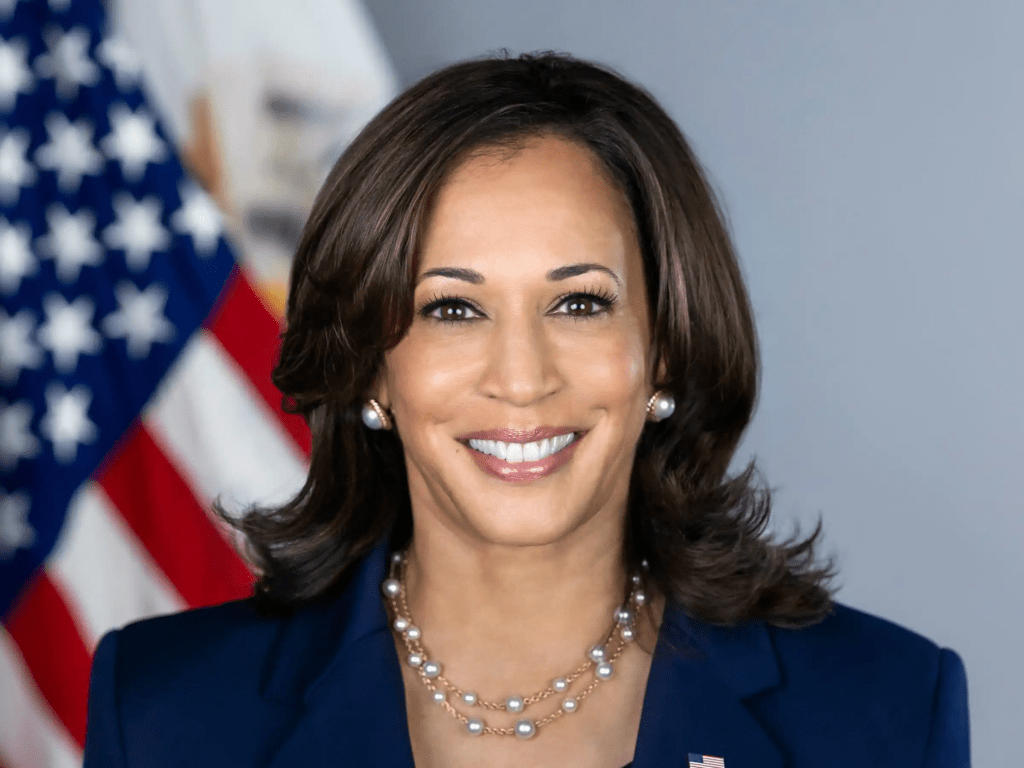
Harris’s proposal to provide tax incentives to builders to encourage the construction of more homes and apartments would address that concern, but there are many reasons experts cite for the housing shortage.
Among them are restrictive zoning laws, higher material costs, and even a shortage of construction workers, which tax incentives cannot solve.
Harris promises to reduce the bureaucracy that restricts the construction of new homes. But that is mainly a state and local concern.
Harris said: “I will lower the cost of insulin and prescription drugs for everyone.”
Harris made this promise in reference to the 2022 Inflation Reduction Act, which allows Medicare to negotiate drug costs directly with pharmaceutical companies.
While it is difficult to predict whether she can fulfill it, recent policy may provide some clues.
Both the Trump and Biden administrations achieved $35 insulin copay caps for certain Medicare beneficiaries.
Biden’s caps have a broader scope, as they apply to all insulin products covered by any Medicare Part D or Part B plan, according to the nonprofit health policy research organization KFF.
Trump’s applied only to some insulin products covered by a voluntary subset of Part D plans.
Federal ban on “food price gouging” in supermarketsHarris said: “As president, I will tackle the high costs that matter most to most Americans… And I will work to pass the first federal ban in history on food price gouging.”
While food prices are 25% higher than before the pandemic four and a half years ago, they have stabilized recently, and it is unclear whether there is much price gouging now.
In the last 12 months, food prices increased by an average of just 1.1%, comparable to pre-pandemic increases.
Additionally, the prices of most goods and services, in general, do not fall significantly except in deep recessions.
Instead, most economists expect wages to rise enough for Americans to adjust to higher costs.
Still, prices remain higher overall than just a couple of years ago.
The impact of Trump’s proposed tariffsHarris said: Trump “wants to impose what is already in place, a national sales tax on everyday products and basic necessities that we import from other countries… And, as you know, economists have done the math.
Donald Trump’s plan would cost a typical family $3,900 a year.” Most economists expect Trump’s proposals to increase the prices of many goods.
The Tax Policy Center, a joint project of the policy studies organizations Urban Institute and the Brookings Institution, estimates that it would reduce the average income of the top 60% of earners by 1.8%.
And the Center for American Progress Action Fund, a progressive group, has calculated that higher tariffs would cost households an additional $3,900 per year.
However, Trump has said that tariff revenue could be used to cut other taxes, and that it would reduce the overall cost.
Image: CNN





