New Florida Housing Law: The Legal ‘Trick’ to Expand Your Home and Make Money
Did you know Florida is debating a law to allow mini-homes in your backyard? Discover how House Bill 313 will change your family’s finances in 2026. Find out here!
Is Your Backyard Worth a Fortune? The Change in Florida Hispanic Families Have Been Waiting For
Living in Florida has become a high-stakes financial challenge. With skyrocketing insurance costs and relentless rent hikes, many Latino families have been forced to share housing or, worse, move farther from their workplaces. But take note: the Legislature is crafting a housing law in Florida that could be the biggest financial lifeline of the decade for homeowners.
It’s called House Bill 313, an initiative aimed at cutting red tape so you, as the owner of a single-family home, can build an Accessory Dwelling Unit (ADU)—those well-known “guest cottages” or independent studios—without needing zoning approval from the city.
Advertisement
Key Fact: If this law passes as proposed in 2026, local governments would be required to allow you to build these units, eliminating public hearings and years-long permitting processes.
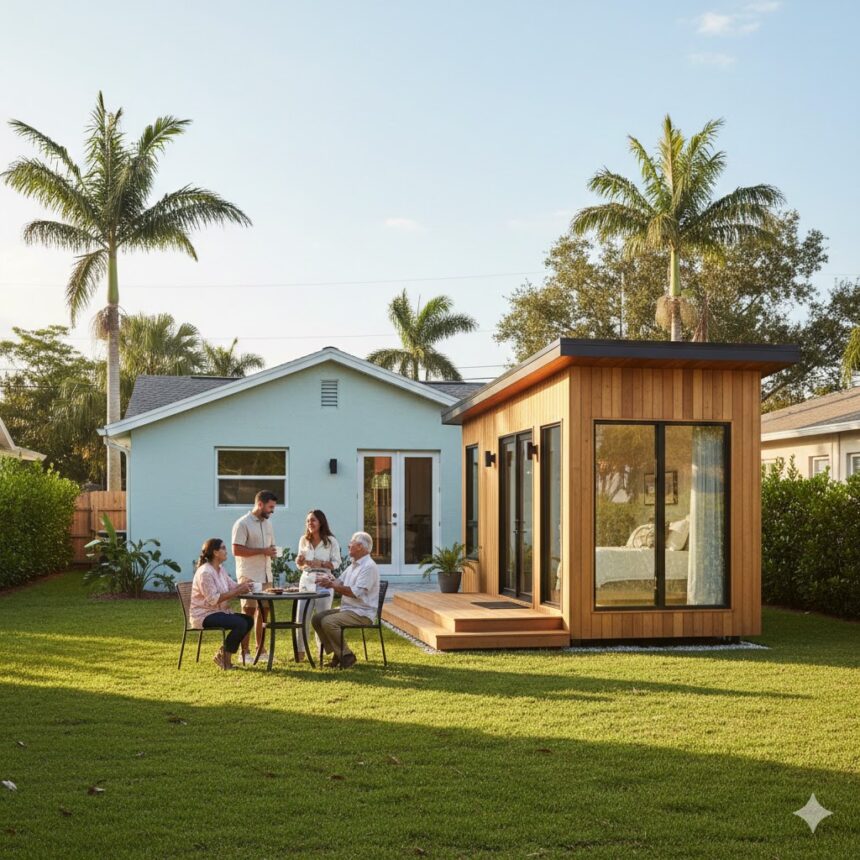
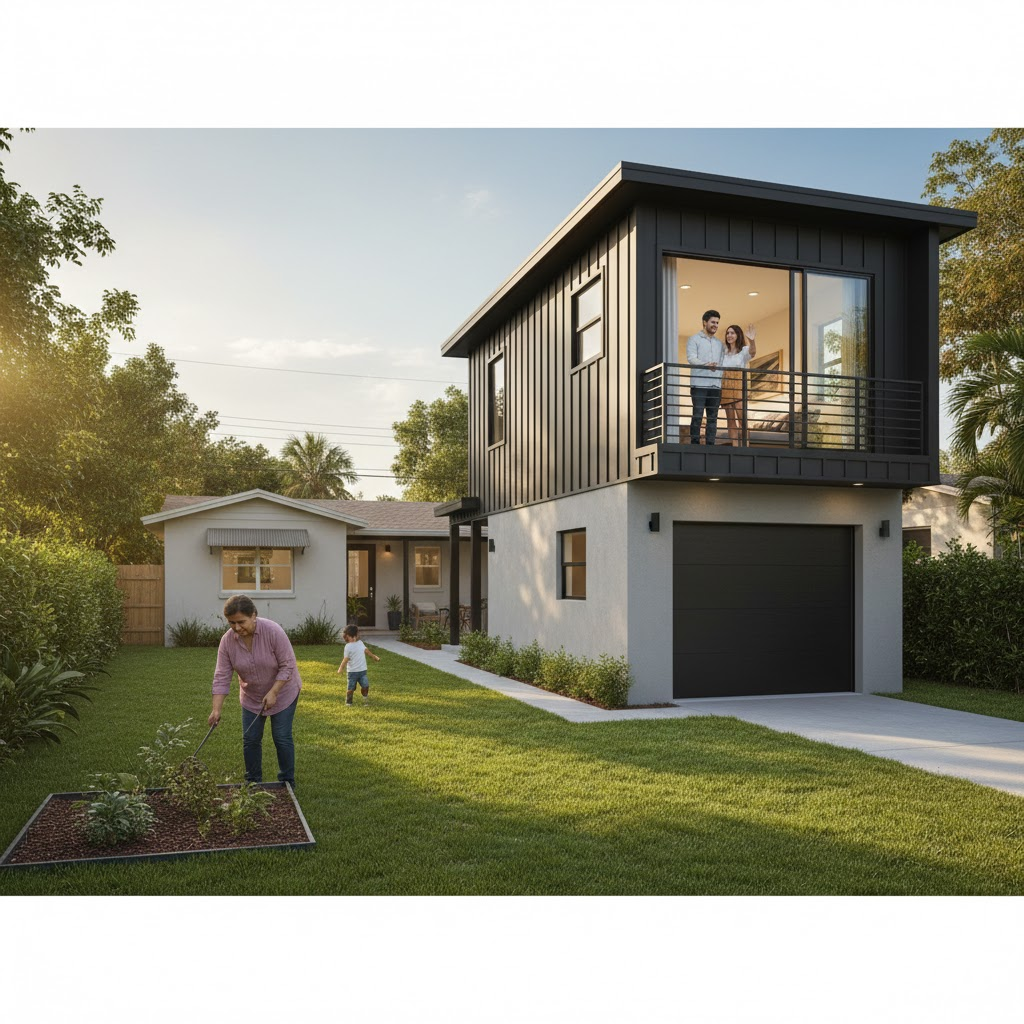
Families in Florida could build additional units on their properties to combat the housing crisis.Credit: ElHispanoParaTodos/PRESS
What Exactly Is House Bill 313, and Why Should You Care?
An “accessory dwelling unit” (ADU) is simply a second living space on the same lot as your home. It could be an apartment over the garage, a converted basement, or a small standalone structure in the backyard.
Historically, cities like Miami or Tampa have thrown up countless roadblocks to this. The new Florida housing law for 2026 aims to make the right to build automatic.
The 3 Pillars of Family Benefits:
Extra Income: You’ll be able to legally rent out that space to help pay the mortgage.
Multigenerational Living: Are your parents aging and you want them close? Is your child struggling to afford rent alone? This is the solution.
Increased Property Value: A property with a legal rental unit is worth significantly more in today’s market.
Comparison Table: Before vs. After the Law (Estimated 2026)
Feature
Previous Regulation (Local)
Proposed New Law (State)
Zoning Permits
Required costly public hearings.
Direct administrative approval.
Property Use
Restricted to “family members” in many areas.
Allows rentals to third parties (zoning-dependent).
Permitting Costs
Thousands of dollars in legal and architectural fees.
Simplified and standardized process.
Parking
Strict requirements for additional spaces.
Full flexibility to avoid overcrowding.
Not All Rosy: The Insurance and Tax Issues
This is where you need to read the fine print. While building an ADU sounds great, we can’t ignore that Florida is still grappling with an insurance crisis. Governor DeSantis recently announced premium cuts (up to 8.7%), but adding a living unit to your property will reassess its value.
What does this mean for you?
Advertisement
Your property taxes will rise: With more square footage, the county will assess your home at a higher value.
Your policy must be updated: Don’t try to hide the construction from your insurer. In Florida, such a mistake could leave you without coverage in a hurricane.
How to Prepare If You’re a Homeowner in Florida
The truth is, you don’t have to wait for the governor to sign the bill to start planning. If you have a backyard with enough space or a garage that’s just collecting old boxes, here’s your roadmap:
Check your property’s “Plat”: Review how much setback space your county currently requires. The state law will offer flexibility, but property lines are non-negotiable.
Budget for “Cottages”: Modern prefabricated units are becoming more affordable. Research options that comply with Florida’s building codes (especially wind resistance).
Consult a Homestead expert: If you live on the property, ensure the new construction won’t affect your Homestead exemption, which protects your assessed value.
“Do we really need to fill backyards with concrete? It may not be everyone’s aesthetic dream, but with today’s inflation, having $1,200 in rent coming in every month from a ‘cottage’ in the backyard is the difference between losing your home or living comfortably.”