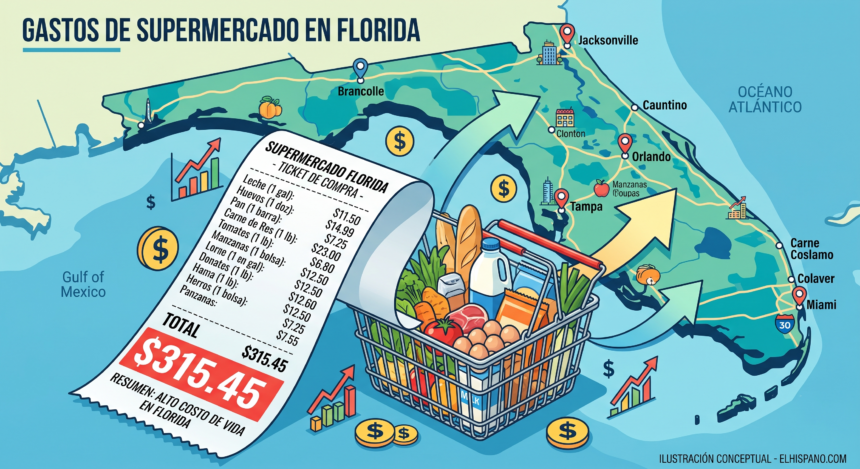
Cost of living: Even as national inflation shows signs of cooling, the “Sunshine State” continues to struggle with prices that severely strain residents’ wallets, particularly in housing and insurance.
By: EL HISPANO PARA TODOS Editorial Team

Florida, once considered an affordable haven for retirees and families looking to escape high taxes in the Northeast, has solidified its position as one of the most expensive states to live in the U.S. According to recent economic analyses, the cost of living in the state remains consistently above the national average, defying the trend of slowing inflation seen in other parts of the country.
The Housing Factor: A Cost Driver
The main driver of this high cost of living is, without a doubt, the housing market. Massive migration to Florida during and after the pandemic spiked demand, but supply has not been able to keep up.
While the growth in rental and home prices has moderated compared to the historic peaks of 2021 and 2022, baseline prices remain extremely high. Cities like Miami, Fort Lauderdale, Tampa, and Orlando regularly appear on lists of the most “overvalued” or least affordable housing markets for the average resident, whose salaries have not always grown at the same rate as their housing expenses.
The Insurance Crisis: A Unique Burden
Unlike other states, Florida faces an additional crisis squeezing homeowners: property insurance. Premiums have skyrocketed, in many cases doubling or tripling in just a few years.

This increase is driven by a combination of factors, including the frequency and intensity of hurricanes, the high cost of reinsurance, and excessive litigation that has plagued the industry in the state. Even renters feel the impact, as landlords pass these operational costs on to tenants. Auto insurance in Florida is also among the most expensive in the country, adding another layer of financial pressure.
Fact: Many middle- and lower-income residents are forced to dedicate a disproportionate share of their income to housing and insurance, cutting back on other essential expenses.
Food and Utilities: No Relief
Grocery and utility costs don’t offer much relief either. While food inflation is a national issue, it hits harder in Florida due to logistics and transportation costs. Residents often report that their electricity bills and other utilities continue to rise, driven by high demand from the heat and infrastructure costs.
A Paradise at a High Price
Florida’s appeal—its climate, beaches, and lack of a state income tax—continues to attract new residents. However, for many who already live there, the economic reality has become unsustainable. The gap between average income and the cost of maintaining a basic quality of life has widened considerably.

While state lawmakers seek solutions, particularly in the insurance sector, the cost of living in Florida remains a structural challenge that is redefining the state’s reality and raising questions about its long-term affordability.