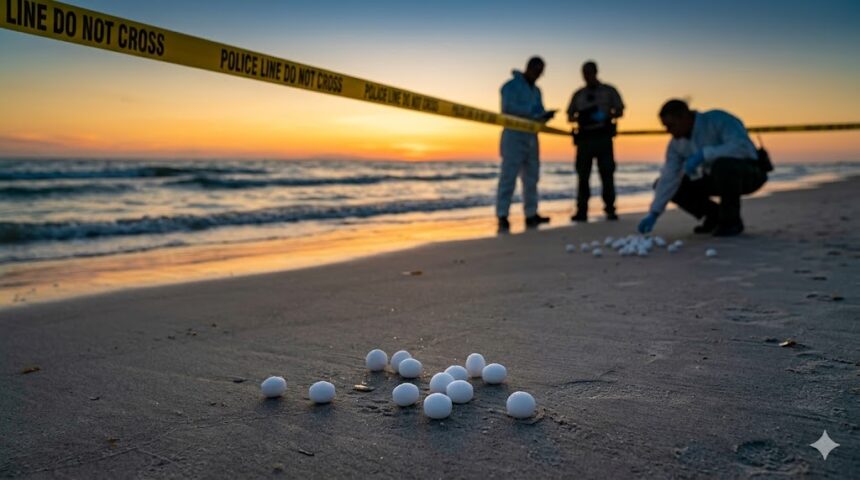
Imagine walking along the white sand of a beach in Volusia or Flagler County, expecting the scent of saltwater, only to be hit with a sharp chemical odor—that “grandma’s closet” smell, but a thousand times stronger—filling your lungs. It’s no coincidence. Hundreds of mothballs have invaded Florida’s coasts, and authorities don’t believe it’s an accident.
The truth is, this goes beyond simple marine debris. We’re facing a possible deliberate act that threatens local wildlife and the safety of those who enjoy the ocean.

What’s really happening on our beaches?
Currently, the Florida Department of Environmental Protection (DEP) and local agencies are conducting an open investigation into a possible intentional dumping of naphthalene (a chemical derived from coal tar or petroleum) in coastal areas. Contact with these spheres can cause severe respiratory irritation and even neurological damage if handled without protection.
The Discovery: A Chemical Puzzle in the Sand
What began as an isolated report from a beachgoer has turned into a coordinated cleanup effort. The mothballs, small but deadly due to their concentration, didn’t arrive on their own.
Here’s the interesting part: naphthalene doesn’t naturally float in the ocean for long periods without degrading—unless it was recently released in large quantities.

Why Is an Intentional Act Suspected?
- Abnormal Distribution: They don’t follow the pattern of a typical shipwreck, where debris disperses with the current.
- Material Purity: Analyzed samples show they haven’t been exposed to the sun long enough, suggesting a recent “landing.”
- Frequency: Reports coincide in geographic locations that don’t usually receive offshore ocean trash.
Critical Note: If you see something that looks like a white candy or a perfectly round little stone in the sand, do not touch it. A child’s curiosity or your pet’s nose could end up in the emergency room.
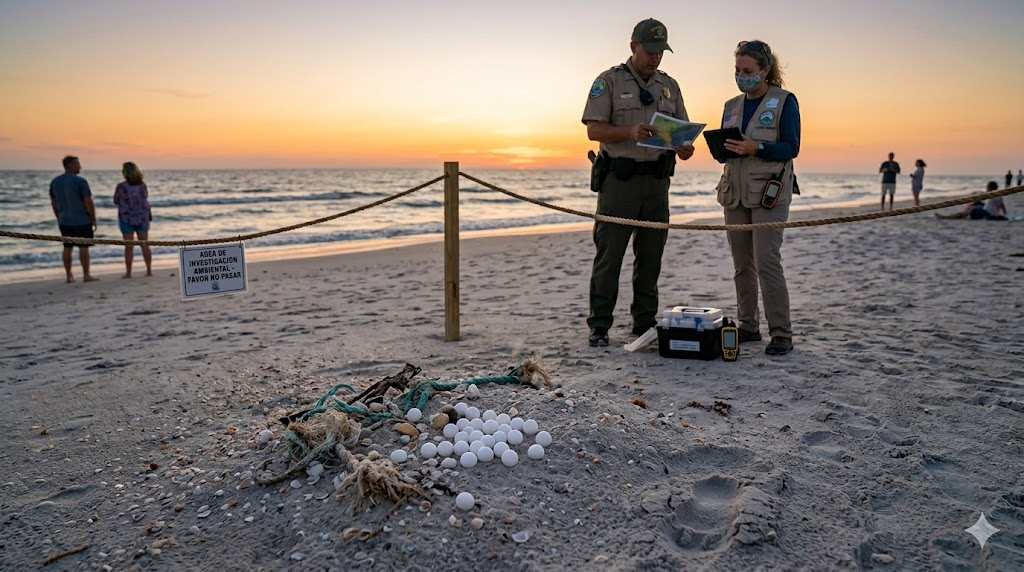
The Invisible Risks: What Naphthalene Does to Your Body
Don’t let the name fool you. Naphthalene is a polycyclic aromatic hydrocarbon. In simple terms: pure poison in a small package.
| Exposure Route | Immediate Effect | Long-Term Risk |
| Inhalation | Dizziness, nausea, severe headache. | Damage to blood cells (hemolysis). |
| Skin Contact | Mild chemical burns, redness. | Chronic dermatitis. |
| Ingestion (Pets/Children) | Vomiting, seizures, collapse. | Liver or kidney failure. |
The situation is especially concerning for sea turtles. Florida is in the middle of nesting season, and these chemicals can seep into the sand, affecting egg viability or confusing hatchlings’ instincts.
What to Do If You Find These Balls on the Beach
If you’re enjoying a sunny day and come across these substances, here’s the action protocol recommended by experts (which could save you a fine or a medical scare):

- Safety Distance: Stay at least 15 feet away from the affected area. Chemical vapors are stronger near the ground.
- Immediate Report: Call the Florida Fish and Wildlife Conservation Commission (FWC) hotline. Don’t assume “someone else already called.”
- Avoid DIY Cleanup: No matter how much you want to help clean your local beach, do not pick up the material. Specific personal protective equipment (PPE) is required to handle hydrocarbons.
- Pet Control: Keep dogs on a short leash. Dogs often lick strange objects to identify them; a single mothball can be fatal to a medium-sized dog.
Who Is Responsible? Theories Behind the Investigation
Environmental police aren’t ruling out any hypotheses. The truth is, the cost of legally disposing of industrial chemicals is high, which leads unscrupulous companies to “midnight dumping.”
- Industrial Warehouse Cleanup? This is the strongest theory. Someone dumped old surplus directly into the drainage system or the sea.
- Environmental Vandalism? A dark possibility being investigated due to the location of the findings near protected areas.
Do we really need more coastal protection laws? Probably, but they’re useless without monitoring at dumping sites. Florida’s Hispanic community, which depends on tourism and fishing, must be the first line of defense in reporting suspicious activities at docks.
Image: ElHispanoParaTodos/PRESS