St. Lucie County receives a $300,000 check to bolster Route 7 in its transit system. Discover how this capital injection will connect workers without touching your taxes.
If you live in Florida, you know relying on a car sometimes feels like divine punishment. Between sky-high insurance, fluctuating gas prices, and paralyzing traffic on major corridors, getting to work or the doctor is a financial risk.

But there’s a truce on the horizon for the Treasure Coast.
The Florida Department of Transportation (FDOT) just injected $300,000 in direct state funds into St. Lucie County to secure and enhance Route 7 (Lakewood Park Regional Transit Route). The best part? The county doesn’t have to contribute a single local cent.
The truth is, we don’t usually pay attention to local buses until ours breaks down or the numbers don’t add up at the end of the month. This isn’t just news about a government check; it’s a lifeline for intercounty mobility that’s been in the works for over a decade. And if you live, work, or travel through Fort Pierce, Indian River, or Martin County, this affects you directly.
The $300,000 lifeline (and why your wallet is safe)
When the government announces “million-dollar investments,” the average citizen’s first instinct (and rightfully so) is to reach for their wallet, wondering where the money will come from. Here’s the interesting part.

This grant, awarded through the Transit Corridor Development Program (CDP), is what’s known in government jargon as a “100% state funding match.” Basically, free money for the county. The St. Lucie County Board of Commissioners accepted this capital knowing it preserves local resources while securing an essential service.
“This route plays an important role in connecting Lakewood Park residents with the broader regional transit network,” said Adolfo Covelli, St. Lucie County Transit Director. “By supporting Route 7, we’re maintaining a service that helps residents move throughout the region while strengthening connections between St. Lucie, Indian River, and Martin counties.”
What happens if this money doesn’t arrive?
Without these funds, peripheral routes often face schedule cuts or, in the worst case, cancellation. Leaving the northern area of Fort Pierce disconnected simply wasn’t a viable option.
Anatomy of Route 7: The Treasure Coast’s invisible bridge
We’re not talking about a bus that circles the block. Route 7 is a vital artery. It primarily serves the Lakewood Park community, one of the densest and fastest-growing residential areas in northern Fort Pierce.

For our Hispanic community, which often sustains the workforce in service, construction, and retail sectors along the coast, this route is the direct ticket to stability.
Connecting three counties without touching the wheel
This is where the magic of urban logistics (when it works) becomes evident. Route 7 doesn’t operate in isolation; it’s a strategic connector.
- The Zero Point: Everything starts and ends at the Fort Pierce Intermodal Facility, the heart of local transportation.
- Heading North (Indian River): The route crosses the county line northward, allowing passengers to connect directly with the GoLine system at the Oslo Road intergenerational center. (If you have family or work in Vero Beach, this is your gateway.)
- Heading South (Martin County): Within St. Lucie, Route 7 intersects with Route 1. What does this mean? You can transfer and travel south to Martin County.
📊 DATA BOX: The Impact of Leaving the Car at Home The average worker in Florida spends about $800 a month on car payments, insurance, gas, and maintenance. Cost of using the regional network (St. Lucie/Indian River): A microscopic fraction of that value. Route 7’s connectivity allows families with one vehicle (or none) to keep jobs 20 or 30 miles away without going bankrupt from transportation costs.
The story of a necessity (It wasn’t built in a day)
Did we really need to push this route so hard? Absolutely.
The history of Route 7 is a lesson in persistence. It was first identified in the county’s Transit Development Plan back in 2009. Yes, it spent years in bureaucratic drawers as a “priority project” for regional mobility and economic development.
It wasn’t until 2015 that the wheels hit the pavement for the first time. Since then, it has undergone multiple tactical adjustments—not because it was failing, but to fine-tune schedules, improve ridership rates, and sync with neighboring counties. This $300,000 from FDOT is essentially a reward for that persistence and fuel to ensure the service doesn’t take a step back.
How this project breathes life into our streets
There’s a side effect no one talks about when public transit is funded: traffic relief.
Every person riding a Route 7 bus is one less car competing for space on US-1 or clogging major intersections. Regional connectivity allows residents to cross county lines without relying solely on personal vehicles. It’s a breath of fresh air for the local environment and direct relief for those who do have to drive.
Action Guide: Get on board
If you’ve never used the system, or if your car is begging for a break, now’s the time to explore your options. The infrastructure is paid for and ready to use.
- Plan your trip: Before heading out, check the updated schedules. Timing is key if you’re transferring to Indian River or Martin County.
- Identify your stops: Locate the Fort Pierce Intermodal Facility or your local stop in Lakewood Park.
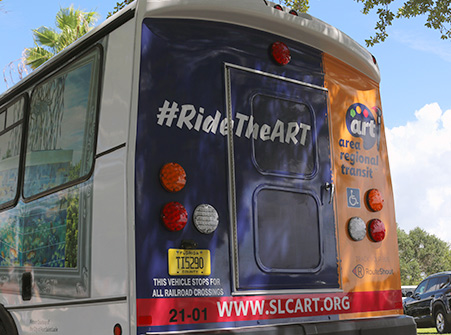
- Check fares and real-time maps: The county’s entire mobility ecosystem (including routes, connections, and alerts) is centralized on the official portal: www.SLCART.org.
At the end of the day, a connected community is a thriving community. And with an extra $300,000 in the tank, Route 7 has a clear path to keep moving our people forward.
Image www.stlucieco.gov