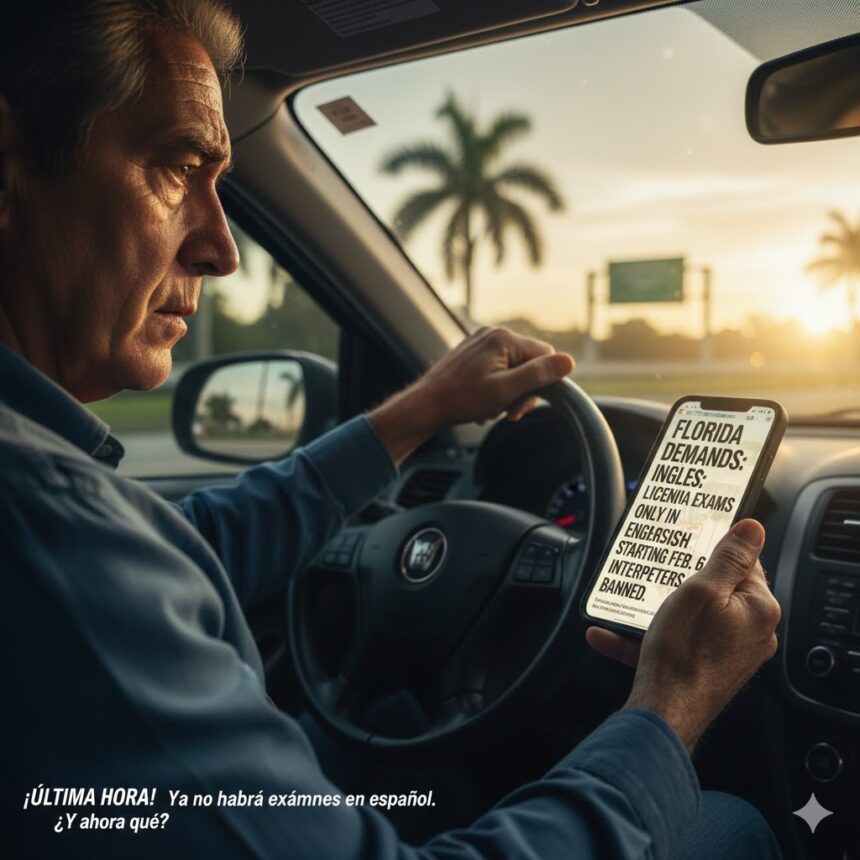
If you live in Florida and have been putting off your driver’s license exam until you were “ready,” your time is up. The Florida Department of Highway Safety and Motor Vehicles (FLHSMV) has dropped a regulatory bombshell: starting this week, the Spanish language is banned from DMV offices for testing purposes.
“This isn’t just a language change; it’s a steel barrier for thousands of families who depend on a steering wheel to work. Is this really a safety measure or an exclusion tactic?”
The quick answer: What exactly changed?
Starting February 6, 2026, all knowledge (written) and skills (road) tests for obtaining a driver’s license in Florida will be administered exclusively in English. The use of printed exams in Spanish, audio options in our language, and—most critically—the use of interpreters or translators during tests is strictly prohibited.

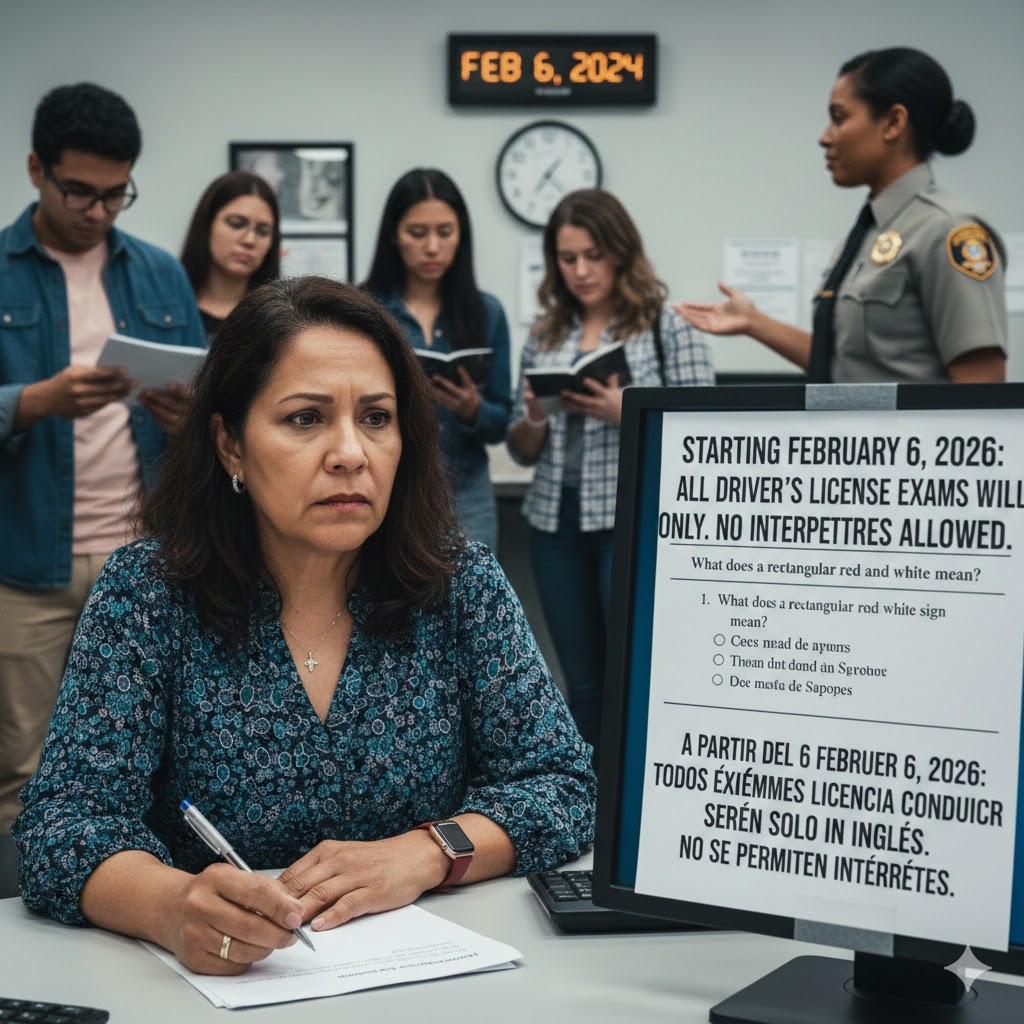
Credit: ElHispanoParaTodos/PRESS
The end of an era: Details of the new regulation
Historically, Florida was one of the most flexible states due to its large Latino population. However, the state administration has decided to make a 180-degree turn.
1. Goodbye to bilingual exams
Previously, applicants for non-commercial licenses could choose Spanish or Haitian Creole. Even for Commercial Driver’s Licenses (CDL), the knowledge test allowed support in Spanish. That no longer exists. The state’s technological system has been updated to eliminate any language other than English.
2. Total ban on interpreters
Many applicants relied on family members or professional services to translate instructions from the examiner during the road test. The FLHSMV’s new order is clear: if the applicant cannot understand and respond to the examiner’s instructions in English, the test will automatically be marked as failed.
3. Official justification vs. social reality
Authorities argue that this measure aims to “ensure road safety” and ensure that every driver can read traffic signs and understand police officer commands in an emergency.

- The trigger: A tragic accident in St. Lucie last August, involving a truck driver who did not speak English, has been the political banner to accelerate this law.
Table: What you can and CANNOT do now
| Process | Before Feb 6 | After Feb 6 |
| Written Test (Class E) | Available in Spanish/Creole | English Only |
| Road Test | Interpreter Allowed | Interpreter Prohibited |
| CDL Test (Commercial) | Bilingual Option Available | English Only |
| Driver’s Manual | PDF Available in Spanish | The test will be 100% in English |
Who is most affected by this measure?
This isn’t just about newcomers. The law impacts:
- Seniors: Longtime residents who, though they drive cautiously, never mastered technical English.
- Agricultural and construction workers: Sectors that rely on commercial licenses, where Spanish was the bridging language.
- Immigrants with legal status: Remember, Florida only issues licenses to those with legal presence, so this change directly affects those who are “doing things the right way.”
The danger of “marked” licenses
Pay attention to this: In addition to the language change, the HB 991 bill is advancing in the legislature, which seeks to add the initials “NC” (Non-Citizen) to the licenses of those who are not U.S. citizens, even if they are legal residents. The landscape in Florida is becoming a minefield for Hispanic drivers.
Survival strategies: How to prepare
If you have an appointment scheduled after February 6, don’t panic—but do take action. The truth is, whether you like it or not, you’ll have to adapt.

- Master the symbology: Memorize not just the shape of the signs but also the action verbs in English (Merge, Yield, Right of Way).
- Practice tests in English: Stop using Spanish practice apps. Start familiarizing yourself with the DMV’s technical terminology in its original language.
- Intensive road vocabulary courses: Some community centers are already planning “driver’s English clinics.” Look for them in your county.
Image: ElHispanoParaTodos/PRESS