A U.S. military operation in international waters of the Caribbean Sea resulted in the deaths of 11 people aboard a vessel that, according to the administration of President Donald Trump, was transporting drugs from Venezuela and was operated by members of the “Tren de Aragua” gang.
A military blockade ordered by Donald Trump to strengthen U.S. security through direct action against drug cartels has kept Venezuela’s dictatorship under constant pressure, and the recent operation is evidence of that.

Ships, aircraft, helicopters, and drones deployed by the Pentagon to intercept drug shipments leaving Venezuela were activated Tuesday morning after Trump received classified intelligence indicating that a vessel linked to Tren de Aragua—a group designated as a terrorist organization by the U.S.—was departing from a Venezuelan port toward international waters.
Without hesitation, the U.S. president gave the order for its immediate destruction.
The sinking of the Tren de Aragua vessel demonstrated the White House’s political resolve to destroy all maritime and aerial drug shipments originating from Venezuela.
The military blockade now deployed by the U.S. is more powerful than the military operation used by the White House to occupy Panama and remove Manuel Noriega in 1989.

Incident in the Caribbean: What We Know About the U.S. Anti-Drug Operation Leaving 11 Dead
A U.S. military operation in international waters of the Caribbean Sea resulted in the deaths of 11 people aboard a vessel that, according to the administration of President Donald Trump, was transporting drugs from Venezuela and was operated by members of the “Tren de Aragua” gang.
President Trump himself confirmed ordering the strike on Tuesday, September 2, 2025, describing it as a “kinetic attack” against “narcoterrorists.” The White House released a black-and-white video showing a speedboat being hit and engulfed in flames.
Key Details of the Operation:
- Target: A vessel that, according to U.S. officials, was transporting illegal narcotics bound for the United States.
- Casualties: 11 people aboard the boat were killed. No U.S. forces were reported killed or injured.
- Accused Perpetrators: The U.S. government identified the deceased as members of “Tren de Aragua,” a transnational criminal organization originating in Venezuela that Washington has designated as a foreign terrorist organization.
- Location: The incident occurred in international waters in the southern Caribbean after the vessel departed from Venezuela.
- Justification: The action is part of the administration’s intensified anti-drug campaign in the region, aimed at stopping the flow of drugs into the United States.
An Escalation in Anti-Drug Strategy
This attack marks a significant shift and escalation in U.S. drug interdiction tactics, moving from seizing vessels to lethal strikes.

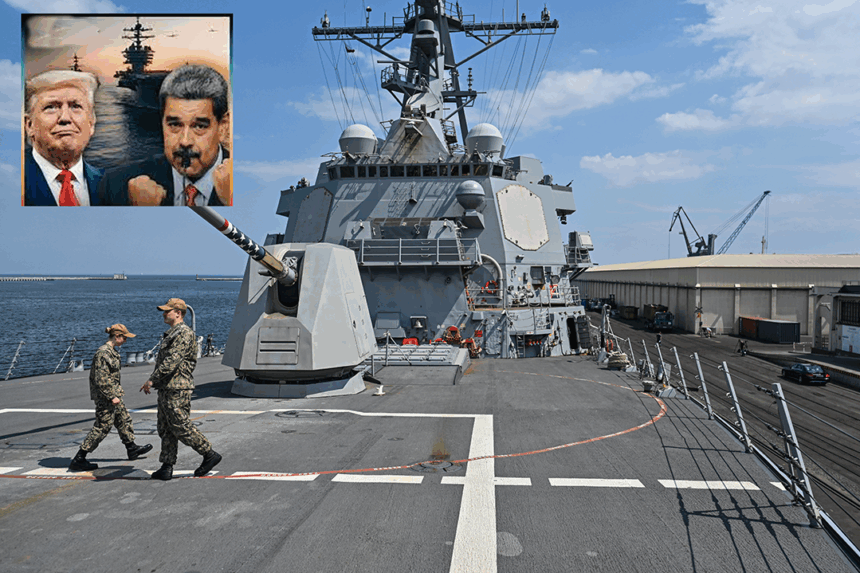
The move comes amid rising tensions between Washington and Caracas and follows the recent deployment of several warships, a nuclear submarine, and thousands of U.S. military personnel to the Caribbean near Venezuela’s coast.
Secretary of State Marco Rubio supported the operation, stating that the U.S. will continue to fight cartels “that flood American streets and kill Americans.”
Reactions and Unanswered Questions
So far, the White House has not provided details on how it was determined that those aboard were, in fact, members of Tren de Aragua.
For its part, Nicolás Maduro’s government has not directly addressed the attack on the vessel but has condemned the increased U.S. military presence in the area, calling it a threat to Venezuela’s sovereignty and an “unprecedented military pressure.”
Maduro has warned that, in the event of aggression, the country would declare itself in “armed struggle.”
The incident has heightened tensions in the region and opens a new chapter in the complex relationship between the U.S. and Venezuela, now with a component of direct military confrontation in the fight against drug trafficking.