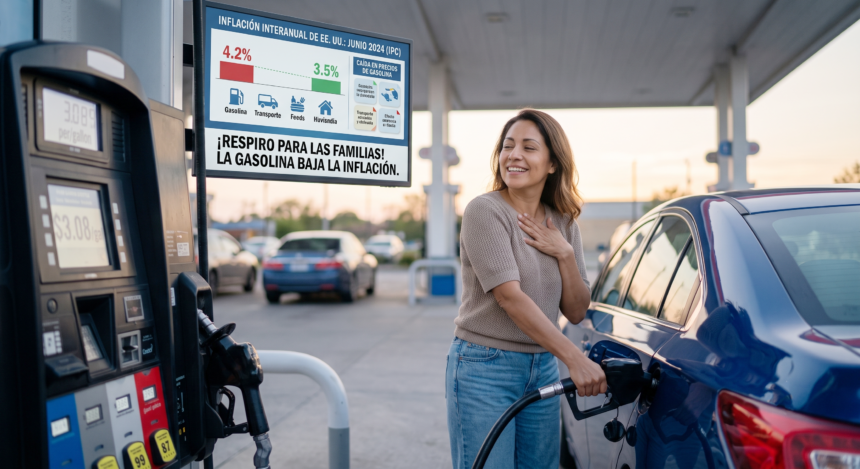
US inflation fell more than expected in June (3.5%) thanks to the drop in gasoline prices. How does this impact your wallet and daily economy?
The Consumer Price Index (CPI) recorded a year-over-year increase of 3.5%, marking clear relief compared to May’s 4.2%. While the macroeconomic numbers bring optimism to markets, what does this drop really mean for families’ monthly budgets?

The US economy got a breath of fresh air this month. Inflation has cooled faster than analysts projected, breaking the upward trend mainly due to a significant drop in fuel prices at the pump.
The Consumer Price Index (CPI) ended June with a year-over-year increase of 3.5%, a notable reduction compared to the 4.2% recorded the previous month. This decline marks one of the most pronounced breaks of the year for the economy.
Relief at the Pump
The main driver behind this slowdown was the energy sector. After months of volatility, the drop in international crude oil prices finally reflected at gas stations across the country. This has not only made private transportation cheaper but also reduced the logistical costs of distributing certain goods.
The Real Impact on Families’ Wallets
For the average citizen, reading that “inflation fell” can be confusing when the grocery bill still feels high. It’s crucial to understand that lower inflation doesn’t mean prices are dropping (deflation), but that they’re rising more slowly.

However, the effect of this news on the family budget is tangible in two immediate ways:
- More money available at the end of the month: By spending less to fill up the car to go to work or take the kids to school, families regain a small margin of flexibility in their monthly liquidity.
- Budget stabilization: The volatility of gasoline prices made financial planning difficult for households. The drop allows for more certainty in projecting monthly expenses.
Despite this, many households still face pressures in other areas, as sectors like housing and certain staple foods maintain rigid prices that haven’t yet reflected the energy relief.
The Domino Effect on the Daily Economy
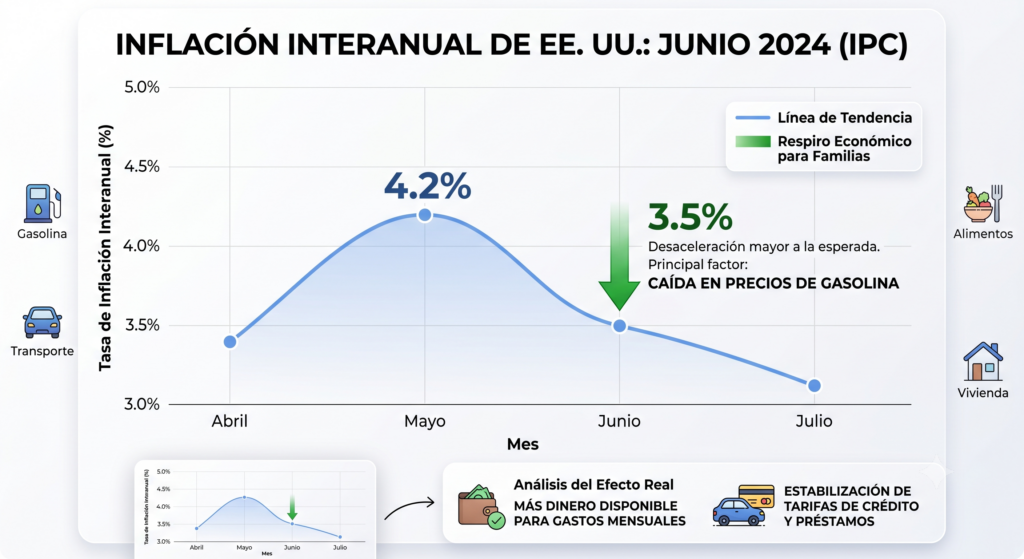
At the macro level and in daily economics, June’s data has a direct impact on the future of loans and debts.

The Federal Reserve (Fed) uses this data to decide on interest rates. If inflation shows consistent signs of cooling, pressure eases for the Fed to continue raising loan costs. In practice, this means that in the short and medium term:
- Credit card interest rates could stabilize.
- Those seeking a mortgage or auto loan could find less suffocating conditions in the coming months.
- Consumer confidence increases, which boosts local commerce and job creation at the grassroots level.
While the specter of high living costs hasn’t completely disappeared, June’s data offers the first solid sign that pressure on the American working class is beginning to ease.
Image EL HISPANO PARA TODOS