

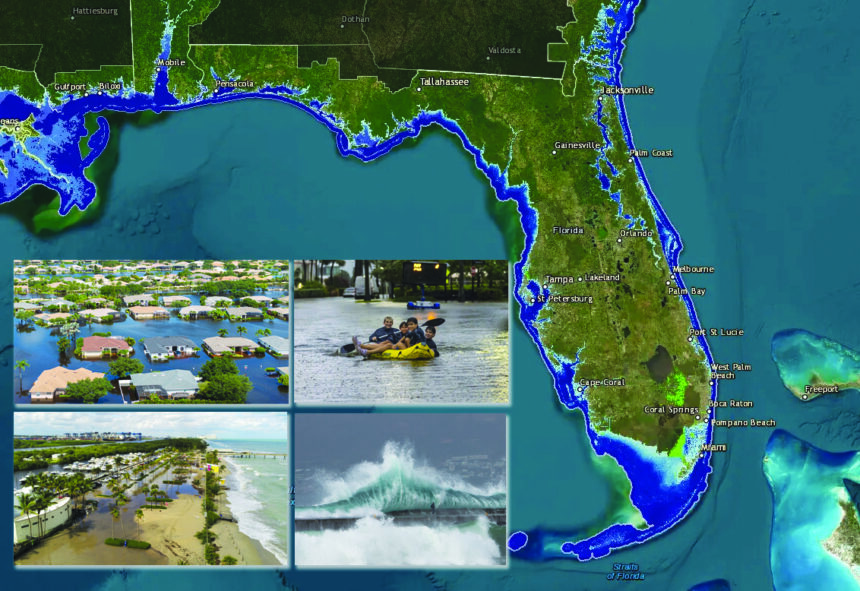
A flood on the scale of those recently seen in Texas is a possible scenario in Florida.
While the triggering factors may have different nuances, the Sunshine State has a high vulnerability to catastrophic flooding due to its geography, climate, and the growing threat of climate change.
In fact, it is more susceptible to flooding because of its flat terrain and extensive coastline. Understanding the risks and taking proactive measures is crucial for the safety of its residents.

Rising sea levels and heavy rainfall are factors that increase the risk of flooding in Florida, especially in coastal and low-lying areas.
The main flood threats to Florida come from a combination of factors:
- Intense Rainfall: Like Texas, Florida can experience periods of torrential rain, especially during hurricane season (June 1 to November 30) and other tropical storms. These events can quickly saturate drainage systems and lead to flash and river flooding.
- Storm Surges: Florida’s extensive coastline makes it extremely susceptible to storm surges associated with hurricanes. These abnormal rises in sea level can inundate vast coastal areas, causing widespread destruction.
- Flat Topography and Low Elevation: Much of Florida’s territory is flat and only a few meters above sea level. This geographical feature hinders the natural drainage of rainwater and increases the extent and duration of floods.
- Rising Sea Levels: Climate change is causing a steady rise in sea levels, which worsens the effects of storm surges and high tides. This results in increasingly frequent “sunny-day flooding” in low-lying areas and greater saltwater intrusion into aquifers.
A History of Devastating Floods
Florida is no stranger to severe flooding. Throughout its history, numerous events have left a trail of destruction:
- Hurricane Ian (2022): This powerful Category 4 hurricane made landfall in Southwest Florida, generating a catastrophic storm surge that flooded entire communities like Fort Myers Beach and Sanibel Island. Torrential rains also caused significant river flooding inland.
- South Florida Flooding (June 2024): A storm system unrelated to a hurricane brought torrential rains to Miami-Dade and Broward counties, causing flash floods that paralyzed the region, swamped streets and homes, and forced the closure of Fort Lauderdale-Hollywood International Airport.
- Hurricane Milton (2024): This hurricane also brought significant flooding to various parts of the state, underscoring Florida’s vulnerability to these events.
These are just a few examples that demonstrate the real and recurring threat of massive flooding in Florida, whether caused by a major hurricane or a persistent rain system.

How to Prepare:
Key Steps to Protect Yourself in Case of Flooding
Preparation is the most effective tool to mitigate the risks associated with flooding. Florida authorities, such as the Florida Division of Emergency Management (FDEM) and county governments, urge residents to take the following measures:
1. Know Your Risk:

- Identify Your Flood Zone: Visit the FEMA Flood Map Service Center to determine if your property is in a high-risk area.
- Know Your Evacuation Routes: Familiarize yourself with the evacuation routes designated by your county.
2. Create a Family Emergency Plan:
- Meeting Point: Designate a safe place where your family can reunite if separated.
- Out-of-State Contact: Choose a family member or friend who lives outside Florida as a central point of contact.
- Pet Plan: Include your pets in your evacuation plan. Keep in mind that many public shelters do not accept animals.
3. Prepare an Emergency Supply Kit:
Your kit should contain enough supplies for each family member to last at least seven days. Essential items include:
- Water: One gallon per person, per day.
- Food: Non-perishable and easy-to-prepare food.
- Medications: A supply for at least two weeks.
- First Aid Kit.
- Flashlights and Extra Batteries.
- NOAA Weather Radio: To receive alerts, even if the power goes out.
- Important Documents: Copies of insurance policies, IDs, and bank records stored in a waterproof bag.
- Cash.
4. Prepare Your Home:
- Clear Drains and Gutters: Ensure water can flow freely away from your home.
- Elevate Appliances: If you live in a risk area, elevate electrical appliances such as water heaters and air conditioning units.
- Consider Flood Insurance: Most homeowner insurance policies do not cover flood damage. Purchase a policy through the National Flood Insurance Program (NFIP).
5. Stay Informed:
- Emergency Alerts: Sign up to receive emergency alerts from your county.
- Media: Pay attention to news and guidance from local authorities before, during, and after a flood event.
Living in Florida comes with the responsibility of being prepared to face the threat of flooding. By taking these preventive measures, residents can protect their families and properties and increase their resilience to these natural disasters.





