On April 8, a total solar eclipse will occur, and in addition to viewing it, you may also be able to spot some planets.
Venus will be the brightest planet in the sky, just 15 degrees to the right of the sun, according to Space.com.

Jupiter will also be visible, though not as bright. According to Space.com, it will be 30 degrees to the left of the sun.
You may also be able to see a comet. According to Astronomy, the Pons/Brooks comet, known as the devil comet, will pass by. The comet only appears every 71 years.
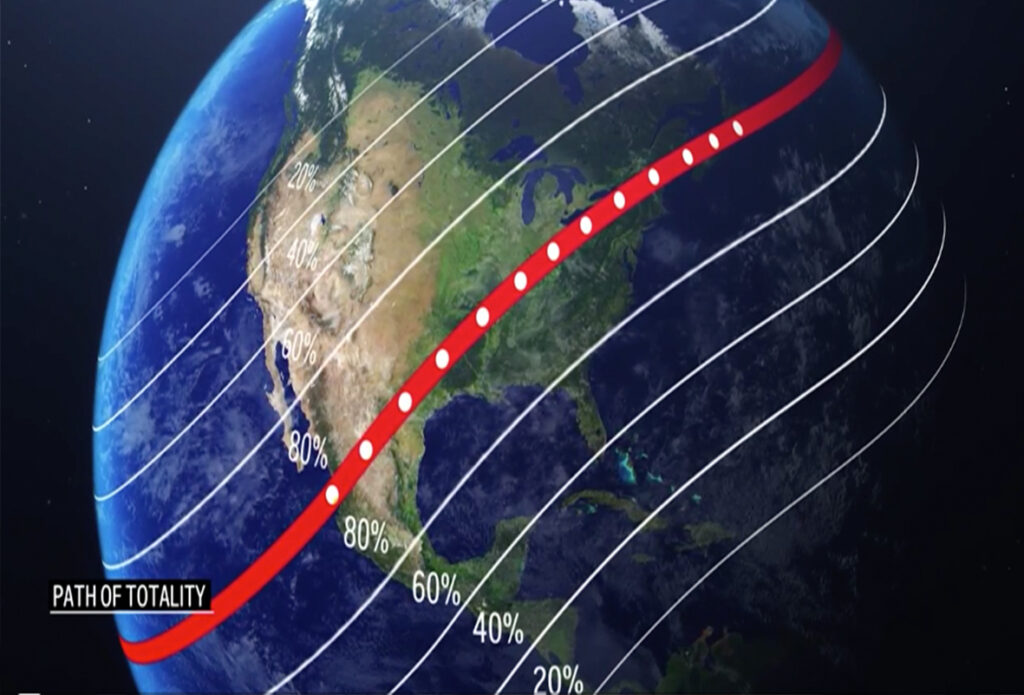
The peak spectacle will last up to 4 minutes, 28 seconds in the path of total darkness.
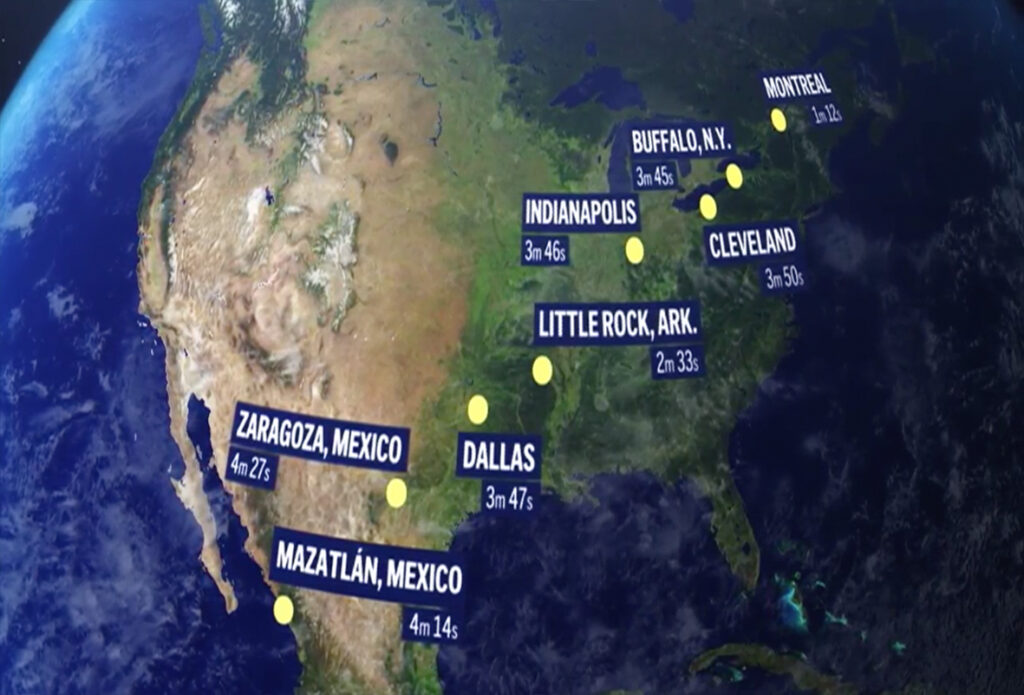
The path of totality crosses 15 states:

- Texas
- Oklahoma
- Arkansas
- Missouri
- Illinois
- Kentucky
- Indiana
- Ohio
- Pennsylvania
- New York
- Vermont
- New Hampshire
- Maine
- Tennessee
- Michigan
The rest of the continental United States will experience a partial eclipse.
During a total solar eclipse, the Moon aligns perfectly between the Earth and the Sun.
According to the Associated Press, North America won’t experience totality again until 2033, but only in Alaska. In 2044, totality will be confined to western Canada, Montana, and North Dakota. There won’t be another U.S. eclipse spanning coast to coast until 2045.

Image: Wflx