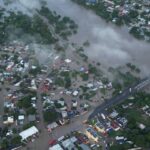
FEMA also reports ongoing recovery efforts in North Carolina and the Southwest following Hurricane Helene and Hurricane Milton.
- FEMA also reports ongoing recovery efforts in North Carolina and the Southwest following Hurricane Helene and Hurricane Milton.
- Updates on recovery efforts following Hurricane Milton
- Updates on recovery efforts following Hurricane Helene
- You can apply for FEMA assistance in three ways:
- Assistance in North Carolina
- Assistance in Florida
- Assistance in South Carolina
- Assistance in Georgia
- Assistance in Virginia
- Assistance in Tennessee
- Volunteer Organizations
More than 8,500 federal employees are deployed, including over 4,200 on-site personnel, working closely with state and local officials to ensure survivors receive the support they need to begin their recovery.

For all those impacted by Hurricane Helene, to date, FEMA has approved over $860 million in federal disaster assistance, which includes $507 million in aid for individuals and communities affected and over $351.5 million for debris removal and life-saving activities, protecting public health and safety, and preventing damage to public and private property.
Survivors can start their recovery process by applying for federal assistance from FEMA. The fastest way to begin the application process is online at disasterassistance.gov/es.
As survivors move forward with the application process, they can access Critical Needs Assistance for essential items such as food, water, baby formula, breastfeeding supplies, medication, and other emergency supplies.
Updates on recovery efforts following Hurricane Milton
Electricity restoration efforts have improved significantly across the region in the wake of Hurricane Milton. Crews have continued working tirelessly and have restored power to nearly 3 million residents.

FEMA is currently working with state and local officials on debris removal plans for storm-affected areas. Residents should follow local instructions regarding debris pickup in their area.
More than 30 shelters are currently housing over 2,950 people affected by Milton, a significant decrease from nearly 13,000 last week.
FEMA has 7.6 million meals and 4.6 million liters of water available to support Hurricane Milton survivors, ensuring critical supplies are ready for immediate distribution.

Updates on recovery efforts following Hurricane Helene
Recovery efforts continue following Hurricane Helene, with federal response personnel working across the region to provide immediate and long-term assistance.
FEMA Disaster Recovery Centers are also open throughout the region to provide support. To date, FEMA has distributed more than 12.6 million meals and over 12.8 million liters of water in the region.
Survivors of the disaster in the designated areas in Georgia, Florida, North Carolina, South Carolina, Tennessee and Virginia can begin their recovery process by applying for federal assistance through FEMA.
Individuals with damage to their homes or personal property living in the designated areas should apply for assistance, which may include initial funds to help with essential items such as food, water, infant formula, breastfeeding supplies, and other emergency supplies.
Funds may also be available to repair storm damage to homes and personal property, as well as assistance in finding temporary housing.
Homeowners and renters who suffered damage to their homes or personal property from previous disasters, regardless of whether they received FEMA funds or not, remain eligible to apply for and receive assistance for Hurricane Helene.

You can apply for FEMA assistance in three ways:
- Online, visit DisasterAssistance.gov/es.
- Download and apply for assistance on the FEMA mobile app.
- Call FEMA’s Helpline at 1-800-621-3362.
- Visit a Disaster Recovery Center
- Apply through a Disaster Survivor Assistance team member
Assistance in North Carolina
FEMA has approved over $96 million in housing and other assistance for more than 75,000 families.
More than 2,500 families who cannot return to their homes are staying in safe and clean accommodations through FEMA’s Transitional Sheltering Assistance program. Under this program, residents in designated counties who have applied for disaster assistance may be eligible for temporary lodging in a FEMA-paid hotel or motel while working on their long-term housing plan.
FEMA will notify them of their eligibility via an automated phone call, text message, and/or email, depending on the communication method they selected when applying for disaster assistance. The number of people in shelters continues to decrease, with 13 shelters housing just over 560 occupants.
Supply distribution, mass feeding, and hydration operations are underway in western North Carolina. Voluntary organizations are supporting feeding operations by delivering bulk food and water via trucks and aircraft.
- Residents can visit: ncdps.gov/helene for additional information and assistance.
- Residents can reach out to loved ones by calling 211 or visiting unitedwaync.org to be added to search and rescue efforts.
Currently, there are four Disaster Recovery Centers open in Asheville, Lenoir, Marion, and Sylva counties where survivors can speak directly with FEMA and state staff for recovery assistance. To find the nearest center, visit FEMA.gov/DRC.

Assistance in Florida
As recovery efforts for Helene continue in Florida, FEMA has approved over $177.6 million for more than 56,900 families.
FEMA specialists are visiting communities in Florida affected by Helene to help survivors apply for assistance. Additionally, FEMA inspectors are visiting applicants’ homes to assess disaster-related damage.
There are 122 Disaster Survivor Assistance team members visiting communities and ten Disaster Recovery Centers supporting survivors of Debby and Helene, where survivors can speak with state and federal staff to assist with their recovery.
Survivors can find the nearest center by visiting FEMA.gov/DRC.
Residents who need information or resources should call the State Assistance Information Line (SAIL) at 1-800-342-3557. Operators who speak English, Spanish, and Haitian Creole are available to answer questions.
Assistance in South Carolina
As recovery efforts continue in South Carolina, FEMA has approved over $119 million for more than 133,900 families.
FEMA’s Disaster Survivor Assistance teams are present in neighborhoods in the affected counties and continue to help survivors apply for FEMA assistance and connect them with additional state, local, federal, and voluntary agency resources.
There are 81 Disaster Survivor Assistance team members visiting communities and three Disaster Recovery Centers open in Greenville, Barnwell, and Batesburg, where survivors can speak with state and federal staff to assist with their recovery.
Survivors can find the nearest center by visiting FEMA.gov/DRC.
Residents with questions about Hurricane Helene can call the state’s toll-free hotline at 1-866-246-0133, available 24 hours a day.
Residents who rely on in-home medical equipment and are without power due to Helene may be eligible for a medical needs shelter. Call the State Department of Public Health’s care line at 1-855-472-3432 for more information.
Assistance in Georgia
FEMA has approved over $103 million for more than 106,300 families. Disaster Survivor Assistance teams are in neighborhoods of the affected counties to help survivors apply for FEMA assistance and connect them with other state, local, federal, and voluntary agency resources.
There are 139 Disaster Survivor Assistance members visiting communities and three Disaster Recovery Centers open in Valdosta, Douglas and Augusta where survivors can speak with state and federal staff to help with their recovery. Survivors can find the nearest center by visiting FEMA.gov/DRC.
Residents can find resources such as shelters and feeding sites on the website gema.georgia.gov/hurricane-helene.
Assistance in Virginia
To date, FEMA has provided over $4.2 million to more than 1,330 families. FEMA’s Disaster Survivor Assistance teams are in neighborhoods of the affected counties and continue to help survivors apply for FEMA assistance and connect them with additional state, local, federal, and voluntary agency resources.
There are approximately 39 Disaster Survivor Assistance members visiting communities and three Disaster Recovery Centers open in Damascus, Independence, and Tazewell where survivors can speak with state and federal staff to help with their recovery. Survivors can find the nearest center by visiting FEMA.gov/DRC.
Residents can find resources such as shelters and feeding sites on the website: Recovery – Hurricane Helene | VDEM (vaemergency.gov) (link in English).
Assistance in Tennessee
FEMA has provided over $10.7 million in disaster assistance to more than 2,200 families. FEMA’s Disaster Survivor Assistance teams are in neighborhoods of the affected counties and continue to help survivors apply for FEMA assistance and connect them with additional state, local, federal, and voluntary agency resources.
There are 42 Disaster Survivor Assistance members visiting communities to connect with survivors who lack cell service or electricity.
Counties continue to set up donation centers. For the evolving list, visit the website of the Tennessee Emergency Management Agency (link in English).
Volunteer Organizations
Volunteer organizations are also providing personnel and resources to the hardest-hit areas.
The American Red Cross has hundreds of trained disaster workers providing comfort and operating shelters. Additionally, they are helping to locate loved ones through their helpline 1-800-RED-CROSS (1-800-733-2767) or their American Red Cross Hurricane Helene Reunification page, where people can enter pertinent information about the person they are searching for.
If someone has lost a child during this disaster or any other incident, they should call 9-1-1 and then 1-800-THE-LOST for assistance from the National Center for Missing & Exploited Children.
FEMA remains steadfast in its mission to support survivors as they begin their recovery from these historic storms. The agency will continue working with federal, state, and local partners to ensure the safety and well-being of those affected by Milton and Helene.
Image: FEMA