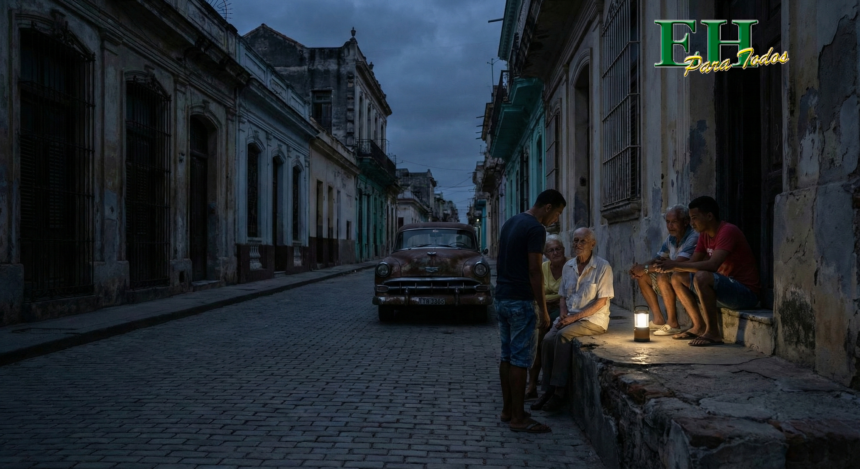
Imminent collapse? Cuba today faces record blackouts, suspended flights, and the peso’s plummet. We analyze the real impact of U.S. sanctions on the island.
The reality on the streets of Havana, Cuba, this Wednesday isn’t found in official statements; it’s felt in the sweat of nights without a fan and the silence of airports watching their departure boards go blank.

U.S. pressure has shifted from diplomatic background noise to an economic vise squeezing the last breaths of stability from the island. It’s not just politics; it’s the daily lives of millions of families hanging by a thread that seems ready to snap.
What is Cuba’s current situation amid U.S. pressures?
The island of Cuba is experiencing an unprecedented systemic crisis this Wednesday, marked by blackouts affecting over 50% of the country, the collapse of the Cuban peso against the dollar, and the mass cancellation of commercial flights due to indirect sanctions impacting fuel supplies and logistical operations.
The hardening of Washington’s policies has blocked vital financing channels, leaving the Cuban government with no room to maneuver against social discontent.

The “Great Blackout”: When Darkness Becomes Political
This isn’t just a simple power outage. We’re talking about a country where blackouts lasting 18 to 20 hours a day are the new norm. Cuba’s energy infrastructure is a house of cards, and U.S. sanctions are the wind threatening to blow it down.
Why Is There No Power?
- Fuel Shortage: Pressure on shipping companies transporting crude from Venezuela has drastically reduced the flow. Without oil, thermoelectric plants are monuments to rust.
- Unattainable Spare Parts: Due to the embargo, Cuba cannot access technology or parts containing more than 10% U.S. components. The result? Engines from the 1970s trying to sustain a 21st-century country.
- The Geopolitical Factor: Washington has scrutinized financial entities facilitating these payments, making even the island’s historic allies think twice before sending a ship.
“Living in Cuba today is a timed survival exercise: you have to cook, wash, and charge your phone in the three hours of power you get… if you’re lucky,” comments a local resident under anonymity. The uncomfortable truth is that Cuba’s electrical system is brain-dead.
The Sky Closes: Flight Cancellations and Their Domino Effect
This Wednesday, the news of suspended flights hit like a bucket of cold water. It doesn’t just affect tourism—the economy’s lifeline—but severs the umbilical cord for families relying on “mules” and the trafficking of basic goods.
The Aerial Pressure Mechanism
Airlines face a legal crossroads. The State Department has tightened audits on operations at Cuban airports. This has led several regional and low-cost carriers to cancel routes due to “logistical problems,” a polite way of saying the risk of sanctions or lack of return fuel doesn’t justify the business.

| Impact of Cancellation | Direct Consequence for the Population |
| Fewer In-Kind Remittances | Shortage of medicines and clothing that arrived in luggage. |
| Diplomatic Isolation | Difficulty for emergency departures or consular procedures. |
| GDP Decline | Fewer foreign currency inflows from airport fees. |
The Peso in Freefall: Is Money Worth Anything in Cuba?
The informal market has issued its verdict: the Cuban peso is at historic lows. While Washington keeps Cuba on the list of state sponsors of terrorism, access to the international banking system is nonexistent.
Here’s the kicker: Inflation isn’t just a number in an Excel sheet; it’s the fact that a carton of eggs today can cost half a week’s salary. U.S. pressure limiting remittances through official channels has pushed the population into the black market, inflating the dollar’s value to absurd levels.
- Unstoppable Dollar: The U.S. currency has become the only safe haven, leaving those earning in national currency technically impoverished.
- Paralyzed Investment: Who’s going to invest in a country where you can’t legally withdraw your profits due to OFAC banking restrictions?
Where Is This Pressure Headed? The 2026 Outlook
The White House shows no signs of letting up. While Cuba tries to survive with stopgaps from Russia and China, the U.S. administration appears to be betting on total collapse as a catalyst for change. But at what cost? Mass migration shows no signs of stopping; it’s the logical escape valve for a pressure cooker with no safety release.
It’s easy to talk about geopolitics from an office in D.C., but the reality is that this “ruthless pressure” is hitting grandparents without blood pressure medication and children studying by candlelight first. Do these measures really achieve their political goal, or do they only deepen the human wound on the island? History suggests the latter.