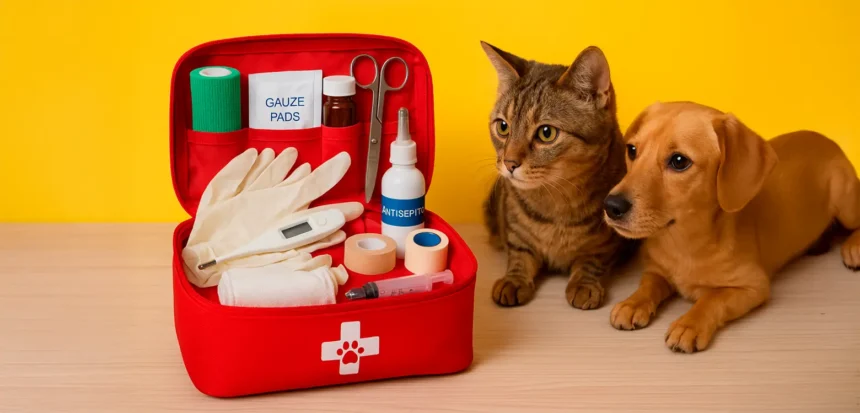
A first-aid kit is very important. As pet owners, our strongest instinct is to protect our dogs and cats. However, accidents happen when we least expect them: a cut at the park, a bee sting, or sudden discomfort.
Having a well-equipped first-aid kit doesn’t replace a veterinarian’s care, but it will give you the tools to stabilize your pet, stop bleeding, or relieve pain while you get to the clinic.

Here’s the exact guide to assembling a functional, safe, and ready-for-any-emergency kit.
The Ideal Container for your first-aid kit:
Before buying supplies, you need a place to store them. Choose a hard plastic box or a nylon bag that is:
- Waterproof: To protect materials from moisture.
- Easy to carry: Ideal if you need to take it in the car during a trip.
- Visible: Label it clearly so any family member can find it quickly.
Wound Care and Bandages
- Sterile gauze: Ideal for cleaning wounds or applying pressure to control bleeding.
- Cohesive (self-adhesive) bandages: Don’t stick to fur and are perfect for securing gauze on limbs.
- Medical adhesive tape: Useful for fastening bandages.
- Cotton balls and swabs: Practical for gently cleaning small and delicate areas.
Essential Tools

- Blunt-tip scissors: Essential for cutting bandages or clearing fur around a wound without risking a skin puncture.
- Tweezers: Crucial for precisely removing ticks, splinters, or thorns after an outdoor walk.
- Digital rectal thermometer and lubricant: The most accurate way to measure a pet’s temperature.
- Needleless syringes: Make it easier to administer oral medications or flush wounds under pressure.
- Small flashlight: Helps examine ears, mouth, or paws more clearly.
Cleaning and Disinfection
- Saline solution: Safe and effective for rinsing eyes or cleaning dirt from cuts and superficial scrapes.
- Antiseptic wipes or chlorhexidine spray: For safely disinfecting skin without causing irritation.
- 3% hydrogen peroxide: Should be included in the kit, but its use is mainly to induce vomiting only under strict and direct veterinary instruction.
- Antibiotic ointment: Helps prevent infections in minor wounds, always ensuring the pet doesn’t lick it off.
Safety and Handling
- Properly sized muzzle: Pain and severe stress can cause even the gentlest pet to react by biting.
- Thermal blanket: Helps prevent shock and maintains body heat if the pet is injured or frightened.
- Latex or nitrile gloves: Protect both your hands and the pet’s wound from bacterial transfer.
- Instant ice pack: Useful for reducing localized swelling in case of bumps, sprains, or insect stings.
Documentation and Local Emergency Preparedness

- Medical history and vaccination records: Keep updated physical copies inside a waterproof plastic bag.
- Emergency contacts: Include your regular veterinarian’s number, the animal poison control center, and the addresses of 24-hour emergency veterinary clinics on the Treasure Coast.
- Contingency supplies: Keep a 7-day reserve of any ongoing medication, extra food, and bottled water in the kit—essential for ensuring your pet’s stability during severe weather alerts, power outages, or hurricane season.
- Important note: A first-aid kit is designed exclusively to stabilize your pet and provide immediate care. It never replaces the evaluation and treatment of a professional veterinarian. In any medical emergency, go to a specialized clinic immediately.
The Golden Rule: What You Should NEVER Include
It’s common to make the mistake of trying to relieve our pet’s pain with what we have in the human first-aid kit. Avoid this at all costs:
- No human pain relievers: Medications like acetaminophen, ibuprofen, or aspirin are highly toxic (and potentially fatal) to dogs and cats.
- No hydrogen peroxide or alcohol: Though we used to use them on ourselves, these liquids burn and damage healthy tissue, delaying healing. Always use chlorhexidine or diluted iodine.
If you have questions about your pet’s well-being, please email:
DrBorrego@petsvet.com
Dr. Enrique Borrego is the medical director of Animal General Hospital, located at 501 SW Port Saint Lucie Boulevard, Port St. Lucie, FL 34953 • Phone 772-344-8835 • www.petsvet.com Serving our Treasure Coast community since 1990