

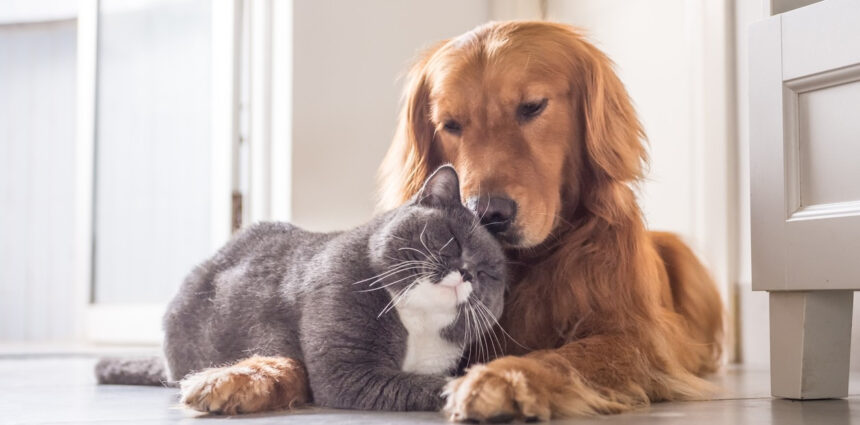
There’s nothing worse than the mix of guilt as you close the door and the terror of not knowing what “surprise” (a torn couch, urine, chewed shoes) you’ll find when you return after leaving your pet alone.
You arrive home exhausted. You open the door expecting a loving welcome, but what you find looks like a crime scene: the couch stuffing is all over the living room, your favorite shoes have been “murdered,” and there’s a suspicious puddle on the rug. Your dog looks at you with that “it wasn’t me” face (or worse, is trembling in a corner).

If this sounds familiar, take a breath. You’re not alone.
Millions of Hispanic families face this issue, especially after periods when we spend a lot of time at home. The number one mistake is thinking your pet does this out of revenge or because they’re “bad.”
Here’s the truth:
Your pet doesn’t destroy things out of spite; they do it out of panic (separation anxiety) or extreme boredom. To teach them to stay alone without chaos, the key isn’t scolding but gradually desensitizing them to your departure routines and providing environmental enrichment (giving them a “mental job” to do while you’re away).3

Let’s fix this, step by step.
Diagnosis: Is It Panic or a Party?
Before applying the solution, you need to know the problem. It’s not the same for a dog that chews through the door because they think you’ve abandoned them as it is for one that raids the trash because it’s fun.
1. Separation Anxiety (The Panic)
This is serious.4 The animal goes into crisis the moment they lose sight of you (or even before, when you grab your keys).

- Symptoms: Excessive drooling, constant barking/howling, urination/defecation (even if house-trained), escape attempts (scratches on doors/windows).
- The emotion: Pure fear. “My human left, and I’m going to die.”
2. Boredom or Bad Habits (The Party)
Here, the dog waits for you to leave to find their own fun.
- Symptoms: Raids the trash, chews objects with your scent, climbs on the table. Usually calm when you return.5
- The emotion: “What do I do? Oh, this cushion explodes if I bite it!”
Editor’s Note: If your case is severe anxiety (the dog self-harms), you need a veterinary behaviorist.
For everything else, keep reading.
Phase 1: Preparation (Before Leaving)
Many fail here. They try to fix the problem during the absence, but success is built before you walk out the door.
The Exhausted Battery Principle
A tired dog is a good dog.
If you have a Husky, a German Shepherd, or any young dog and plan to leave them alone for 8 hours without doing anything beforehand, you’re asking for disaster.
- The rule: Intense physical and mental exercise 30 minutes before leaving.8 It’s not just about walking and smelling flowers. Throw the ball, play tug-of-war, make them run.
- The goal: That when you leave, their body will crave a nap, not a party.
Define the “Safe Zone”
Giving an anxious dog access to the whole house is a mistake. It’s too much territory to “guard.”
- Limit the space: Use a puppy-proof room, a playpen, or, if well-trained, their crate (kennel).
- Positive association: That place should be Disneyland. Never use the crate as punishment. Ever.
Phase 2: The “Phantom” Training Protocol
This is where we break the anxiety. Your dog is a detective; they know you’re leaving long before you open the door. They know that “Shoes + Keys + Perfume = Loneliness.” Let’s break that equation.
1. Desensitization to Cues (The White Lie)
Over the weekend, do the following several times a day without leaving the house:
- Put on your shoes… and sit down to watch TV.
- Grab your keys… and go to the kitchen for a drink of water.
- Put on your coat… and start washing the dishes.
What do we achieve? Those stimuli stop being the announcement of the apocalypse. The dog will no longer trigger adrenaline at the jingle of keys.
2. Gradual Departures (The “Yo-Yo”)
You can’t go from being with them 24/7 to leaving for 8 hours all at once.
- Level 1: Step out the door, close it, wait 10 seconds, come back in. (Repeat 10 times).
- Level 2: Go out, walk to the mailbox, return in 5 minutes.
- Level 3: Go to the store (20 minutes).
- Level 4: Normal departure.
If at any level the dog barks or whines, you moved too fast. Go back a step.
Phase 3: The Secret Tool (Environmental Enrichment)
If you leave a child alone in an empty room, they’ll draw on the walls. If you leave them with an iPad, they won’t even notice you’re gone. It’s the same with dogs.
You need interactive toys, not boring plush toys that “die” in 5 minutes.
The King: The Stuffed and Frozen KONG
This is the world’s best babysitter.
- Buy a durable rubber toy (like a KONG).
- Fill it: A layer of wet food, kibble, peanut butter (xylitol-free), Greek yogurt.
- Freeze it: This is key. When frozen, the dog will take 30-40 minutes to empty it by licking.
- The effect: Licking releases endorphins and calms the dog. When they’re done, they’ll be tired and relaxed.
Anti-Chaos Toy Table:
| Type of Toy | Function | When to Use It |
| Classic KONG | Licking/Calming | Long departures. |
| Snuffle Mat | Food searching | Short departures or quick distraction. |
| Nylon Bone/Antler | Chewing | For dogs with strong jaws (oral anxiety). |
| Camera with Dispenser | Monitoring/Reward | To correct or calm from a distance (Furbo, etc.). |
Phase 4: The Golden Rule (Cool Entrances and Exits)
This will hurt you more than it hurts them, but it’s mandatory.
When we say goodbye in a baby voice (“Oh, my little one, behave, Mommy will be back soon, I love you”), we’re telling the dog that something “big” and emotional is happening. We validate their nervousness.
And when we arrive and throw a party (“Hiiii my looove!”), we confirm that our absence was terrible and our presence is the only salvation.
The New Protocol:
- When leaving: Ignore them 10 minutes before going. Give them the stuffed toy, grab your things, and leave without saying a word. Zero eye contact. You convey security and leadership.
- When arriving: Enter calmly. If they jump on you, turn your back or ignore them. Greet them only when they’re calm and have all four paws on the ground.
The Uncomfortable Truth: Greeting them excitedly when you return fuels their anxiety for next time. Be a calm leader, not an emotional cheerleader.
Troubleshooting
“I did all this, and they’re still barking when I leave.”
Try white noise or classical music. Many dogs react to outside noises (the mail carrier, the neighbor). Leaving the TV or radio on masks those sounds and makes them feel accompanied.
“Should I adopt another dog to keep them company?”
Be careful! Sometimes it works, but often you end up with two anxious dogs feeding off each other’s panic. Fix the first dog’s problem before bringing in a second.
“Do pills or drops work?”
CBD for pets, pheromones (like Adaptil), or natural calming aids can help as support, but they’re not magic. Without the training described above, the pill won’t do much.





