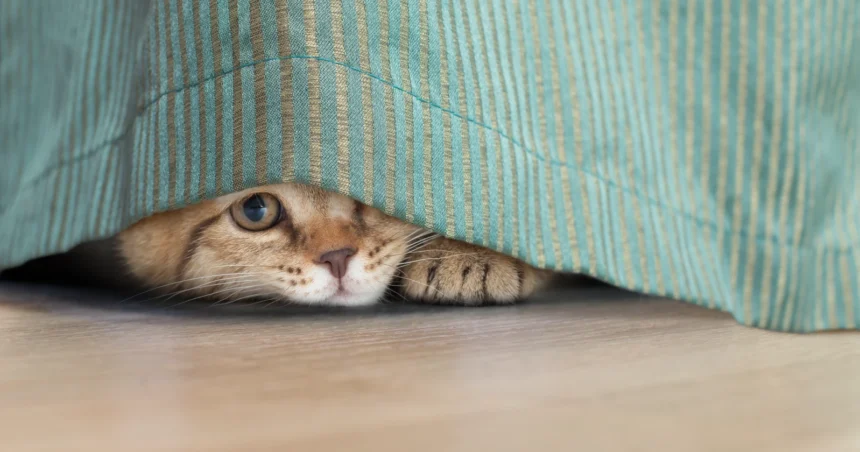
Discover effective feline behavior strategies to help your cat stay calm and avoid nervous reactions when you have guests over.
For many pet owners, having visitors at home means watching their cat disappear under the bed or dash to the darkest corner of the house. Cats are territorial animals and creatures of habit; therefore, the arrival of unfamiliar people, new noises, and different smells can trigger a strong anxiety and stress response.

Forcing a cat to interact when they are scared can worsen the problem and lead to panic-induced aggression. However, with patience and the right strategies, it is possible to change this behavior and make visits a calm experience for everyone.
Below, we detail the best tips for managing your feline’s anxiety around guests.
1. Create a “Safe Haven”
Before the doorbell rings, make sure your cat has free access to a quiet room where guests won’t enter.
- Basic setup: This space should include their own litter box, fresh water, food, and their favorite toys.
- Height: Cats feel secure observing from above. Provide a cat tree or clear shelves where they can rest without feeling cornered.
2. Educate Your Guests
The behavior of your visitors is crucial for the animal’s adaptation process.

- Golden rule: Ask your guests to completely ignore the cat upon arrival. No staring, attempts to pick them up, or loud noises to call them.
- Let the cat take the lead: Allow the feline to approach and sniff at their own pace. If the cat decides to interact, instruct the guest to offer a relaxed hand for the cat to sniff before attempting to pet them.
3. Use Positive Reinforcement
The goal is for the cat to associate the arrival of strangers with positive experiences.
- High-value treats: Keep their favorite snacks or a bit of wet food on hand. You can ask a calm guest to gently toss a treat from a distance.
- Play: If your cat is motivated by interactive toys (like feather wands), try playing with them in the same room as the guests, keeping a safe distance so they can relax.
4. Rely on Synthetic Pheromones
Feline pheromone diffusers (such as Feliway) are an excellent preventive tool. These products release a synthetic copy of the feline facial pheromone, which sends a message of calm and security. Plug it in the main room or their safe haven a couple of days before receiving guests.
5. Control the Environment
Minimize overwhelming stimuli. If you know a large group is coming, keep the music volume low and avoid sudden movements. The energy of the environment directly affects your pet’s mood.

Patience Is the Key to Success
Correcting a cat’s nervousness takes time. Each feline has their own pace, and some may never be the “life of the party,” which is completely normal. Respect their limits, prioritize their emotional well-being, and if you notice your cat’s anxiety is extreme or affecting their health (such as refusing to eat or use their litter box), don’t hesitate to consult a veterinarian specializing in feline behavior.
Image PetServi.com