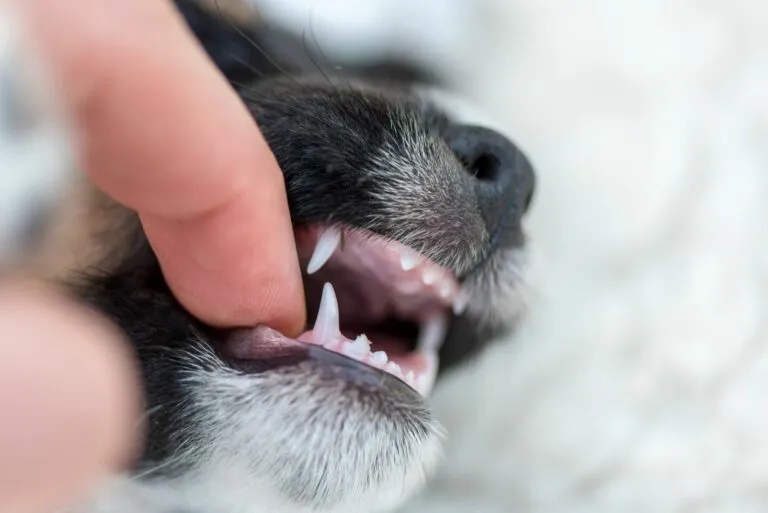
Bringing a puppy into your home brings immense joy, but also a challenging stage for both the dog and its new family: teething.
This natural teething process, though often painful for the puppy, manifests as an almost uncontrollable need to chew on everything in its path, including hands, ankles, and furniture.

Understanding this behavior and knowing how to manage it properly is key to laying the foundation for a happy coexistence and preventing future behavioral issues.
The Teething Process: A Canine Dental Timeline
Like human babies, puppies are born without teeth. The teething process unfolds in two main phases:
- Baby Teeth (2 to 8 weeks): Around two to four weeks of age, the 28 baby teeth, sharp as needles, begin to erupt. This process is usually complete by eight weeks.
- Permanent Teeth (3 to 7 months): Starting at three or four months, baby teeth begin to fall out to make way for the 42 adult teeth. This is the most intense period of chewing, as the puppy’s gums are inflamed and sore. Most dogs complete their adult dentition around six or seven months of age.
During this phase, it’s common to find small baby teeth on the floor or notice a slight amount of blood on their toys. The most evident signs of teething include excessive drooling, red and swollen gums, and, of course, a considerable increase in the need to bite and chew.
Effective Strategies to Manage Nipping
It’s essential to understand that a puppy’s chewing during teething is not an act of aggression but a need to relieve gum discomfort and explore the world. The goal is not to eliminate biting entirely but to teach the puppy to control its force and redirect that behavior toward appropriate objects.

1. Redirection and Appropriate Toys
Always keep a variety of safe and appealing chew toys on hand. The moment your puppy tries to bite your hands or any forbidden object, immediately offer one of its toys.
- Variety of textures: Provide toys made of different materials like hard rubber, nylon, or ropes. This will keep your puppy’s interest and help soothe its gums in different ways.
- Cold toys: Cold has a soothing effect on inflamed gums. You can refrigerate or freeze rubber toys specifically designed for this purpose. A damp, knotted cloth placed in the freezer for a while can also make an excellent homemade chew toy.
- Interactive toys: Toys that dispense treats can keep your puppy entertained and focused on an appropriate object for chewing.
2. Teaching Bite Inhibition
Puppies learn to control the force of their bite by playing with their littermates. If they bite too hard, the other puppy yelps, and play stops. You can replicate this behavior:
- “Ouch!” and withdraw: When your puppy bites too hard, let out a sharp, clear yelp like “Ouch!” Immediately withdraw your hand and stop playing for a few seconds.
- Be consistent: Everyone in the family should apply the same technique consistently so the puppy understands the message.
- Time-out: If the puppy persists in biting hard after the “Ouch!,” stand up and leave the room for a brief period (30 to 60 seconds). This will teach it that biting hard results in the end of interaction and fun.
3. Positive Reinforcement
Praise and reward your puppy when it chooses to chew on its toys instead of you or the furniture. A simple “Good job!” or a pat when you catch it chewing its toy will reinforce the desired behavior.

4. What Doesn’t Work
- Don’t punish physically: Hitting your puppy or holding its muzzle shut can create fear, anxiety, and even worsen biting behavior as a defensive reaction.
- Don’t yell: Shouting can be interpreted by the puppy as a form of rough play, which might excite it even more.
- Don’t encourage hand play: Avoid using your hands as toys during play. This only teaches the puppy that hands are appropriate objects to bite.
With patience, consistency, and the right techniques, your puppy’s teething stage can be managed effectively, turning it into a valuable learning opportunity and strengthening the bond between you and your new pet. If at any point the biting behavior seems excessive or aggressive, don’t hesitate to consult a veterinarian or a professional dog trainer.
If you have questions related to your pet’s well-being, please write to:
DrBorrego@petsvet.com
Dr. Enrique Borrego is the medical director of Animal General Hospital, located at 501 SW Port Saint Lucie Boulevard, Port St. Lucie, FL 34953 • Phone 772-344-8835 • www.petsvet.com • Serving our Treasure Coast community since 1990