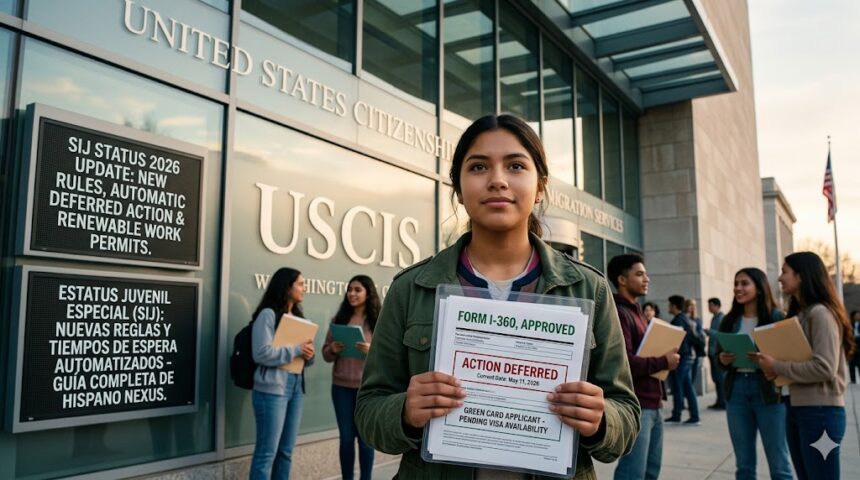
The reality of being a “Special Immigrant Juvenile” (SIJ) in the United States has taken a 180-degree turn. What was once a relatively predictable path has now become a bureaucratic maze where a single mistake in dates or interpreting the new USCIS regulations could cost you deportation. If you are under this status or know someone who is, complacency is no longer an option: the rules of the game have changed, and the clock does not stop.
What changed for the SIJ in 2026?
In 2026, the main changes for Special Immigrant Juveniles (SIJ) focus on the automation of the Visa Bulletin, increased scrutiny of parental abandonment or neglect in the country of origin, and the extension of “Deferred Action” protection for those caught in visa retrogression. Now, beneficiaries with an approved I-360 but without an available visa can access 4-year renewable work permits, reducing vulnerability while waiting for Permanent Residency.

The SIJ Wake-Up Call: What is it exactly, and why does it matter today?
Special Immigrant Juvenile Status is not a gift; it is a legal protection for minors who have been abused, abandoned, or neglected by one or both parents. But here’s the catch: obtaining approval for the classification (Form I-360) is only half the battle.
The real war begins with visa availability. With the increase in applications from Northern Triangle countries (Guatemala, Honduras, El Salvador) and Mexico, priority dates have moved erratically.
Why is this status vital in the current context?
- Shield against deportation: Once classified, the youth enters a “protected limbo.”
- Access to Education: Many states allow these youths to qualify for in-state tuition.
- Legal Independence: Allows the minor to no longer depend on the family structure that failed them.
The New 2026 Rules: Breaking Down the Bureaucracy
Here’s the interesting part. The Department of Homeland Security (DHS) has implemented adjustments aimed at “cleaning up” the system but impose more pressure on attorneys and applicants.

1. “Deferred Action” as the Standard
Previously, deferred action for SIJ youth was an almost manual and discretionary process. Starting this year, it has been formalized that any youth with an approved I-360 who cannot adjust status immediately due to per-country limits will automatically receive deferred action consideration.
Watch out for this: This is not the Green Card; it is a “temporary shield” that allows you to work legally while waiting for your turn in the Visa Bulletin.
2. Greater Rigor in “Best Interest” Evidence
State courts must now be much more specific. A court order simply stating “it is not in the minor’s best interest to return to their country” is no longer sufficient. USCIS is requiring a detailed breakdown of the living conditions the minor would face in their country of origin.
- Critical Point: If the state judge does not detail the history of abuse or abandonment exhaustively, USCIS is aggressively issuing Requests for Evidence (RFE), delaying cases for months.
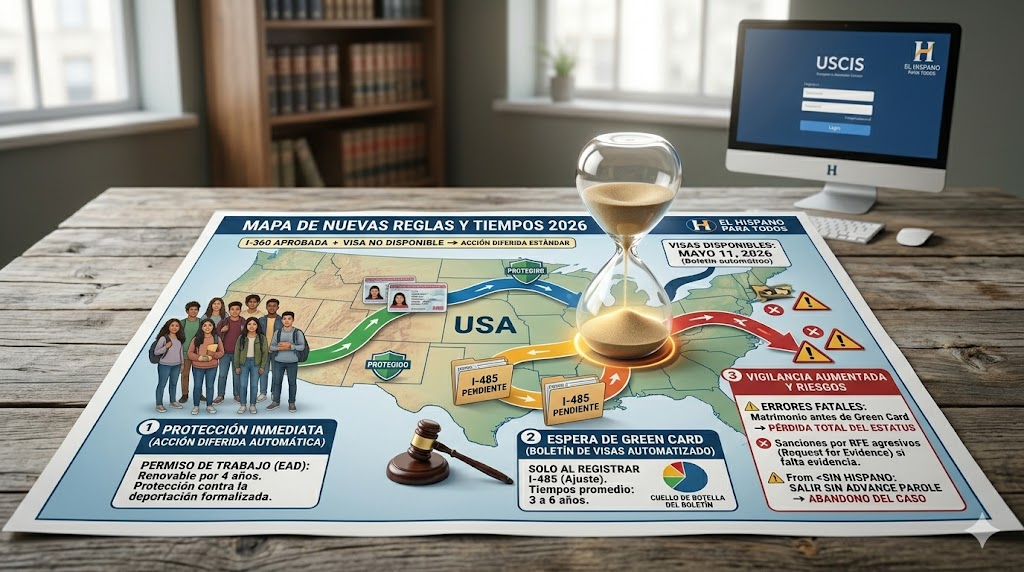
Comparison Table: SIJ Before vs. Now (2026)
| Feature | Traditional Process | 2026 Rules |
| Work Permit | Only when filing for adjustment of status (I-485). | Available through Deferred Action after I-360 approval. |
| Average Wait Time | 2 to 4 years, depending on country. | 3 to 6 years (due to system saturation). |
| Deportation Protection | Uncertain until adjustment of status. | Formalized through automatic Deferred Action. |
| USCIS Interviews | Frequently waived. | Increase in in-person interviews for applicants over 18. |
The Visa Bulletin Maze: The Real Obstacle
The truth is, even with approved SIJ status, you could spend years waiting for your Green Card. The annual quota system is the “bottleneck” that frustrates thousands of families.

- What is the Priority Date? It’s your “place in line.” It is set on the day you file your I-360 petition.
- The Retrogression Phenomenon: Sometimes, the line moves backward. Yes, it sounds absurd, but it happens when there is more demand than visas available for a fiscal year.
- The Winning Strategy: Don’t wait for your date to become current to prepare your documents. The medical exam (I-693) and proof of financial support must be ready weeks before the Visa Bulletin shows your date as “Current.”
Fatal Mistakes to Avoid (The “Survival Manual”)
As a senior editor who has seen countless cases in our community, I can tell you: most denials are not due to lack of merit but because of silly mistakes.
- Getting Married Before the Green Card: If you are an SIJ beneficiary and marry before obtaining permanent residency, you lose your status immediately. SIJ is based on your status as a “minor dependent of the court.” Marriage breaks that legal dependency.
- Leaving the Country Without Advance Parole: Don’t even think about crossing the border for a quick visit. If you leave without an official travel permit, your case is considered abandoned, and you won’t be able to re-enter.
- Lying About Contact with Parents: If you claimed abandonment by your father but USCIS discovers he sends you money or that you talk to him daily on social media, they could accuse you of immigration fraud. Social media is immigration’s best investigator.
What’s Next for Youth in 2026?
Here’s what no one tells you: total digitization. USCIS is migrating all SIJ files to a cloud system. This means response times for I-360s are dropping from 12 months to 6 months in some service centers, but scrutiny of biometric data is total.
Golden Advice from Hispano Nexus: If you already have your I-360 approved, make sure to keep your address updated in the USCIS portal. Many young people lose their chance at a Green Card because the “visa available” notification was sent to an address where they no longer live.
Image: ElHispanoParaTodos/PRESS