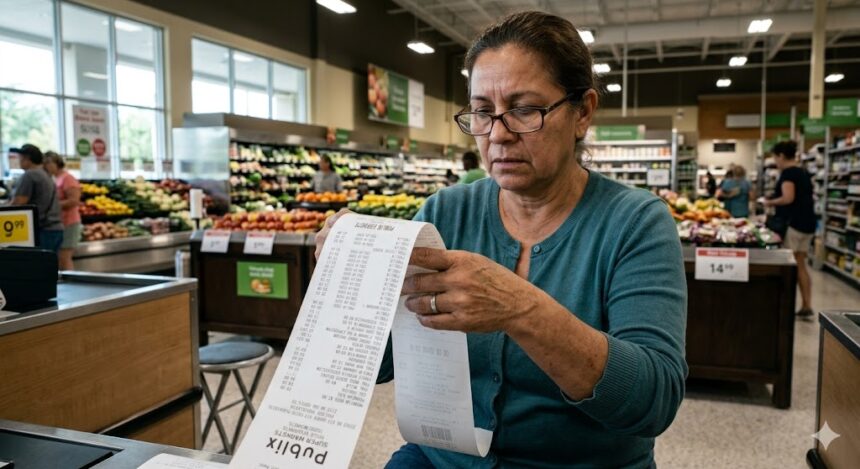
If you remember how much you spent on a basic weekly grocery run five years ago and compare that receipt to today’s, you’ve likely had more than one unpleasant surprise. It’s not your imagination, and it’s definitely not a miscalculation. Food prices have climbed as much as 25% since 2020, turning the task of “grocery shopping” into a financial juggling act that, for many Hispanic families, is becoming unsustainable.
The truth is, we’ve grown accustomed to calling this “inflation,” but at our kitchen tables, it has another name: less quality food for our children and fewer savings for emergencies.

The immediate operational impact (Snippet Bait): With a cumulative increase of up to 25% in the basic grocery basket since 2020, the purchasing power of the average household has been severely eroded. Meat, dairy, and grains lead the list of price hikes, forcing families to make radical adjustments to their shopping habits, opting for generic brands, reducing the frequency of animal proteins, and increasing reliance on coupons or food banks.
The anatomy of the hit to your wallet: Why are we paying more?
When the cash register rings, it rings louder than before, but where is that extra money really going? There’s a complex web of factors that go beyond simple supply and demand.
1. The “Phantom Inflation” and the supply chain
Even though the news says inflation has slowed, prices haven’t dropped; they’ve plateaued at extremely high levels. Transportation logistics, fuel costs, and labor shortages in agriculture have left a “scar” on the final price of every product.
- The transportation effect: Every time diesel goes up by a penny, that cost is passed directly to the price of milk or vegetables arriving from distribution centers.
- Operational costs: Supermarkets, facing higher energy and wage costs, adjust their profit margins, and you, as the final consumer, absorb that impact.
2. “Shrinkflation”: When less is more expensive
Have you noticed that the cereal box is the same size but contains less? That’s called shrinkflation (packaging reduction). Companies are selling you the same price for a smaller quantity of product. It’s a silent tactic by large corporations to raise prices without triggering immediate alarms at the supermarket price scanner.
Comparative Table: The Increase in Essential Products
To help you understand how this 25% breaks down in your shopping list, we’ve prepared this comparative table. (The figures are national average market estimates).

| Product | 2020 Price (Approx) | 2026 Price (Approx) | Estimated Increase |
| Dozen eggs | $1.40 | $2.80 | +100% |
| Beef (lb) | $4.50 | $6.20 | +37% |
| Milk (gallon) | $3.20 | $4.10 | +28% |
| Rice (5lb) | $2.50 | $3.15 | +26% |
| White bread | $1.90 | $2.40 | +26% |
(Note: These values vary drastically by state and supermarket chain).
Survival Guide: How to Protect Your Family Budget
We can’t control the global economy, but we can optimize how we manage the dollar we work so hard to earn. Here are some “financial guerrilla” tactics for the supermarket.
1. Cook from scratch:The rule of ingredients.
Ultra-processed foods have the highest profit margins for the industry. Buying dry beans, bulk rice, and seasonal vegetables is not only cheaper but infinitely healthier. Convenience is a luxury your wallet can no longer afford.

2. Don’t shop on impulse:The weekly ‘Attack Plan.’
The supermarket is designed for you to buy what you don’t need. If you don’t have a written list based on a defined weekly menu, you’re wasting money. Don’t go grocery shopping hungry; it’s the perfect recipe for financial disaster.
3. Ignore the label, check the contents:Store brands.
In most cases, the supermarket’s own brand comes from the same factory as the name brand. You’re paying 30% extra just for the brand’s advertising. In times of crisis, brand loyalty is an unnecessary expense.
This reality is tough, and it’s time to stop waiting for “everything to go back to normal.” The normal has changed. The good news is that when the Hispanic community organizes and takes control of its finances, we are unstoppable. We will continue monitoring price fluctuations to bring you reports that help protect what’s yours.
Image: ElHispanoParaTodos/PRESS