
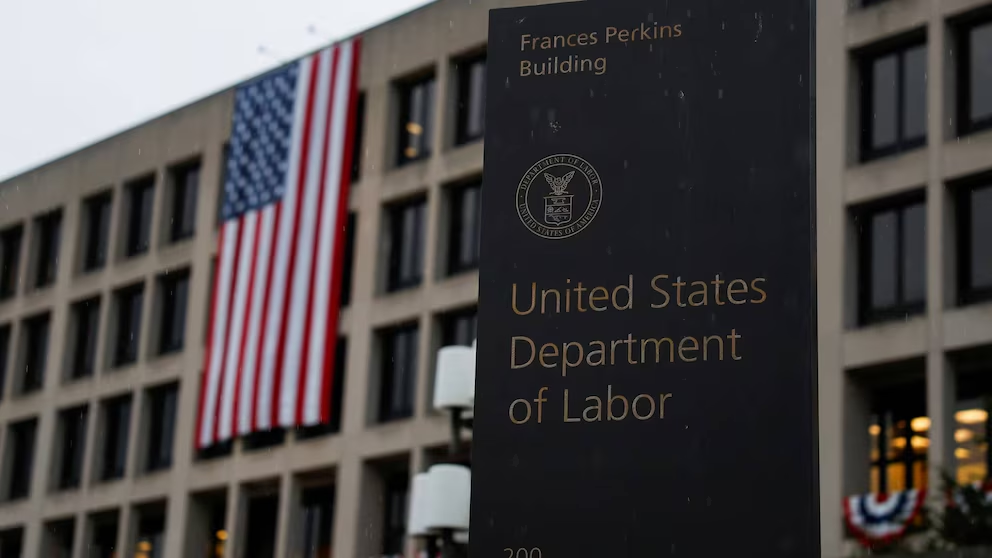
The US labor market is starting to send smoke signals that neither Wall Street analysts nor working families can afford to ignore. Whether you’re seeking stability in your current job, planning to ask for a raise, or managing hiring costs for your own business, the macroeconomic winds have just taken a noticeable turn. The US Department of Labor has released its weekly report on initial public unemployment assistance claims, and the numbers confirm that the employment shield is no longer impenetrable. Unemployment benefit claims nationwide rose to 215,000, a jump that, while not signaling an imminent collapse, marks the pulse of a federal economy walking the thin line of induced slowdown.
- The Report’s Background: What Do These 215,000 Claims Really Mean?
- The Forces Behind the Numbers: High Rates and Spending Contraction
- Comparative Chart: Weekly Unemployment Trend vs. Market Expectations
- Sectors with the Highest Turnover: Who Is Losing Jobs Today?
- Practical Guide: How to Interpret Your Unemployment Protection Options
The reality is that the era of guaranteed employment with eyes closed is shifting toward a much more selective landscape. The Federal Reserve has kept its foot on the interest rate accelerator for months, and the shrapnel from that restrictive policy is finally hitting the human resources departments of major American industries.

Immediate Impact Summary (Snippet Bait): Initial unemployment assistance claims in the United States recorded a net increase, reaching 215,000 weekly claims. This upward adjustment aligns with the most conservative projections from economists, who see this trend as a reflection of a gradual moderation in corporate hiring and a technical readjustment in the services, technology, and light manufacturing sectors at the federal level.
The Report’s Background: What Do These 215,000 Claims Really Mean?
To grasp the true significance of this economic data, it’s essential to step back from alarmist headlines and assess the immediate historical context. In an economy as massive as the US, a weekly figure hovering around 200,000 claims is technically considered an indicator of a healthy labor market under full employment conditions. However, here’s the catch: what matters is not the isolated number of 215,000, but the speed and consistency with which the curve has started to steepen over the last four months.
The rise in unemployment benefit claims acts as a real-time thermometer for mass layoffs and business closures. When a company decides to cut its workforce due to a drop in consumption or the rising cost of credit lines, the displaced worker typically turns to state agencies immediately to file for economic relief. Therefore, this increase tells us that the pace of layoffs is outstripping the rapid absorption capacity companies had last year.
The Forces Behind the Numbers: High Rates and Spending Contraction
Asking why major corporations are tightening their hiring spigots at this moment is an exercise in basic financial logic. Can a distribution chain or a tech consortium really expand its payroll when the cost of bank financing remains at restrictive levels? Probably not, and that’s the crossroads defining the operational reality of today’s businesses.
- The Corporate Credit Squeeze: Medium and large companies rely on debt issuance or revolving credit lines to finance their daily operations and expansion plans. With money expensive at federal banks, refinancing that debt has become a headache, forcing management to cut fixed operational costs, where salaries and benefits represent the highest percentage.
- The Exhausted Consumer’s Resistance: The engine of the US Gross Domestic Product (GDP) is domestic consumption. After months of battling inflation at the grocery store, home insurance, and gas pump, the average citizen has cut back on non-essential goods. With less demand for products, factories and warehouses are reducing shifts and, ultimately, eliminating stable jobs.
Comparative Chart: Weekly Unemployment Trend vs. Market Expectations
Let’s analyze how the current report compares with previous weeks’ records and the estimates from major New York financial firms to gauge the degree of macroeconomic surprise:

| Weekly Evaluation Indicator | Record from Three Weeks Ago | Previous Consolidated Data | Current Government Report | Analysts’ Projection |
| Initial Claims (National) | 204,000 claims | 208,000 claims | 215,000 claims | 210,000 (Exceeded) |
| 4-Week Moving Average | 203,500 claims | 206,000 claims | 209,250 claims | Moderate upward adjustment |
| Continuing Claims (Insured) | 1.78 million | 1.81 million | 1.83 million | Increase in unemployment duration |
Sectors with the Highest Turnover: Who Is Losing Jobs Today?
A detailed analysis by state and sector reveals that job vulnerability does not affect everyone equally. Specific industries are acting as the main catalysts for this increase in social assistance offices, directly impacting a significant portion of our community’s workforce:
- Technology and Financial Support Services: Software firms, digital platforms, and investment consultancies continue their process of optimizing structures after the hiring excesses of the easy liquidity era. Administrative and mid-level support positions are the first to be deemed redundant.
- Logistics and Supply Chain: Warehousing and freight transportation companies are adjusting their workforces downward following the rebalancing of global inventories, stabilizing cargo volumes at more modest levels compared to previous demand peaks.
- Administrative and Corporate Support Services: Temporary staffing agencies and subcontractors for cleaning and industrial security services are seeing contract cancellations from corporate clients looking to protect their annual budgets against any contingency.
“We’re not seeing a massive employment collapse, but rather a margin correction. Companies are no longer willing to retain idle talent out of fear of not finding staff in the future. If a position doesn’t generate direct profitability in the quarter, it’s eliminated from the organizational chart without hesitation,” notes a labor market specialist from a global consulting firm.
Practical Guide: How to Interpret Your Unemployment Protection Options
In this environment of subtle economic cooling, complacency in the workplace is a high-risk luxury. If you feel that corporate restructurings are nearing your workplace or simply want to be prepared for any management surprises, the margin for error is zero. It’s crucial to understand the technical workings and legal safeguards of federal and state unemployment insurance.
1. Income and Employment Documentation Audit: Shielding Phase.
Don’t wait for a termination letter to organize your employment records. Keep secure, downloaded digital copies of your latest pay stubs (W-2 or 1099 statements), your original employment contract, and any recent performance evaluations. These documents will serve as your unassailable legal evidence before the state agency to prove that your job separation was not due to misconduct or poor personal performance.

2. Eligibility and Benefit Amount Determination: Reserve Calculation.
Each state in the Union manages its own compensation tables and maximum payment caps based on earnings from the so-called “base period” (the first four of the last five completed quarters). Check the official calculator from your state’s Department of Labor to see how much you would receive weekly and for how many maximum weeks (typically between 12 and 26 weeks depending on the region) to mathematically adjust your family’s contingency budget.
3. Filing Your Claim Without Delay: Immediate Strategy.
If layoffs occur, file your initial unemployment benefit claim during the same week of your job separation. Processing and the mandatory “unpaid waiting week” mean your first electronic payment will typically take between 14 and 21 days to become effective. Delaying the digital application will only extend the financial drought in your bank account.
4. Strict Compliance with Reemployment Requirements: Legal Safeguard.
Unemployment benefits are conditional insurance, not a passive right. The government requires you to demonstrate weekly that you are actively seeking work and available to accept a reasonable offer based on your previous experience. Record every digital application, job interview, or job fair you attend; eligibility audits are common, and omitting a single detail could force you to repay the funds received with severe financial penalties.
Image: ElHispanoParaTodos/PRESS