

Trump slams the door on families, students, and workers seeking to arrive legally in the U.S.
Translated with AI from the original article in Spanish. Leer la noticia original en español
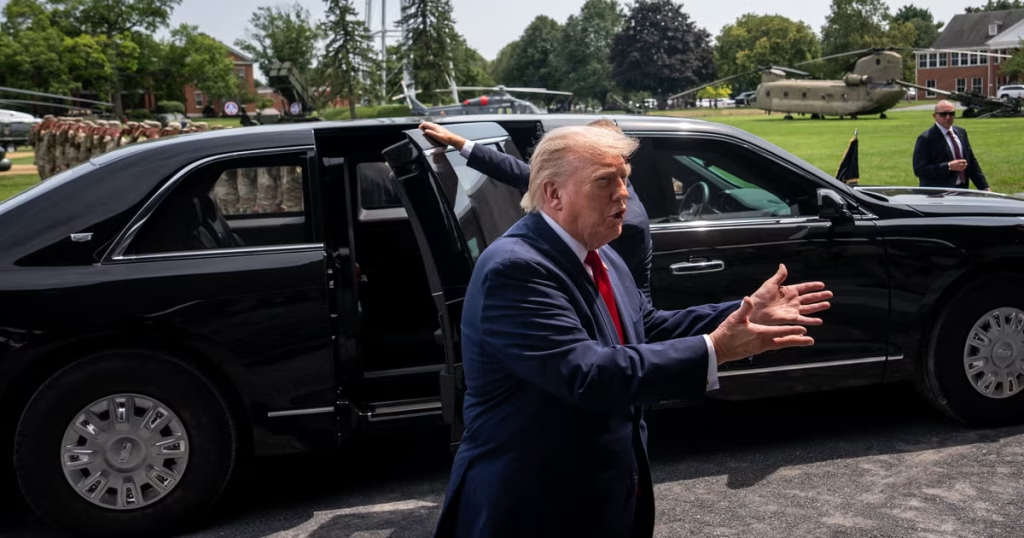
Donald Trump has implemented and proposed a series of comprehensive reforms that severely restrict legal immigration channels in the United States. These measures directly impact three traditional pillars of entry into the country: international students, families, and skilled workers.
According to an analysis of government data by the Cato Institute, 73% of the total decline in migration to the United States stems from the obstruction of these regular pathways, far exceeding the decrease in unauthorized crossings.
| Affected Group | Target Visas | Restriction Mechanism | Main Impact |
| Skilled Workers | H-1B, L-1, Sponsorships | Extreme Requests for Evidence (RFE), increased denials, and mandatory consular processing outside the U.S. | 78% drop in the issuance of specialized work visas. Halt to hiring in the technology sector. |
| Families | H-4, Status Adjustments | Removal of work permits for spouses and application of much stricter income tests ("public charge"). | Forced family separation and years-long bottlenecks at embassies to achieve reunification. |
| Students | F-1, OPT | Elimination of "duration of status" (imposing fixed expiration dates) and cuts to the Optional Practical Training (OPT) program. | Blockage in the transition from student to professional, pushing talent toward other countries. |
The "Bureaucratic Wall"
The administration's core strategy consists of increasing fees, intentionally slowing down internal processing at the immigration agency (USCIS), and forcing applicants already in the U.S. to leave the country to obtain in-person interviews at saturated consulates.
The practical result is a total disincentive: companies avoid the risk and cost of sponsoring foreigners. And academic talent opts for destinations with more agile and predictable immigration systems.
The most significant changes in each area are detailed below:
1. International Students (F, M, and J Visas)
The academic and exchange visa system has undergone drastic modifications designed to limit the flexibility of foreign students at U.S. institutions:
- Academic mobility restrictions: Undergraduate students are prohibited from changing majors or transferring institutions during their first year. For graduate students, this prohibition is permanent except for very restrictive exceptions.
- Prohibition on multiple degrees: The possibility of pursuing a second degree at the same educational level (for example, obtaining a second master's degree in a different field) is permanently restricted.
- Reduction of the grace period: The time limit to leave the country, find new employment, or change status after finishing studies was reduced from 60 to 30 days.
- Administrative burden: Routine procedures such as program extensions or OPT (Optional Practical Training) applications now face greater bureaucratic requirements and an increase in individual petitions to USCIS.
2. Families and Family Reunification
The pathways for the reunification of U.S. citizens and permanent residents with their foreign family members have been considerably hindered:
- Expansion of Travel Bans: Total and partial suspensions of immigrant and non-immigrant visas have been implemented for citizens of dozens of countries, blocking regular arrival channels.
- "Public Charge" Rule: Economic and self-sufficiency criteria have been tightened, implicitly penalizing low-income applicants or those who have relied on certain public benefits in the past, directly affecting family petitioners.
- Suspension of humanitarian and parole programs: Various family reunification processes based on parole (such as CHNV programs and other regional processes) have been limited or terminated, closing temporary legal entry routes.
3. Workers and Employment Visas (H-1B, EB-1, EB-2)
U.S. companies that rely on foreign talent face a much more restrictive financial and regulatory landscape:
- High costs for employers: Substantial fees have been introduced for work visa petitions—such as a fee of up to $100,000 in certain cases of new H-1B hires from abroad—which makes the process more expensive and difficult, especially for small businesses and startups.
- Salary prioritization: The H-1B lottery selection system has been modified to exclusively favor higher-salary positions, harming entry-level applications.
- Scrutiny of employment-based residency: Stricter eligibility standards have been imposed for employment-based residency categories (such as EB-1 and EB-2), increasing Requests for Evidence (RFE) and denial rates.
4. General and Operational Restrictions
- Consular interviews and tourist visas: Previous exemptions for temporary visa renewal interviews were eliminated, generally requiring physical presence at consulates of origin.
- Proof of citizenship: The naturalization exam (civics test) has become considerably more demanding in terms of the volume of questions and required levels.
The two opposing positions
- The administration's justification: The government maintains that the previous immigration system harmed the American working class by encouraging the hiring of foreign skilled labor at a lower cost and neglecting national security. Its approach prioritizes local employment and meticulous scrutiny of every application.
- The position of the private sector, universities, and think tanks (such as the Cato Institute): They argue that the collapse of legal pathways damages competitiveness against economies like Canada, Australia, or the European Union, causes a shortage of critical talent in science and technology, and in practice does not solve irregular immigration, but rather dismantles it.
Follow us on Facebook