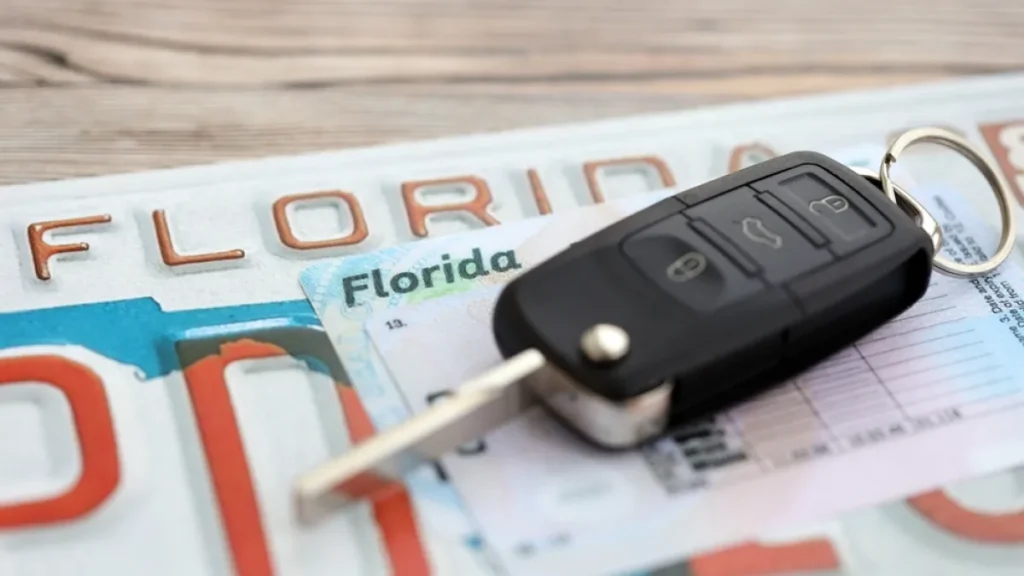
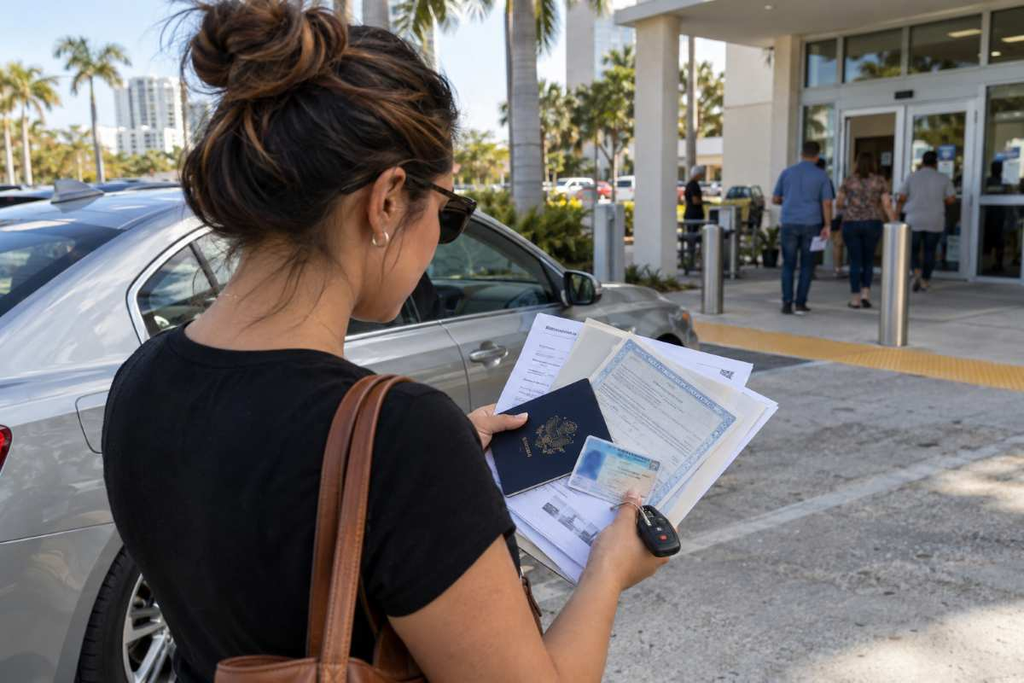
If you just bought a used car, recently moved to Florida from another state, or simply need to renew your annual license sticker, you’ll know that arriving at the counter without the exact paperwork or with a poorly drafted sales invoice means one thing: being sent back to the frustration line after hours of waiting. The truth is that state bureaucracy does not forgive oversights, and the new audit directives have raised the bar of demand to unprecedented levels.
The tightening of controls is not an administrative whim; it responds to the urgent need to curb massive title fraud, the circulation of uninsured vehicles, and the falsification of residency proofs that flood traffic databases. From now on, attempting to register a car in Florida with “shortcuts” or half‑finished documents is almost a guaranteed rejection. What exactly are the new regulatory locks, what papers the FLHSMV now demands with millimetric scrutiny, and how can you shield your process to succeed on the first try? Let’s break it down in detail.
The pulse of the new vehicle registration (Snippet Bait): The state of Florida formally tightened the requirements to register vehicles and enroll new or used cars, requiring owners to present reinforced identity proof, insurance evidence with strict local coverage, and digitally audited clean titles. This new regulation aims to eradicate registration fraud and the use of phantom policies, increasing verification filters at all FLHSMV offices.
Effective October 1, changes will affect vehicle registration, plates, accident reports, and several DMV-related procedures in Florida.
What will you need to present to register a vehicle?
The new law states that an individual applicant must provide satisfactory proof of residence for the department and, in addition, one of three types of documents.
The alternatives are:
A valid driver’s license or ID card that meets REAL ID, issued by Florida or another state.
A valid and current U.S. passport.
A valid and current foreign passport accompanied by a current I‑94 form issued by U.S. Customs and Border Protection.
The law expressly establishes these three alternatives in state statute.
The Anatomy of the Tightening: What Has Changed at FLHSMV Counters?
To understand why a process that once took ten minutes can now require multiple visits and additional validations, it’s necessary to examine the cracks in the system that authorities decided to seal in one go.
1. The Hunt for Fake or Foreign Insurance Policies
One of the biggest headaches for Florida traffic authorities was the proliferation of drivers registering vehicles using insurance from other states with minimal coverage or, worse, fraudulent coverage certificates issued by phantom agencies.
New real‑time validation filter: With the new protocol, DMV offices electronically and instantly verify with authorized insurers that the policy contains the mandatory liability coverage (PIP and PDL) under the exact VIN number of the vehicle. If the system finds no exact match and activation in the central server, the registration is frozen immediately.
The uncomfortable truth: Drivers accustomed to buying cheap, dubious insurance to get past the counter now face an impenetrable computer wall that rejects the process and reports the anomaly.
2. Proof of Residence and Electronic Titles (E‑Titles)
The requirement to prove legal and physical residence in the county where the vehicle is registered has become extremely rigorous, eliminating the flexibility that some informal processors used to operate with.
Goodbye informal receipts: Letters from relatives or simple lease contracts without notarization are no longer accepted as valid proof of residence. Recent utility bills (water, electric, gas) in the holder’s name or official government documents are required.
Inspection of out‑of‑state titles: If you bring a financed or purchased car from another state, the physical inspection of the serial number by a police officer or authorized notary is now an obligatory, non‑transferable step before stepping into the tax office.
Table: X‑ray of the Process — Traditional Requirements vs. Florida’s New Standards
To accurately visualize what has changed when putting your car’s paperwork in order, we contrast both scenarios:
Registration Component
Traditional Requirement (Previous Flexibility)
New Strict Requirement (Current)
Insurance Policy
Acceptance of traditional printed documents subject to manual visual review.
Mandatory real‑time electronic verification with insurer database.
Proof of Residence
Third‑party letters, simple lease contracts, or miscellaneous receipts.
Formal utility bills or direct government documentation.
Vehicle Inspection (VIN)
Loose requirement for vehicles with clean out‑of‑state titles.
Mandatory physical VIN verification (Form HSMV 82042) for all foreign cars.
Practical Guide: How to Register Your Vehicle in Florida Without Fatal Errors
In a landscape where the slightest discrepancy in a document stops your process, methodical preparation is your best ally. Follow these foolproof steps to succeed:
1. The First Filter You Must Pass Without a Taint: Gather and verify the validity of your identity and residence documents.
Make sure to bring your updated Florida driver’s license or current official ID. As proof of residence, prepare at least two formal documents (such as an electricity, gas bill, or recent bank statement) that clearly show your name and exact county address.
2. Avoid Automatic Rejection at the Counter: Confirm that your insurance meets the state’s mandatory standards.
Contact your insurance agent beforehand and ask them to verify that their system is electronically synced with the FLHSMV. Ensure the insurance card clearly displays the vehicle’s VIN, the PIP coverage limits, and that the policy is active in your name.
3. The Essential Step for Out‑of‑State Titles: Perform the VIN inspection if the vehicle comes from another state.
If the car is titled outside Florida, schedule a physical VIN verification. This can be done by a local police officer, an authorized Florida new‑car dealer, or an employee at the tax collector’s office. Without this signed form, the registration will not proceed.
The truth is that trying to shortcut Florida’s vehicle procedures only leads to wasted time and money. For our Hispanic community, being informed and prepared with the correct documentation is the only guarantee to travel with absolute peace of mind on the state’s roads.