If you or a family member arrived in this country seeking stability, followed the regular channels, and relied on Medicaid to cover medical visits, prescriptions, or chronic health treatments, the news that the public health system is closing its doors to you today feels like an institutional slap. The idea that government medical protection was guaranteed for all vulnerable legal residents has collapsed under the weight of a new federal legislative architecture.
The change is not minor or administrative; it is a historic contraction in eligibility criteria driven by federal legislation (Budget Reconciliation Law), sharply cutting federal Medicaid and CHIP funds. From now on, entire categories of immigrants who historically received medical assistance are excluded from the federal umbrella. Who exactly loses the benefit, what emergency options remain, and how this measure impacts key communities in states like Florida? Let’s break it down.
The pulse of health exclusion (Snippet Bait): Starting today, October 1, new federal restrictions take effect that limit Medicaid funds exclusively to U.S. citizens, lawful permanent residents (LPR), entrants from Cuba and Haiti, and COFA migrants. Hundreds of thousands of lawfully present immigrants (with regular legal status but outside these preferred categories) lose automatic access to full federal medical coverage, leaving them exposed to being uninsured unless states decide to cover them with local funds.
The measure is not aimed solely at people without immigration authorization. In fact, those who could lose coverage include refugees, people granted asylum, certain humanitarian parole beneficiaries, and some trafficking or domestic violence victims who remain legally in the country.
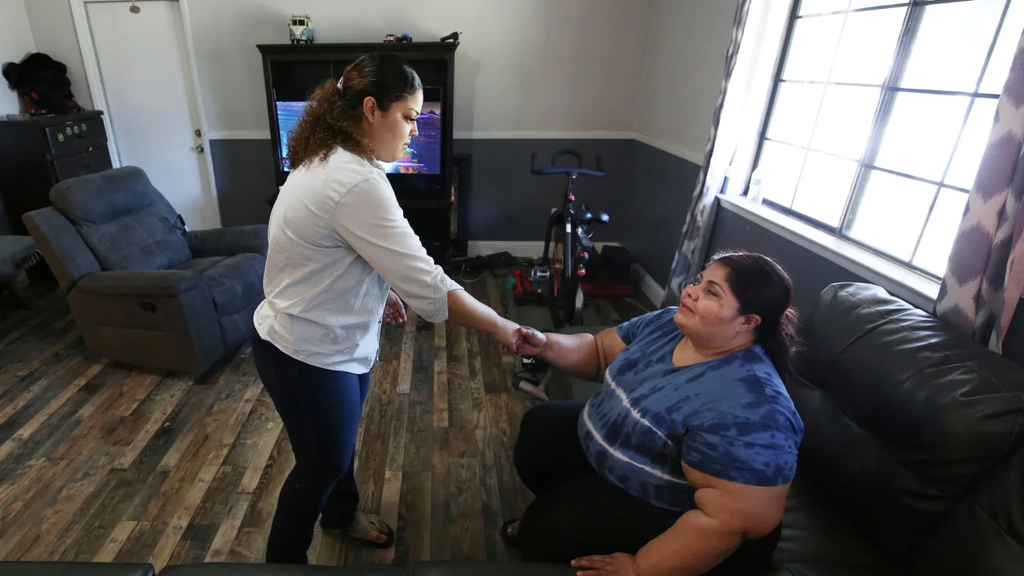
Refugees and other legal immigrants face new restrictions on Medicaid access starting in October. Credit: Gary Kazanjian | AP
The Anatomy of the Cut: Which Immigrants Lose Eligibility Starting Today?
To understand the magnitude of this budgetary slash, it is necessary to examine the new exclusion map that rewrites the rules for accessing public health in the country.
1. Tightening of Migration Filters in the Health System
For years, Medicaid access for non‑citizens depended on their entry date or specific humanitarian considerations that covered various groups with documented legal status.
The only profiles that retain the benefit: Federal regulations set a ruthless filter. From today, only those who maintain full coverage in Medicaid (meeting other socioeconomic requirements) are U.S. citizens, lawful permanent residents (with or without the 5‑year bar as applicable), documented entrants from Cuba and Haiti, and COFA migrants.
The uncomfortable truth: What happens to refugees, certain asylum seekers, work visa holders, or people under other humanitarian statuses that previously qualified? When federal funds for them run out under this new framework, they are left stranded nationally, forcing state governments to decide whether to bear the financial cost of keeping them or allow them to add to the list of uninsured.
2. Direct Impact on High‑Immigrant‑Population States Like Florida
The implementation of this regulation directly falls on state health and social service departments, such as Florida’s Department of Children and Families (DCF), tasked with reviewing and pruning beneficiary lists.
The ghost of administrative and procedural losses: Public health experts warn that beyond strict migration status exclusion, the bureaucratic chaos generated by the transition will cause thousands of eligible families to lose coverage due to notification errors, lack of postal data updates, or language barriers when responding to state notices.
Table: Radiograph of the Change — Who Saves and Who Falls Out of Medicaid
To accurately visualize the new regulatory landscape effective today, we compare migration categories with system access:
Applicant Migration Status
Medicaid Benefit Status (From Today)
Key Observations and Exceptions
Citizens and Residents (LPR)
Retain the right
Subject to regular income and resource criteria of each state.
Cuba and Haiti Entrants / COFA
Retain the right
Explicitly protected under the new budget law exceptions.
General Legal Status Immigrants(Refugees, Work Visas, etc.)
Lose federal eligibility
Unless the state chooses to fully fund their care with local resources.
Undocumented Immigrants
Remain excluded
Maintain only access to emergency medical services (Emergency Medicaid) by historical policy.
Practical Guide: What to Do If You or Your Family Are Affected by This Medicaid Cut
Faced with such a radical change in the health system rules, it is vital to act quickly, verify notifications, and explore local alternatives before becoming completely unprotected. Follow these foolproof steps:
1. Identify if you have received an official state notification: Carefully review your mailbox and digital communications.
State health departments are sending notices by postal mail or through digital portals to beneficiaries whose eligibility changes today. If you receive a letter indicating termination or a shift to a limited Emergency Services Only scheme, read the appeal deadlines carefully.
2. Some regions maintain coverage for certain groups: Investigate whether your state has locally funded programs.
Although the federal government has cut funds, several states have safety nets funded by their own taxes to protect children, pregnant women, or certain vulnerable adults regardless of Washington’s changes. Check with community health centers (Federally Qualified Health Centers) or immigrant aid agencies to learn about resources available in your area.
3. Where to seek rigorous guidance and avoid fraud: Professional advice and reliable information sources.
In times of health crisis and legal changes, scammers proliferate, charging for nonexistent medical insurance “saves.” Turn only to certified social workers in community clinics or consult nonprofit organizations specializing in immigrant health rights.
The truth is that health should not be a pawn in Washington’s budget battles. For our Hispanic community, staying informed and seeking alternative support networks is the only line of defense against a system that insists on closing doors to those who work and build this country every day.