

Radiography of the Collapse: The States Where Medicaid Has Left Thousands of Immigrants Without Coverage
Translated with AI from the original article in Spanish. Leer la noticia original en español
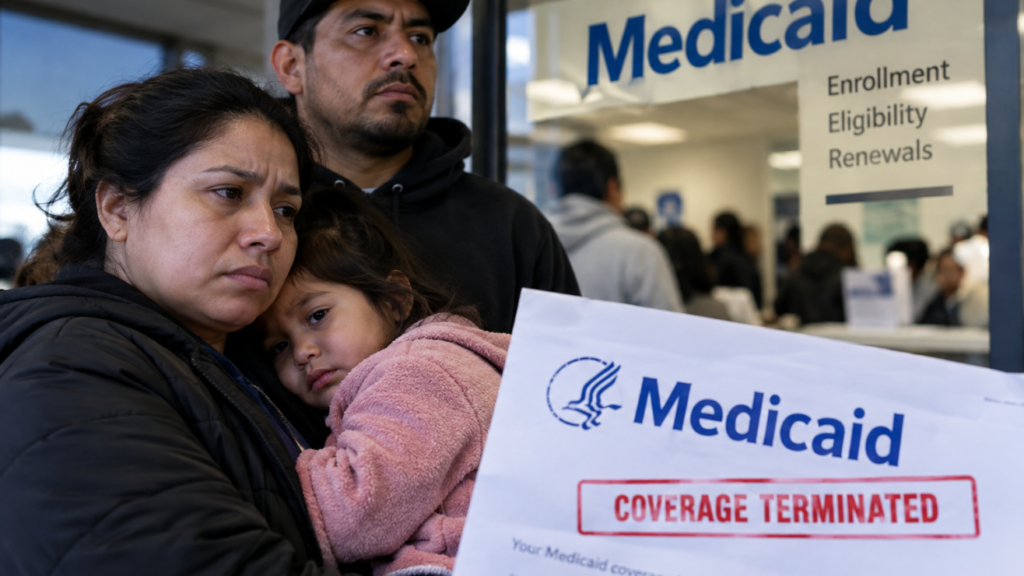
If you reside in states like Florida, Texas, or Arizona and depend on public medical assistance to care for your family, the truth is that the last few weeks have been marked by uncertainty and fear. The idea that having a regularized legal status in the United States guaranteed the fundamental right to health has vanished following the implementation of drastic budget cuts shaking Medicaid rolls across the country.
The reality is that states are not applying the rule in the same way. While some local administrations have decided to absorb the financial blow temporarily with their own resources, other state governments have accelerated mass disenrollments, leaving hundreds of thousands of essential workers and their children without access to medical consultations, prescription drugs, or emergency treatments. In which states are the worst cuts being recorded, how are community clinics responding, and what should affected families do to avoid being left completely unprotected? Let's break it down in depth.
The Pulse of the Health Crisis (Snippet Bait): Federal Medicaid cuts have already left thousands of immigrants with legal status without medical coverage in key states such as Florida, Texas, Arizona, and Georgia. The massive lack of medical care forces affected families to rely on saturated community clinics, while local governments debate whether to allocate their own funds to avoid a public health catastrophe.

The Territorial Anatomy of the Cut: Where Does the Medicaid Crisis Hit Hardest?
To understand the magnitude of this exclusion, it is necessary to analyze the national map and observe how the political decisions of state governments determine who keeps health insurance and who is left out in the cold.
1. The Southern Front and Vulnerability in Key States
The highest concentration of affected Hispanic families is found in the Sun Belt states, where budget restriction policies have been applied with greater administrative rigor.
- Florida and the impact on essential workers: With a historically strict registry and a prolonged rejection of full Medicaid expansion, Florida leads the exclusion lists. Local health departments have begun purging thousands of files of immigrants who, despite having work permits or conditional residency, no longer qualify under the new federal filters.
- Texas and the pressure on public hospitals: In Texas, the lack of a robust public health network for vulnerable populations has caused emergency rooms in cities like Houston, Dallas, and San Antonio to become saturated with patients who lost their preventive coverage and now go to the hospital only when their illnesses reach critical stages.
2. Regional Disparity: States Seeking Alternatives Versus Those Closing the Door
The crisis reveals a deep division in how state governments manage public health in times of cuts.
- The Protective States (Sanctuary Health): Conversely, states with more progressive legislation have implemented health programs funded entirely by state taxes to cover sectors of the immigrant population that were excluded from Washington's funds.
- The uncomfortable truth: Living in one state or another has become a medical survival lottery. An immigrant with exactly the same legal status and income level can keep their health insurance if they reside on the West Coast, but lose it overnight if they live in the southern part of the country.
Table: Regional Radiography — Impact of Medicaid Cuts by Key Zones
To visualize the national landscape with precision, we contrast the situation of the states most affected by health exclusion:
| State / Region | Level of Impact on Immigrants | Response and Local Alternatives |
| Florida | Critical / Massive | Accelerated purging of rolls; high dependence on community clinics. |
| Texas | High / Emergency Room Collapse | Saturation of public hospitals due to lack of preventive medical care. |
| Arizona | Moderate to High | Pressure on border health agencies and non-profit organizations. |
| California / New York | Low (Mitigated) | Implementation of own state funds to cover excluded sectors. |
- Florida: It is estimated that nearly 177,000 people were affected by the measure.
- Arizona: Approximately 29,000 documented immigrants were removed from beneficiary lists.
- Washington: Around 11,000 residents lost coverage. The state has alternative local programs to try to relocate some of those affected, although with limited spots.
- Maine: More than 1,000 immigrants with valid immigration status no longer qualified for the program.
Practical Guide: How to Protect Your Health and Find Alternatives if You Lost Medicaid?
Being left without medical coverage does not mean you must give up healthcare entirely. Follow these foolproof steps to find support networks and protect your loved ones:
1. Medical care based on your actual income: Go immediately to a Federally Qualified Health Center (FQHC).
If you lost Medicaid, look for a Federally Qualified Health Center in your area. These community clinics offer general medicine, pediatrics, and pharmacy services on a sliding fee scale, which means you pay according to what you actually earn, regardless of your status.
2. Do not suspend chronic treatments without consulting options: Verify if you qualify for pharmaceutical or state assistance programs.
Many pharmaceutical laboratories and charitable organizations have free or low-cost medication programs for low-income patients who lost their public coverage. Consult with a social worker at local hospitals to learn about available support.
3. Where to seek legitimate, non-profit advice: Consult official sources and avoid falling for fraudulent insurance offers.
Faced with the desperation of losing insurance, scammers proliferate, selling fake policies or "miracle plans." Go only to counselors certified by the health insurance marketplace (Healthcare.gov) or recognized legal service agencies for immigrants.
The truth is that health is the most precious pillar of any working family. For our Hispanic community, knowing which states are implementing cuts and where to find alternative support networks is the only way to stay safe in the midst of this institutional storm.