

Trump's Immigration Offensive Hits Latino Businesses: Impact in Palm Beach and the Treasure Coast
Translated with AI from the original article in Spanish. Leer la noticia original en español
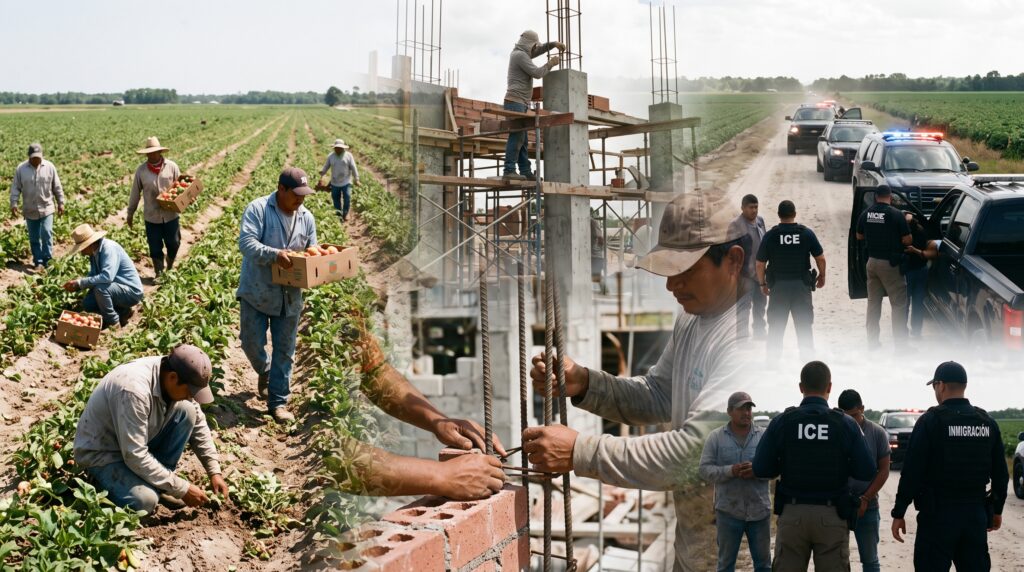
Discover how the tightening of immigration policy and raids are affecting Hispanic businesses, agriculture, and construction in Florida.
A renewed offensive in immigration policy and enforcement operations is causing strong economic tremors in South and Central Florida.
The United States Hispanic Chamber of Commerce (USHCC), which represents more than five million Latino-owned businesses, has issued a clear warning: labor force disruptions and a climate of uncertainty are threatening the survival of small family businesses and economic prosperity nationwide.
But this impact is not just a federal statistic; its effects are felt directly and deeply in our region, from the luxury hotels of Palm Beach to the agricultural fields and construction zones on the Treasure Coast (Martin, St. Lucie, and Indian River counties).
Raids and fear: The epicenter in Palm Beach
The climate of tension recently escalated in Palm Beach County. Just a few months ago, immigration agents (ICE), in conjunction with state police, carried out immigration operations that resulted in the arrest of more than 300 people in the area.
For Latino business owners in the region, these operations—added to the rhetoric of the Trump administration and strict Florida state laws (such as the expansion of E-Verify and the harsh penalties of law SB 1718)—create a devastating domino effect.
The fear of profiling or deportation causes commercial streets to empty, reducing customer traffic in Hispanic restaurants, supermarkets, and retail stores. If the community is afraid to leave their homes, the local economy suffocates.
The blow to the Treasure Coast's engines
Further north, on the Treasure Coast, the immigration crisis is not just about a lack of customers, but a lack of hands. The local economy depends on industries that have historically been sustained by the immigrant workforce:
- Agriculture and Citrus: In cities like Fort Pierce and Fellsmere, agricultural fields and citrus packing houses are facing a critical shortage of pickers. Organizations such as the Florida Policy Institute have repeatedly pointed out that the massive requirement of the E-Verify system and the persecution of undocumented workers could cost the state's economy billions of dollars.
- Construction in boom (and on pause): Port St. Lucie is one of the fastest-growing cities in the country, driven by massive developments in areas like Tradition. However, contractors report construction sites operating at half capacity, with residential and commercial projects suffering severe delays because workers have left the state for fear of legal retaliation.
- Hospitality and Services (Landscaping): The maintenance of golf courses, residential landscaping services, and cleaning in the region's hotel sector are also facing minimal operating margins by not finding personnel willing to fill vacancies.
It is estimated that hundreds of thousands of individuals work in Florida agriculture without legal status, constituting approximately 60% of the state's agricultural workforce. A disruption in this sector not only bankrupts local farms, but also makes food at the supermarket more expensive for everyone.
What's next for local entrepreneurs?
For many Hispanic business owners, the landscape demands rapid adaptation. Some are investing in legal counsel to ensure strict compliance with E-Verify audits and protect their documented employees from erroneous inspections.
Others are trying to raise wages to attract talent, although this often means passing the increased costs on to the final consumer in an economy already battered by inflation.
What is clear is that the line separating immigration policy from local economic policy has disappeared. When compliance policies silence an essential workforce, it is small businesses—the true engine of Palm Beach and the Treasure Coast—that end up paying the bill.