Florida is a tropical paradise, but it comes at a price: we share our backyards with predators that don’t announce their presence. With rising temperatures this spring, calls to animal control centers have surged. This isn’t paranoia—it’s biology. The sun warms the ground, and venomous snakes in Florida emerge from winter hibernation hungry and ready to defend their territory.
- Spring Awakening: Why Are There More Sightings Now?
- 1. The Eastern Diamondback Rattlesnake (Crotalus adamanteus)
- 2. The Water Moccasin (Agkistrodon piscivorus)
- Coral Snake or False Coral? The Color Code That Saves Lives
- Critical Mistakes Residents Make (And How to Avoid Them)
- The Uncomfortable Truth: Are These Snakes Necessary?
If you live here, you already know that “being careful” isn’t enough. You need to know exactly what to look for in the underbrush before it’s too late.

Quick Response (Snippet Bait): The most common venomous snakes reappearing in Florida during spring are the Timber Rattlesnake, the Eastern Diamondback Rattlesnake, the Water Moccasin (Cottonmouth), the Copperhead, and the deadly Coral Snake. Most can be identified by their elliptical pupils (cat-like) and heat-sensing pits, except for the Coral Snake, which is recognized by its color pattern: “Red touches yellow, kills a fellow.”
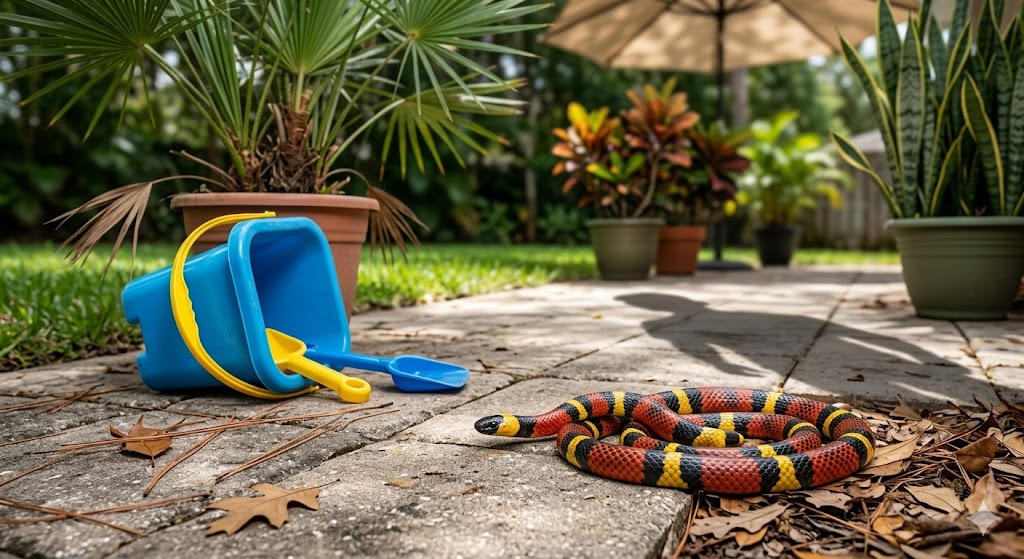
Credit: ElHispanoParaTodos/PRESS
Spring Awakening: Why Are There More Sightings Now?
It’s not some magical plague. It’s a matter of thermoregulation. Snakes are ectothermic; they rely on their environment to regulate body temperature. After months of relative inactivity, March and April mark the start of mating season and food foraging.
Here’s the interesting part: massive real estate development in Florida is pushing these species into residential areas. What was once a pristine swamp is now your “backyard” with a pool. The collision between humans and reptiles is inevitable, and ignorance is the number one risk factor.
1. The Eastern Diamondback Rattlesnake (Crotalus adamanteus)
It’s the undisputed queen of danger in the Southeast. It can exceed 6 feet in length.
- How to recognize it: Look for the pattern of dark diamonds with light edges along its back.
- The sound of fear: Its rattle is a final warning. If you hear it, don’t look for the source; back away slowly.
- Pro Tip: Not all rattlesnakes sound off before striking. Some are “silent” due to mutations or simply because they prefer ambush tactics.
2. The Water Moccasin (Agkistrodon piscivorus)
Often mistaken for harmless water snakes, but with one deadly difference: its temperament.

- The “Cottonmouth”: When threatened, it opens its mouth to reveal a bright white interior, like cotton. It’s its way of saying, “Not another step.”
- Habitat: They’re not just in the water. They can be in your garage if there’s moisture nearby.
Coral Snake or False Coral? The Color Code That Saves Lives
This is the mistake that sends the most people to the ER in the “Sunshine State.” The Coral Snake has a neurotoxic venom that paralyzes the respiratory system. This is no joke.
| Feature | Coral Snake (Venomous) | False Coral / King Snake (Non-Venomous) |
| Color Pattern | Red touches yellow. | Red touches black. |
| Head | Black, blunt snout. | Reddish or light snout. |
| Type of Venom | Neurotoxic (paralysis). | None (constrictor). |
| Behavior | Elusive, prefers to hide. | Often more visible. |
Safety Note: There’s a myth that baby snakes are more dangerous because they “can’t control the amount of venom.” The reality is that an adult has much more venom stored. Both can be deadly. Don’t underestimate a small one.
Critical Mistakes Residents Make (And How to Avoid Them)
Let’s get to the point: most bites occur when someone tries to kill the snake or move it with a short stick. Here’s the safety protocol recommended by experts from the Florida Fish and Wildlife Conservation Commission (FWC):
- Yard Maintenance: Woodpiles, tall grass, and debris are five-star hotels for snakes. Keep your yard clean.
- Rodent Control: If you have mice in the shed, you have an open buffet for rattlesnakes. Eliminate the food source, eliminate the predator.
- Proper Footwear: Forget flip-flops if you’re walking through dense vegetation or near canals. Leather boots are your best life insurance.
What to Do If Bitten? (Emergency Protocol)
Forget what you saw in cowboy movies. DO NOT cut the wound, DO NOT try to suck out the venom with your mouth, and DO NOT apply a tourniquet.

- Step 1: Stay calm (an elevated heart rate speeds up venom distribution).
- Step 2: Call 911 immediately. Florida has some of the best antivenom banks in the world, but time is muscle tissue.
- Step 3: Remove rings, watches, or tight clothing near the area. Swelling will be massive and rapid.
- Step 4: Keep the affected limb at heart level, neither too high nor too low.
The Uncomfortable Truth: Are These Snakes Necessary?
I know they’re scary. Do we really need them? The short answer is yes. They’re the most efficient natural pest controllers we have. Without them, Florida would be overrun with rats and carriers of far worse diseases. The goal isn’t to eradicate them but to learn to coexist at a safe distance.
Image: ElHispanoParaTodos/PRESS