

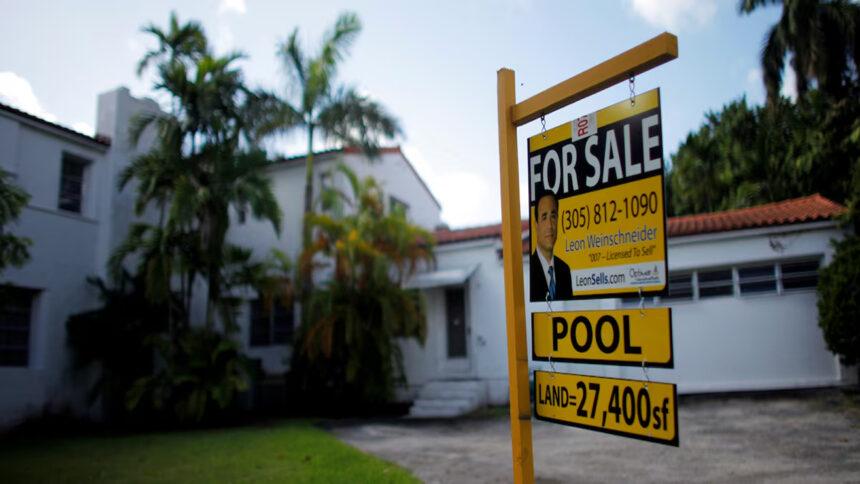
The exponential rise in housing costs in Florida has led state lawmakers to consider an unprecedented measure: eliminating the property tax. This proposal, which could radically transform the state’s economy, aims to ease the financial burden on homeowners facing growing difficulties due to rising property values and associated costs.
However, eliminating the property tax presents significant challenges. This tax is a crucial revenue source for local governments, funding essential services such as schools, public safety, and social programs. While a total abolition seems unlikely in the short term, the idea is gaining political traction, reflecting the pressure homeowners across the state are facing.

The property tax debate has become one of the central issues of the legislative session that began this month in Florida. Republican Governor Ron DeSantis urged lawmakers during his State of the State address to provide tax relief to homeowners. In response, dozens of bills have been introduced, ranging from minor adjustments to proposals to completely eliminate the tax.
Among these initiatives, a bill led by Republican State Senator Jonathan Martin stands out. It proposes conducting a study on the feasibility of eliminating the property tax, with a report expected by October. Martin noted that high tax and insurance costs are severely impacting homeowners, stating, “That American dream in Florida is costing five figures a year in local taxes.”
Impact on Retirees and Fixed-Income Households
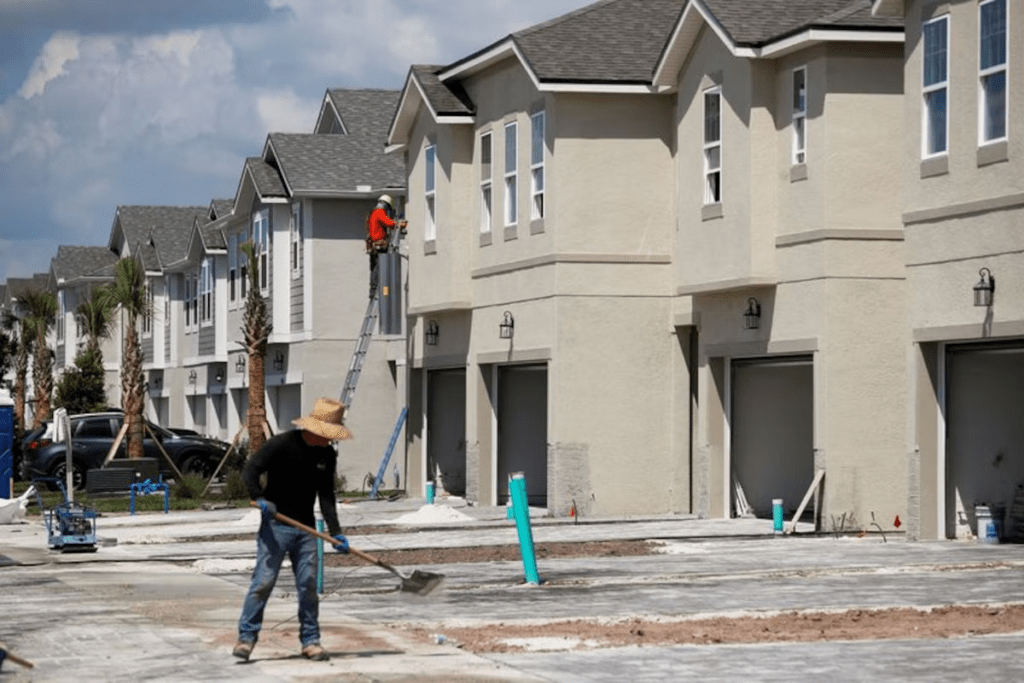
The rise in property values has been particularly harmful to retirees and fixed-income families. According to data from the Tax Foundation, property values in the U.S. increased by 27% between January 2020 and July 2024, adjusted for inflation. In Florida, this trend has been especially pronounced, with home prices quadrupling in the Miami metropolitan area since 2012 and more than tripling in the Orlando and Tampa areas, according to real estate firm Redfin.
Juan Arias, market analysis director for CoStar in South Florida, explained that this increase disproportionately affects fixed-income households, such as retirees, who did not anticipate such significant rises in housing costs.

Property tax is one of the main revenue sources for local governments in Florida, accounting for 18% of county revenues, 17% of municipal revenues, and between 50% and 60% of school district revenues, according to a report by the Florida Policy Institute. In the 2024-2025 fiscal year, total revenue from this tax reached over $55 billion, double what was collected a decade ago.
Eliminating this tax would require compensating for the lost revenue through other sources. According to a report, the sales tax, currently at 6%, would need to double to 12% to cover the deficit. However, DeSantis ruled out increasing state taxes and suggested that local governments could cut excessive spending to balance their budgets.
Political and Economic Division Over the Proposal
The proposal has sparked divisions both between political parties and within the Republican Party itself. Democratic State Representative Anna Eskamani stated that while she supports exploring tax relief options for specific groups, such as seniors, she believes a total elimination would be harmful. Eskamani argued that relying solely on the sales tax would disproportionately affect low-income individuals and be less reliable due to its sensitivity to economic fluctuations.

Even some Republicans have expressed skepticism. State Senator Don Gaetz questioned how property tax revenue would be replaced fairly and efficiently, ensuring local governments could continue operating properly.
DeSantis aims to bring a constitutional amendment to voters in 2026 to abolish or reduce the property tax. For approval, the measure would need the support of 60% of voters.
Image: Infobae





