The White House, United States, demonstrated its political will and logistical power to secure the freedom of five opposition leaders to Nicolás Maduro who had been living as refugees in the Argentine embassy in Venezuela.
- In this context, the Trump administration sent a direct message to the Venezuelan dictatorship:
- The White House can influence the regular provision of resources that sustain the economy, health, and oil industry, managed by countries like Argentina and India, for example.
- Maduro seeks the United States to lift financial sanctions and authorize American companies to extract and export Venezuela’s oil reserves.
The extraction of Magallí Meda, Claudia Macero, Omar González, Pedro Urruchurtu, and Humberto Villalobos was a meticulously planned operation, synchronizing a transfer from Caracas to a beach on the Caribbean Sea, immediate navigation to an island made famous by the Beach Boys, and a short flight that landed in Miami.

Operation Guacamaya, carried out to free the Venezuelan dissidents, was a political decision by Marco Rubio, U.S. Secretary of State. Alongside him were Chris Landau, Deputy Secretary of State, and Mauricio Claver-Carone, special envoy of Donald Trump for Latin America.
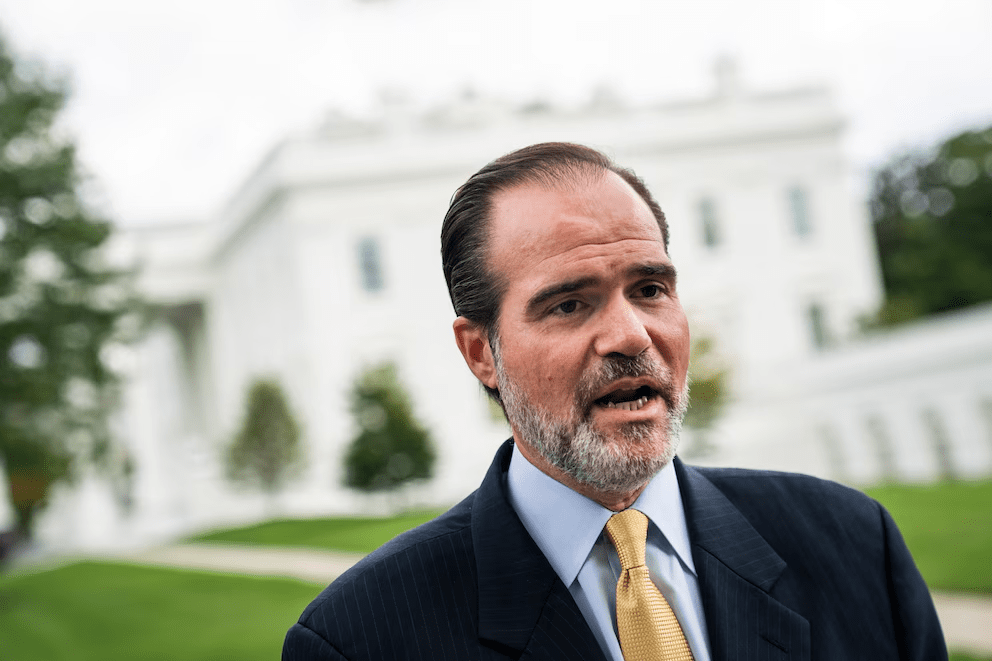
It is no coincidence that Rubio, Landau, and Claver-Carone worked together. All three have emotional and political ties to the region, and all three understand what happens in the shadow of the Caribbean regime.
In this context, the Trump administration sent a direct message to the Venezuelan dictatorship:
If it does not proceed with the release of 11 political prisoners who are detained or missing, the United States will act with the speed and rigor it already applied in Operation Guacamaya.
Claver-Carone has access to Maduro’s inner circle, while Rubio and Landau are combining efforts that the White House has already set in motion.

Landau lived in Caracas and during his time at Harvard, wrote his senior thesis on the relationship between the United States and Venezuela. He knows the terrain like few others.
Rubio, in his dual role as Secretary of State and National Security Advisor, keeps President Trump informed, who aims for another defeat of the Venezuelan regime.
Venezuela has an absolute dependence on global supply chains—from inputs for oil exploitation to the procurement of medicines—and the U.S. warning focuses on this structural weakness in the Caribbean nation’s economy.

The White House can influence the regular provision of resources that sustain the economy, health, and oil industry, managed by countries like Argentina and India, for example.
From this position of strength, the State Department wants Maduro to release 11 political prisoners it considers a national priority. This group of detained or missing individuals includes nine Americans, Argentine gendarme Nahuel Gallo, and an Israeli citizen.
The governments of Javier Milei and Benjamin Netanyahu have asked the Trump administration to secure the release of their nationals, and the State Department added their names to the priority list that Claver-Carone is negotiating with Maduro’s designated interlocutors.
Ron Dermer, Israel’s Minister of Strategic Affairs, met with Trump and Rubio last week before the U.S. president flew to the Persian Gulf for a 72-hour tour.
In Argentina’s case, Ricardo Ferrer Picado—advisor to Patricia Bullrich in the Security Ministry—acts as a liaison between the Republican administration and Milei’s government. Ferrer Picado has strong connections in the State Department and the White House West Wing.
Despite the success of Operation Guacamaya, which exposed the security and intelligence failures of the Caribbean dictatorship, Maduro’s representatives show willingness to dialogue with the State Department.
However, their demands do not align with the negotiations proposed from Washington. Rubio, Landau, and Claver-Carone are reluctant to accept certain conditions transmitted from Caracas.
Maduro seeks the United States to lift financial sanctions and authorize American companies to extract and export Venezuela’s oil reserves.
Additionally, the Caribbean dictator demands that the exchange of political prisoners for drug traffickers detained by Nayib Bukele be asymmetrical.
Maduro wants to apply Hamas’ terrorist logic: one U.S. hostage in exchange for a large number of criminals under Bukele’s control.
No, responded the State Department to the Venezuelan regime’s demands. Maduro already knows the clock is ticking.
Image: Infobae