

The new budget law One Big Beautiful Bill, which maintains tax cuts for the wealthiest Americans, will have a significant impact on the health of the most vulnerable, including immigrants with legal status. It will increase the cost of living and even affect the quality of the air we breathe.
- A Historic Setback
- “An estimated 4.8 million people will lose their health coverage primarily due to failing to comply with reporting requirements and the required bureaucracy.”
- “Changes to the Affordable Care Act (ACA) marketplace have received less attention than Medicaid changes, but they are also substantial.
- Fiscal Impact
- A Step Back
“States that have used their own funds to provide health coverage to undocumented immigrants will face significant pressure to cut it. This law limits health coverage under Medicare and Medicaid for legal immigrants in the country, even if their incomes are below the poverty level,” said Larry Levitt, executive vice president of Health Policy at KFF (a national health policy organization).

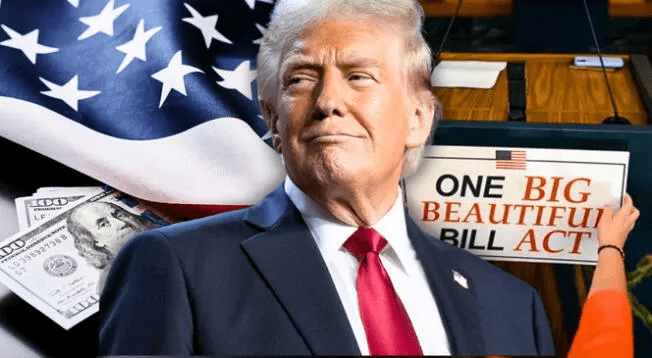
During the videoconference “Deciphering the New Big and Beautiful Law,” organized by American Community Media (ACoM), several experts discussed the impact of the new budget and spending law, as well as its long-term effects on health, the environment, and the national deficit, which is expected to grow by $3 trillion over the next decade.
A Historic Setback
Levitt pointed out that the One Big Beautiful Bill represents a shift in the healthcare system since the Affordable Care Act was passed 15 years ago, erasing many of its gains.
“The Congressional Budget Office has estimated that the legislation would reduce federal health spending by over $1 trillion over the next decade and increase the number of uninsured people by 11.8 million.”
He stated that this represents the largest rollback in federal support for medical coverage in history.

“An estimated 4.8 million people will lose their health coverage primarily due to failing to comply with reporting requirements and the required bureaucracy.”
He noted that some will also be excluded because they will be required to renew their Medicare coverage more frequently—every six months instead of once a year.
“There are also restrictions on taxes that could force states to cut payments to hospitals and other healthcare providers or other parts of the Medicaid program.”

He explained that one of the major concerns during the Senate debate was the impact on rural hospitals because a substantial portion of the cuts targeted rural areas.
“Rural hospitals, in particular, have low margins and are potentially more vulnerable to closing or cutting services as a result of the cuts.”
He added that a temporary $50 billion Rural Health Fund was included, which will certainly help rural communities, but it will not fully offset the permanent cuts.
“Changes to the Affordable Care Act (ACA) marketplace have received less attention than Medicaid changes, but they are also substantial.
“The new income verification procedures would end automatic coverage renewal at the end of each year, which could lead to many people losing their coverage.
“There would no longer be limits on the amount people would have to repay for subsidies or tax credits to help pay their premiums when filing their tax returns the following year if their income turns out to be higher than expected, which could cause unpleasant surprises and discourage enrollment.”
He emphasized that many low-income legal immigrants, including those with Temporary Protected Status, refugees, or asylees, would no longer be eligible for premium assistance under the Affordable Care Act.
“This would also apply to Medicaid and Medicare.”
He noted that the bill passed by the House of Representatives left out a provision that would have penalized states with reduced Medicaid funding if they used their own resources to provide healthcare to undocumented immigrants.
However, he mentioned that states like California, which have provided coverage to undocumented immigrants, have proposed cutting it, and it is possible that the Trump administration is working to penalize those states as well.
Fiscal Impact
Natasha Sarin, a professor at Yale Law School and the School of Management, said that by the end of this decade, the debt-to-GDP ratio will be closer to 135%, meaning our debts will significantly exceed our total economic output.
“Broadly speaking, this represents a deficit increase of about $3 trillion if we consider the bill as it stands. But if we include expansions, extensions, and all the expirations that will likely be postponed, we’re looking at something closer to $4 trillion over the next 10 years.”
Sarin questioned who the winners and losers are from the specific decisions lawmakers made in this package.
“The wealthiest individuals are receiving a massive tax cut of around $30,000 annually as a result of this package, while those who will suffer the most are the ones affected by Medicaid cuts.”
She highlighted that as a consequence of the new budget law, we will have higher interest rates that will significantly impact households and the real economy.
“Mortgage rates for homes will be thousands of dollars higher. This means small business loans will be thousands of dollars more expensive. Auto loans, student loans, and any type of borrowing have been affected by this legislation, increasing costs for both households and businesses.”
Therefore, she explained that in the long term, over the next decade and even more so over the next three decades, the package of measures will lead to a smaller economy.
“This package will reduce GDP and economic output, as it makes investments in the U.S. more expensive.”
A Step Back
Bill McKibben, writer, environmentalist, and founder of Third Act, which organizes older adults to take action on climate change, said the new law is packed with provisions clearly designed to slow the transition to renewable energy.
“These include the elimination of tax exemptions for solar, wind, and battery energy, which were a significant part of the Inflation Reduction Act passed during the Biden era. They were supposed to last a decade, but most will be phased out by the end of this year.”
He detailed that the tax credit for electric vehicles expires at the end of September.
As a result, he anticipated that it will be extremely difficult for the renewable energy industries to cope with these provisions.
“There is speculation that there will be massive layoffs in companies working on projects like rooftop solar installation and that many clean energy projects will be canceled.”
He pointed out that this delay in the energy transition also has other consequences.
“One of them will be higher utility rates because we live in a world where renewable energy is the cheapest.”
He noted that it is a great paradox that just as the rest of the world is decisively moving toward clean energy, the U.S. is moving against it.
“We must push back; we need to mobilize public opinion to achieve what we can at least at the state and local levels because climate change is happening so rapidly.”
Image: Opinion





