

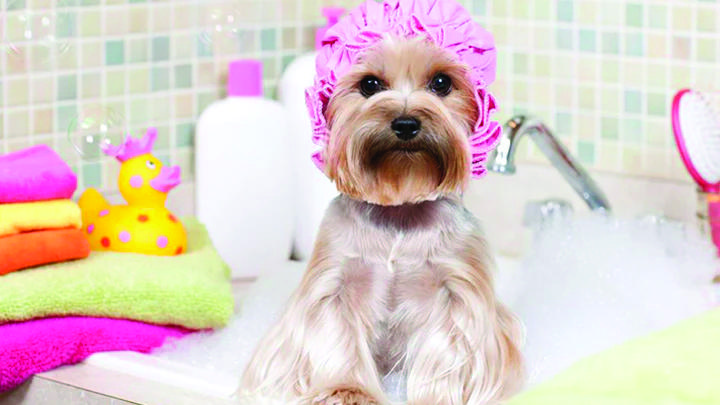
Bathing your dog is essential to remove bacteria and dirt that could compromise their health.
- Bathing your dog is essential to remove bacteria and dirt that could compromise their health.
- Bathing frequency varies depending on the dog’s fur type.
- It’s also crucial to consider the type of shampoo used.
- Over-bathing can be harmful.
- The dog’s activity level is another crucial factor.
- Myths About Bathing Dogs
However, the frequency of these baths changes depending on whether the animal has long or short fur.

Proper care of your dog’s hygiene is crucial for their well-being.
However, determining how often to bathe a dog raises many questions among owners.
According to veterinarians, it’s essential to bathe dogs to remove bacteria and dirt that could compromise their health.
Experts suggest that your pet should not go more than three months without a bath.

Bathing frequency varies depending on the dog’s fur type.
Dogs with short fur can be bathed every month and a half or two months, while those with medium fur should be bathed every month or month and a half.
On the other hand, dogs with long fur require a bath every three weeks or a month.
It’s important to remember that these timeframes are guidelines and should be adjusted to each specific situation.

It’s also crucial to consider the type of shampoo used.
For example, dogs with dermatological conditions may require specific products to avoid skin issues.
Choosing the right shampoo helps maintain the pH balance and the health of their coat.
Over-bathing can be harmful.
Bathing dogs too often can dry out their skin and reduce natural protective oils.
In some extreme cases, bathing twice a year may be sufficient, though the most common recommendation is not to exceed a monthly bath.
The dog’s activity level is another crucial factor.
Dogs that spend a lot of time outdoors or are very active tend to get dirtier.
In contrast, older or less active dogs require fewer baths.
In urban environments, where pollution is higher, it may be necessary to adjust bathing frequency.
One of the most important points is the role of brushing.
“Brushing your dog helps remove dead fur and eliminate much of the dirt,” which is especially important for long-haired dogs that tend to accumulate more dirt and odors.
The first bath experience for puppies is another area to consider.
Puppies should not be bathed before three months of age.
During this time, it’s better to clean them with a damp, well-wrung sponge.
When puppies reach three months, they should be bathed with lukewarm water and puppy-specific shampoo, ensuring thorough drying afterward to avoid respiratory issues.
For dogs with specific medical conditions, bathing may need to be more frequent but should always be under veterinary supervision, known as “shampoo therapy”, to treat conditions like seborrhea.
Myths About Bathing Dogs
It’s worth noting that many myths surround dog bathing.
For example, a common myth is that “a dog’s fur loses oils when bathed,” which is true; however, these oils regenerate quickly.
Another myth is that “bathing alters a dog’s pH,” which is temporary and does not pose a significant risk.
In cases of heavy dirt or exposure to toxic substances, an immediate bath is necessary.
It’s also recommended to bathe your dog if they smell bad or have come into contact with grease or oil.
If you have concerns about your dog’s coat or skin health, it’s always best to consult your veterinarian.
Maintaining proper hygiene for dogs is essential but should be done with moderation to avoid damaging their skin and coat.
Bathing frequency varies based on factors like fur type, lifestyle, and the dog’s age.
Regular brushing and using the right products also contribute to the health and well-being of your pet.





