

Rain of Fire Over Moscow: The Historic 450-Drone Attack Shaking Russia
Translated with AI from the original article in Spanish. Leer la noticia original en español
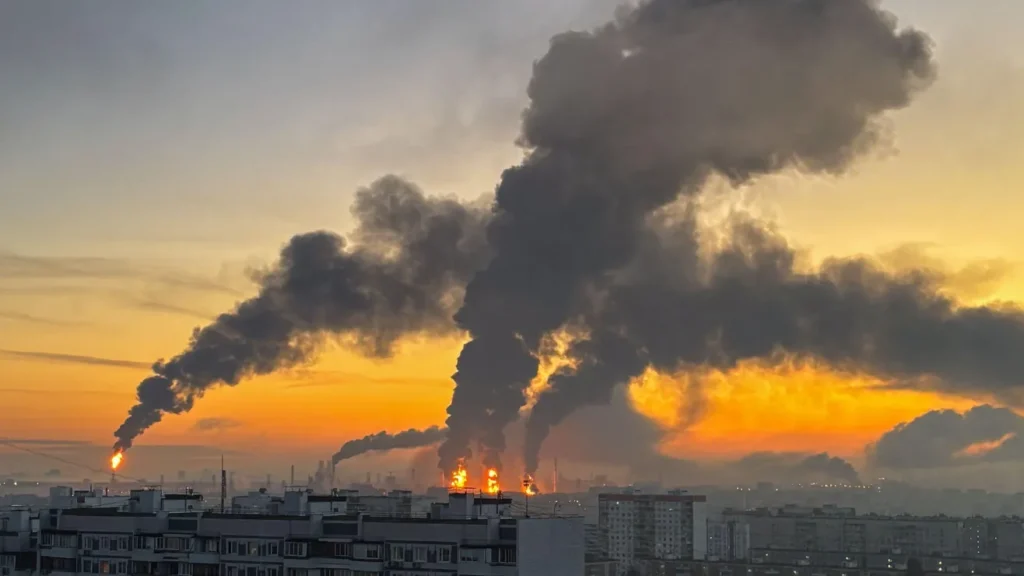
If you have followed the development of the fighting in Eastern Europe with the false peace of mind that the conflict was limited to muddy trenches in the Donbas or distant fronts on the Ukrainian plains, this early morning news completely shatters that perception. The truth is that modern warfare no longer knows safe distances; when the political and military centers of a superpower are simultaneously reached by hundreds of unmanned aircraft—450 drones—the conflict ceases to be a distant statistic and becomes an absolute transformation of global geopolitics.
The surprising and massive coordinated aerial assault against Moscow, estimated by intelligence services and defense reports at approximately 450 attack drones, represents the largest bombardment received by the Russian capital since World War II. This massive deployment is not a mere propagandistic act, but a surgical war-of-attrition maneuver designed to collapse anti-air defense systems, sow panic in the Russian rear, and demonstrate full retaliatory capability. How was an operation of this magnitude planned, what flaws did it expose in the Moscow shield, and how does this escalation impact international stability? Let's break it down thoroughly.
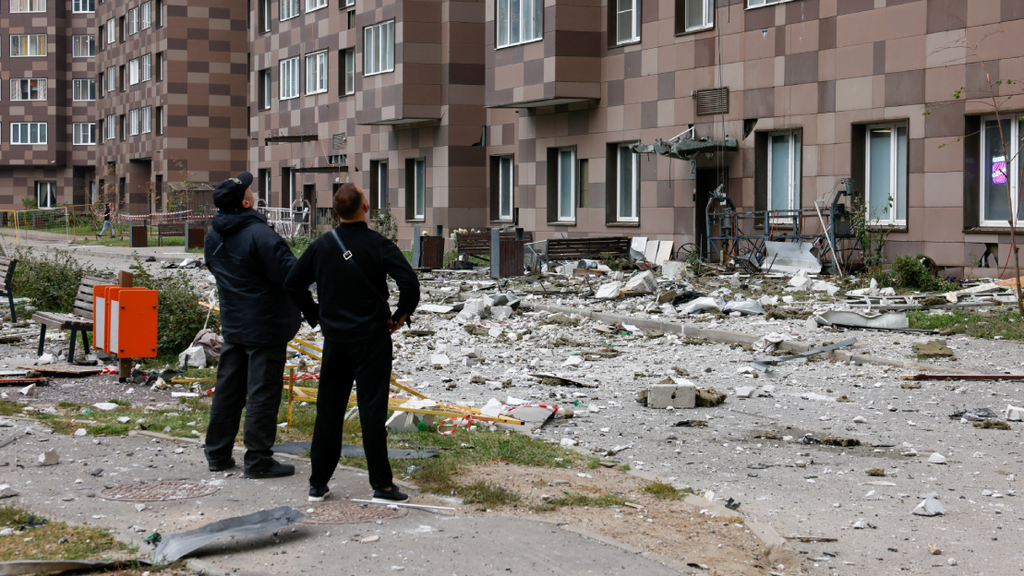
The Pulse of the International Conflict (Snippet Bait): In an unprecedented aerial offensive, Ukraine struck Moscow with an estimated 450 drones in the largest attack registered against the Russian capital to date. The massive swarm of unmanned aircraft forced the temporary closure of the region's main international airports, saturated anti-air defense radars, and demonstrated the growing self-sufficiency of the Ukrainian defense industry in developing long-range vectors. Authorities reported at least two dead and 20 wounded as a result of the bombardments.
The Anatomy of the Swarm Attack: How Was a 450-Drone Offensive Executed?
To understand the tactical complexity of this strike, it is necessary to examine how low-cost technology and autonomous navigation systems have revolutionized the art of modern warfare.
1. Radar Saturation and the "Swarm" Principle
Traditionally, defending a metropolis the size of Moscow required sophisticated and expensive surface-to-air missile systems, designed to intercept a limited number of ballistic targets or crewed aircraft.
- Volume Collapse: When an attacker simultaneously deploys some 450 fixed-wing, electrically propelled drones—manufactured with composite materials that are difficult to detect and programmed with winding flight paths via artificial intelligence—defense operators face an insoluble mathematical problem: there simply are not enough missile batteries to shoot down every target.
- The Uncomfortable Truth: While a single Russian interceptor missile can cost millions of dollars, several of the drones used in the offensive represent a minimal investment. This economic asymmetry on the battlefield tactically favors the attacking side, forcing the Kremlin to spend monumental resources to neutralize everyday threats.
2. The Psychological and Logistical Impact in the Heart of Russia
Beyond the physical damage reported in peripheral facilities and critical infrastructure near the capital, the primary objective of the offensive was to inoculate the war directly into the daily lives of Russian citizens.
- The Paralysis of Civil Aviation: The launch of this swarm forced aeronautical authorities to immediately suspend takeoffs and landings at key airports such as Sheremetyevo, Domodedovo, and Vnukovo, diverting flights and generating logistical chaos in western Russian commercial routes.
- The Shattering of the Invulnerability Myth: For years, the Kremlin's official narrative assured that Moscow was a shielded and impenetrable zone. Seeing columns of smoke and hearing explosions in the capital's suburbs destroys that false sense of internal security.
Table: Radiography of the Aerial Conflict — The Before and After of the Drone Strategy
To accurately visualize the paradigm shift represented by this massive attack, we contrast traditional capabilities against modern swarm warfare:
| Military Variable | Conventional Strategy (Traditional Warfare) | New Swarm Reality (Moscow Attack) |
| Attack Vector | Ballistic missiles, cruise missiles, and long-range bombers. | Hundreds of low-cost drones operated autonomously (swarm). |
| Defensive Saturation | Limited by high production cost and availability of guided missiles. | Massive and economical, specifically designed to exhaust enemy radars. |
| Strategic Impact | Targeted destruction of fixed military targets in front-line areas. | Psychological destabilization, logistical collapse, and political pressure in the capital. |
Practical Guide: How Does This Military Escalation Impact the Global Economy and the International Community?
When superpowers raise the level of direct confrontation in densely populated urban areas, the economic and geopolitical repercussions quickly spread across the planet. Follow these key points to understand the big picture:
1. The Direct Impact on Oil Prices and Raw Materials: Monitoring volatility in global energy markets.
The attacks against critical infrastructure in Russian and Ukrainian territory generate immediate fears regarding disruptions in international energy supplies. Keep a prudent watch on fuel pricing and its inflationary reflection in Western markets.
2. The Absolute Dominance of Unmanned Aerial Vehicles (UAVs): The acceleration of the technological arms race.
This episode confirms that the future of military defense no longer depends exclusively on heavy armor, but on technological innovation in autonomous navigation software, electronic warfare, and anti-drone systems (counter-UAV).
3. Where to Get Rigorous Information Without Falling Into War Propaganda: Consulting neutral information sources and geopolitical analysis.
Faced with events of this magnitude, social networks are flooded with false information, recycled videos, and propagandistic exaggerations. To maintain an objective and cross-checked view of the facts, consult international news agencies with a proven track record such as Associated Press or the global reporting of Reuters.
The truth is that every escalation in an armed conflict pushes away the possibility of a negotiated peace and deepens the suffering of millions of civilians caught in the geopolitics of the great powers. For our community, understanding these global events is fundamental to gauging the shifts in the world economy and security.
Image: ElHispanoParaTodos/PRESS