

The Proposal That Would Require Declaring Citizenship Status on Taxes
Translated with AI from the original article in Spanish. Leer la noticia original en español
If you have fulfilled your civic responsibility year after year of filing your tax return—whether using a Social Security number or an Individual Taxpayer Identification Number (ITIN)—you know perfectly well that the historical purpose of the Internal Revenue Service (IRS) has been strictly to collect revenue. The truth is that, for decades, the federal tax system operated under a wall of confidentiality designed to separate the fulfillment of tax obligations from any immigration-related persecution or control.
However, legislative initiatives promoted in conservative circles to force taxpayers to break down and verify their exact citizenship status directly on tax forms seek to blow up that traditional separation. The idea that a checkbox on the annual return could force a disclosure of whether the filer is a citizen, legal resident, temporary foreigner, or undocumented has unleashed an immediate storm among legal experts, economists, and community leaders. What is behind this proposal, what would the operational consequences be for the tax agency, and why does it terrify millions of Hispanic families? Let's break it down thoroughly.
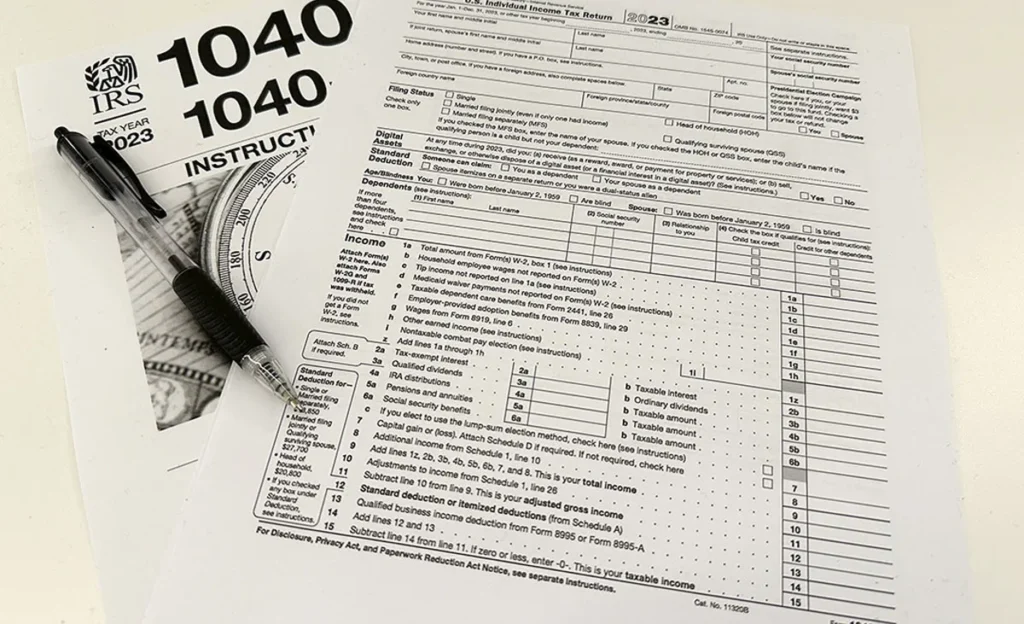
The pulse of the fiscal and immigration debate (Snippet Bait): The Form 1040 used by taxpayers to report income and determine refunds intends to include citizenship status.
A legislative and administrative initiative seeks to modify federal tax return forms to require the mandatory inclusion of the taxpayer's citizenship status. The measure aims to cross-reference tax data with immigration agencies, generating deep concern among economic analysts, who warn that this requirement could trigger a massive tax boycott and a steep drop in the collection of billions of dollars contributed annually by undocumented workers through the ITIN system.

The anatomy of the proposal: Why do they want to cross-reference IRS data with immigration control?
To understand the magnitude of this regulatory change, it is necessary to examine the arguments put forward by its proponents and compare them with the operational reality of the U.S. tax system.
1. The political logic of fiscal border control
Proponents of the measure argue that the federal government must unify its databases to ensure that no benefit, tax credit, or deduction is taken advantage of by people who are in the country without regularized legal status.
- The strict compliance argument: From this perspective, it is maintained that requiring explicit confirmation of immigration status on tax returns provides transparency and aligns tax policy with border security priorities.
- The uncomfortable truth: Critics and opposing lawmakers point out that this proposal deliberately ignores the actual functioning of the U.S. economy. The IRS collects billions of dollars annually thanks to taxpayers without legal status who use ITIN numbers precisely because the law requires them to declare their income, regardless of where it comes from.
2. The potential collapse in tax collection
Forcing taxpayers to stamp their immigration status on an accessible federal document would immediately alter the financial behavior of millions of people.
- The fear of being targeted and deported: If tax information becomes a tool for immigration scrutiny, the natural reaction of undocumented workers will be to abandon formality, take refuge in the cash economy, and stop filing tax returns.
- The impact on public coffers: Stopping the receipt of tax contributions from millions of taxpayers who religiously pay their income tax, Social Security, and Medicare—without receiving direct federal benefits in return—would represent a devastating financial blow to state and federal budgets.
Table: X-ray of the proposed change — The traditional model versus the new scheme
To visualize precisely what this initiative seeks and what the risks pointed out by experts are, we contrast both models:
| Evaluation Axis | Traditional Model (Fiscal Confidentiality) | Status Inclusion Proposal |
| Form Objective | Collect taxes neutrally regardless of immigration status. | Cross-reference tax data with strict immigration eligibility filters. |
| Taxpayer Behavior | Trust that the IRS does not share data with immigration control agencies. | Widespread fear, incentive for the informal economy, and possible tax boycott. |
| Global Economic Impact | Stable collection of billions of dollars via ITIN and SSN. | Risk of fiscal deficit and massive loss of local tax contributions. |
Practical guide: How to protect your fiscal stability and what to do in the face of regulatory changes?
Given the constant debate over modifications to tax forms and the handling of taxpayer data, it is fundamental to act with prudence and professional advice. Follow these infallible steps:
1. Filing taxes remains a fundamental legal obligation: Maintain fiscal compliance with an up-to-date ITIN or SSN.
Despite legislative debates and proposals under discussion, compliance with current tax laws is indispensable. Filing your returns on time demonstrates financial good faith and constitutes the most solid historical record for any future immigration process or adjustment.
2. Avoid falling into the hands of unscrupulous facilitators: Consult only certified preparers and accredited professionals.
Given the uncertainty regarding changes to forms, false agents who claim to know "tricks" to evade requirements are proliferating. Always go to Certified Public Accountants (CPAs) or Enrolled Agents authorized by the IRS.
3. Where to get rigorous information without falling into alarmism: Monitor official sources and civil rights organizations.
Legislative proposals go through long debate processes in Congress before becoming laws or mandatory form modifications. To verify which changes are real and which are mere political projects, consult the official communications on the Internal Revenue Service (IRS) portal or follow the coverage by Associated Press.
The truth is that a nation's tax structure should not be used as a mechanism of intimidation, but as a pillar of economic equity. For our Hispanic community, being informed and prepared is the best defense against any attempt to alter the rules of the financial game.
Image: ElHispanoParaTodos/PRESS