

The Fed raises interest rates for the first time since 2023
Translated with AI from the original article in Spanish. Leer la noticia original en español

If you were holding out hope that borrowing costs would begin to ease in the short term, the news that has just come out of the central bank's offices in Washington represents a very harsh financial reality check. The truth is that when the economy insists on showing stubborn inflationary pressures, the guardians of the currency have no alternative but to hit the emergency brake, regardless of the pain this causes in the markets and family budgets. The Fed is raising interest rates.
The Federal Reserve's decision to increase the federal funds rate marks the end of the monetary pause that had been in place since 2023. This move is not a simple technical adjustment of the stock markets; it is a forceful measure with immediate repercussions on the cost of every loan, card, and line of credit in the country. What motivated this unexpected turn, which sectors are suffering the greatest impact, and how can you shield your personal finances? Let's break it down thoroughly.
The pulse of the central bank (Snippet Bait): In a move that surprised Wall Street, the U.S. Federal Reserve raised the benchmark interest rate for the first time since 2023, placing it in a more restrictive range to curb the inflationary rebound. The decision will immediately translate into higher costs for credit cards, auto loans, and mortgage financing, forcing consumers to urgently rethink their financial health.
The U.S. Federal Reserve raised its benchmark interest rate by a quarter of a percentage point, to a range between 3.75% and 4.00%, in the first monetary policy decision under the leadership of Kevin Warsh, the new central bank chairman appointed by Donald Trump with the expectation that he would push for cuts. The Federal Open Market Committee (FOMC) voted unanimously in favor of the increase, the first since July 2023.
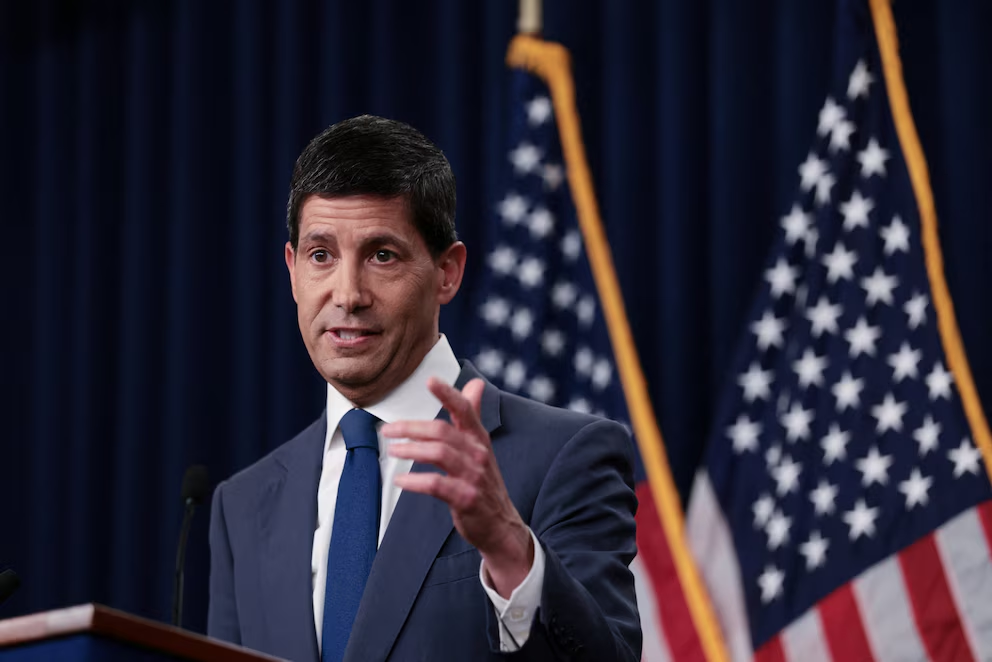
The central bank took the decision to curb inflation that persists above 3% and which, according to its own projections, will not return to the 2% target until 2029.
The anatomy of the monetary turn: Why did the Fed break the truce?
To understand the reasons behind this financial tightening, it is necessary to analyze the recent behavior of the macroeconomic indicators that forced the central bank to change course.
1. The resistance of inflation and overheating
During the previous months, financial analysts were firmly betting that the central bank's next move would be downward. However, the reality of the economic data proved otherwise.
- The ghost of price persistence: Despite previous restrictions, domestic consumption remained robust and the costs of essential services and housing continued to push upward. Inflation refused to descend with the speed that the institutional target of 2% demanded.
- The uncomfortable truth: Keeping rates stable was no longer enough to cool demand. Faced with the risk that inflation might become permanently entrenched in the economy, Fed governors opted for an aggressive stance, prioritizing price stability over temporary relief in credit markets.
2. The immediate impact on debt markets
When the central bank raises the cost of money, the domino effect spreads instantly throughout the commercial financial system.
- The rising cost of variable credit: Prime Rates rise in parallel with the Fed's decision. This means that any balance accumulated on credit cards with floating rates will begin to generate much higher interest almost overnight.
- The brake on the real estate market: Buying a home becomes economically more prohibitive, as long-term mortgage rates react to these restrictive signals, freezing the plans of thousands of families who were looking to acquire properties in Florida and the rest of the country.
Table: X-ray of the impact — The rate hike versus your finances
To visualize precisely how this change in monetary policy is transmitted to the everyday economy, we contrast the effects by sector:
| Financial Sector | Behavior with the New Rate Hike | Recommended Action for the Household |
| Credit Cards | Drastic increase in monthly interest and minimum payments. | Pay off total balances or seek fixed-rate consolidation. |
| Mortgage Loans | Maintenance of high rates and contraction in buying and selling. | Further refinancing evaluations only if markets drop. |
| Savings Accounts (High-Yield) | Favorable returns for cash held in reserve. | Maximize emergency savings by taking advantage of high interest. |
Practical guide: How to shield your domestic economy against the new high-rate cycle?
Faced with a scenario where money officially becomes more expensive, financial passivity is no longer a viable option. Follow these foolproof steps to protect your assets:
1. Attack credit cards and personal loans first: Audit and neutralize high-interest debts.
If you have debts with variable interest rates that exceed double digits, their financial weight will grow month by month. Examine balance transfer options with temporary 0% interest or consolidate your debts under a fixed-rate personal loan to stop the advance of compound interest.
2. Take advantage of safe savings returns: Reinforce the emergency fund in liquid accounts.
With credit so expensive, resorting to loans for a medical or mechanical emergency is a terrible idea. Maintain a solid emergency fund deposited in High-Yield Savings Accounts, which usually offer better earnings thanks to this same high-rate environment.
3. Where to consult direct monetary policy announcements: Monitor official sources and financial education.
To avoid panicking over alarmist speculation on social media, stay up to date with the official minutes of the central bank. You can review reports and direct announcements on the Board of Governors of the Federal Reserve System portal or follow analytical coverage on Associated Press.
The truth is that navigating a change in the interest rate cycle requires discipline, accurate information, and very conservative financial planning. For our Hispanic community, understanding the scope of these macroeconomic decisions is the best shield to protect the effort of so many years of work.
IMAGE: ElHispanoParaTodos/PRESS