

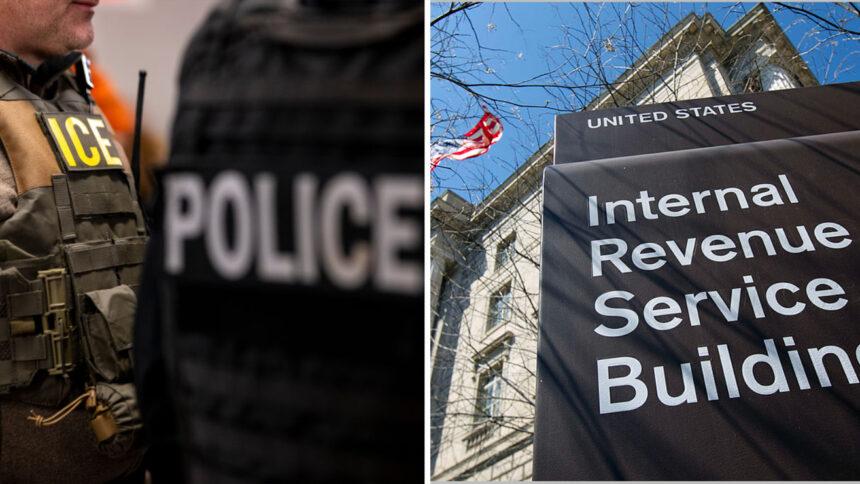
Recently, the Internal Revenue Service (IRS) and U.S. Immigration and Customs Enforcement (ICE) have established an agreement to share tax information of undocumented immigrants for deportation purposes.
This agreement allows ICE to request data on taxpayers who have final deportation orders, despite legal protections that safeguard tax confidentiality.

The measure has drawn criticism from immigrant advocacy groups and legal experts, who argue it undermines decades of trust and federal policies that encourage undocumented immigrants to file their taxes.
However, activists say the agreement violates privacy laws and threatens the privacy of all Americans.
Additionally, IRS Acting Commissioner Melanie Krause has resigned amid the controversy surrounding this agreement.
The agreement, signed by Treasury Secretary Scott Bessent and Homeland Security Secretary Kristi Noem, allows ICE to send names and addresses of undocumented immigrants for verification by the IRS.

This collaboration is part of a broader strategy by the Trump administration to strengthen immigration policies.
Critics warn that this collaboration could violate privacy laws and discourage cooperation from immigrant communities with the tax system.
Historically, the IRS has maintained the confidentiality of tax information, allowing disclosure only in specific circumstances, such as criminal investigations unrelated to taxes.

The involvement of IRS agents in ICE operations has also raised concerns, as these agents are trained to make arrests and carry firearms, which could extend their role beyond traditional tax functions.
This development underscores the debate over balancing immigration policy enforcement with the protection of taxpayer privacy and trust.





