

Hispanic Heritage Month: Between the U.S. Economic Engine and the Shadow of Persecution
Translated with AI from the original article in Spanish. Leer la noticia original en español
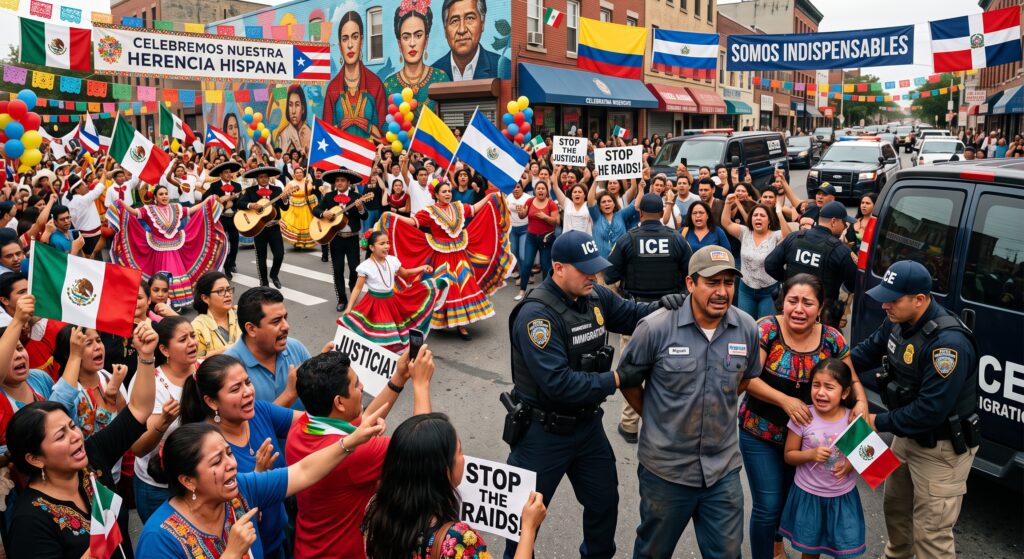
Every September 15, government institutions, corporations, and media outlets in the United States dress up in colors, music, and speeches to inaugurate Hispanic Heritage Month.
Cultural contributions, gastronomy, and the resilience of the community are exalted. However, behind the advertising campaigns and festivals, a much harsher reality pulses: for millions of Hispanics in the country, the current environment leaves very little room for celebration.
Today, the Latino community finds itself at a historic crossroads. They are, without a doubt, the backbone of American growth, but at the same time, they are the primary target of an increasingly hostile political climate, marked by suffocating legislative changes and constant persecution.
An indispensable economic giant
The modern development of the United States cannot be understood without Hispanic labor, talent, and entrepreneurship. The figures are overwhelming: if Latinos in the U.S. were an independent country, their Gross Domestic Product (GDP) would represent the fifth-largest economy in the world.
Hispanic participation transcends the agricultural fields and construction, sectors where they have historically been essential. Today, Latinos are creating small and medium-sized businesses at a much faster rate than any other demographic group. According to recent economic data, Hispanics start businesses at a rate that nearly triples the national average, injecting trillions of dollars into the economy, creating millions of jobs, and revitalizing entire neighborhoods from Los Angeles to New York.
During national crises, pandemics, and recessions, it has been essential workers of Hispanic origin who have kept the country's machinery running, ensuring food supply, logistics, and medical care.
The other side of the coin: What are we celebrating?
Despite being the engine that drives the nation toward the future, the day-to-day life of the Hispanic community has darkened. Public discourse and legislative actions have transformed the "American dream" into a state of permanent alert.
In recent years, we have witnessed a systematic hardening against the community. The reasons why "there is not much to celebrate anymore" are tangible and painful:
- Suffocating state laws: Various states have implemented severe legislation that criminalizes the transport of undocumented immigrants, requires hospitals to ask for the immigration status of patients, and forces local police to act as immigration agents. This has generated terror even among citizens and legal residents who fear for their mixed-status family members.
- Barriers to social aid: As we have seen with recent budget cuts to vital programs like SNAP, bureaucratic obstacles are designed, consciously or unconsciously, to disproportionately affect Hispanic families, reducing their access to fundamental rights such as food and health.
- Hate rhetoric: The criminalization of the immigrant and the Latino in political rhetoric has normalized discrimination. Raids, the militarization of borders, and dehumanizing treatment in detention centers are constant reminders that, for certain sectors of power, the community is seen as a threat, not an ally.
Beyond folklore
The contrast is, at the very least, hypocritical. On one hand, the country avidly consumes Hispanic culture, music, and labor; on the other, it implements policies that persecute and marginalize the creators of that very wealth.
Hispanic Heritage Month should not just be a date to eat tacos or listen to mariachis at corporate events. It must be a moment of demand and reflection. The true celebration of Hispanic heritage will arrive the day that the community's economic and cultural contribution translates into respect, equal rights, fair paths to legalization, and the end of institutional persecution.
As long as that does not happen, September will be less of a party and more of a resistance.